
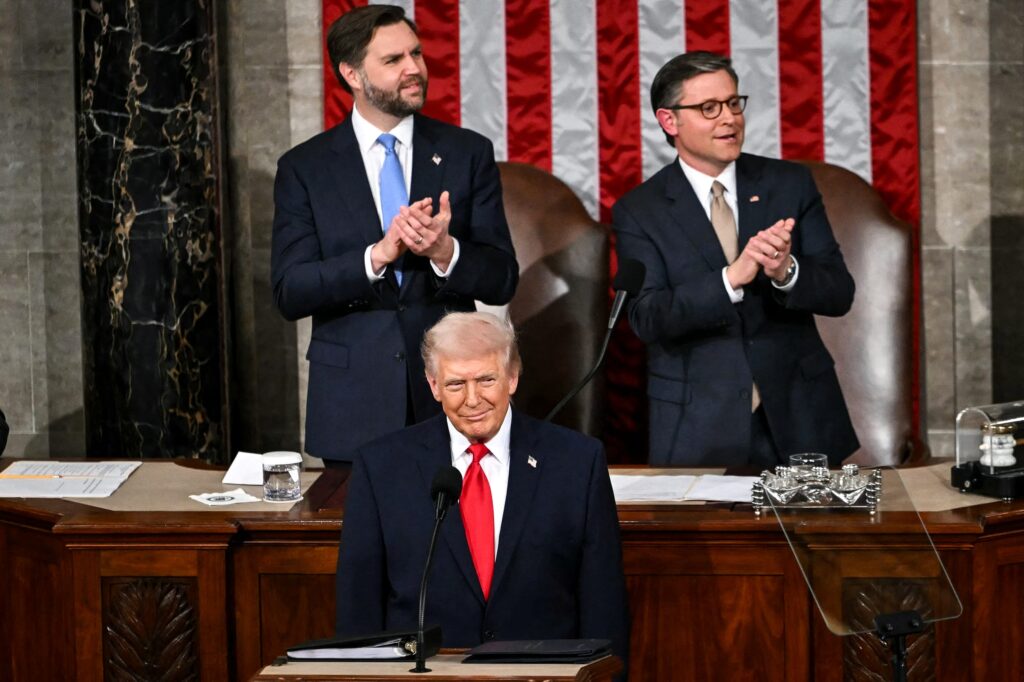
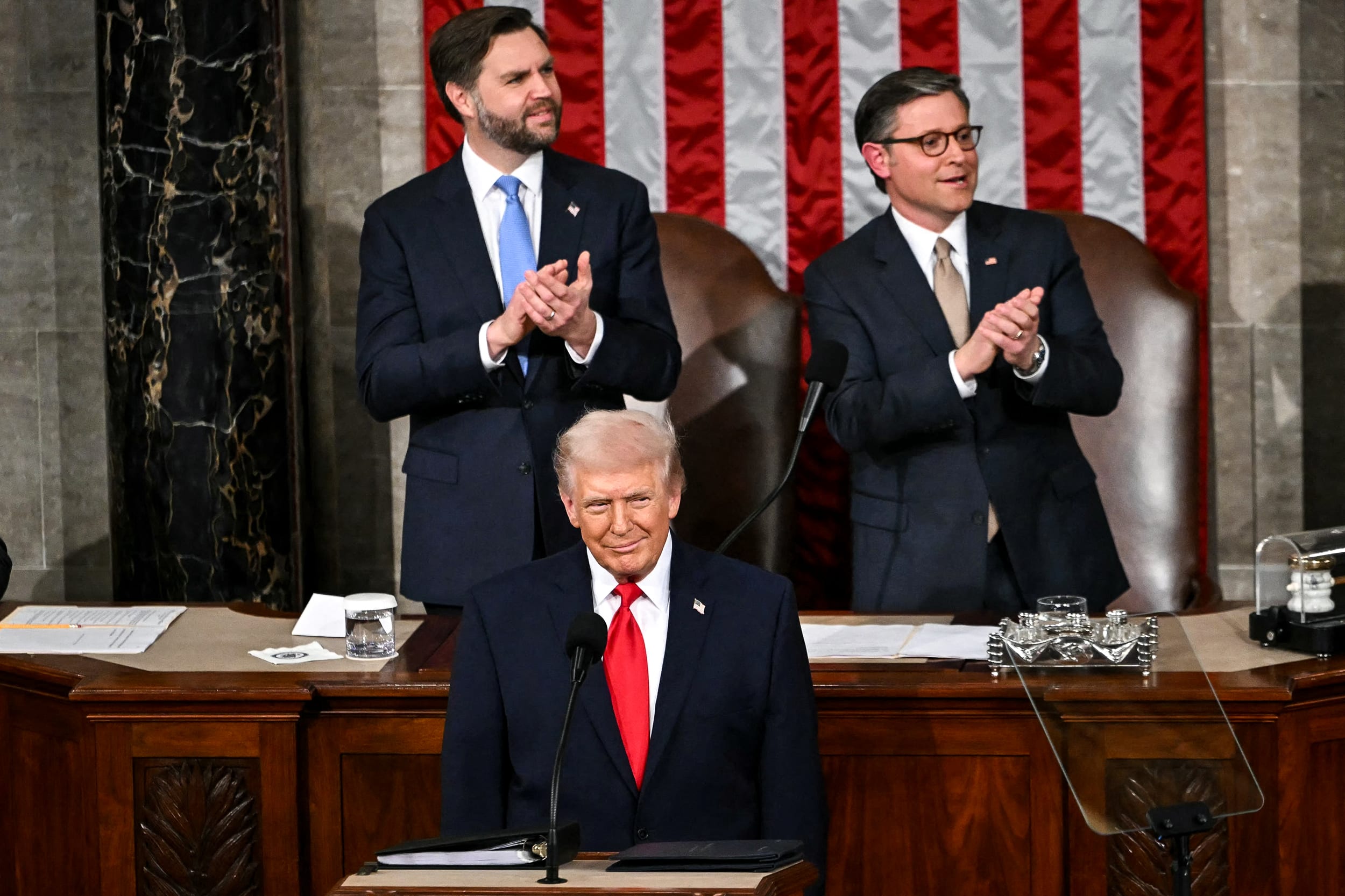
It only took one sentence to shift the tone of the night.
During his State of the Union address, President Donald Trump paused, looked across the chamber, and delivered a line that immediately set off a wave of reactions both inside the Capitol and across social media.
“So tonight, I’m inviting every legislator to join with my administration in reaffirming a fundamental principle: if you agree with this statement, then stand up and show your support: The first duty of the American government is to protect American citizens, not illegal aliens.”
Within seconds, the moment became one of the most talked-about segments of the evening.
A Chamber Divided — and Defined
The State of the Union address, delivered annually before a joint session of Congress at the U.S. Capitol, has long been a stage for defining political contrasts. But this line drew a visual contrast that cameras couldn’t ignore.
Some lawmakers rose quickly. Others remained seated.
The split created a powerful image: one half of the chamber standing in visible agreement, the other choosing not to rise. The optics were immediate and unmistakable. Clips of the moment spread rapidly online, with supporters praising the statement as common sense and critics arguing it oversimplified a complex immigration system.
In the era of viral politics, the image may prove just as influential as the policy discussion behind it.
The Framing of “First Duty”
Presidential rhetoric often centers on defining priorities. By framing border enforcement and immigration policy as the “first duty” of government, Trump elevated the issue above economic policy, foreign affairs, and social programs.
Supporters say the statement reflects a straightforward principle: a nation must prioritize the safety and well-being of its citizens. Many conservative lawmakers echoed that sentiment after the speech, emphasizing border security, crime prevention, and sovereignty.
Critics, however, argued that the line was politically charged. Some Democratic lawmakers later said remaining seated did not equate to opposing citizen protection, but rather reflected disagreement with how the issue was framed.
The moment underscored how language, especially in high-profile speeches, shapes political narratives.
Immigration at the Center of the Debate
Immigration has been one of the defining issues of Trump’s political career. From campaign promises about border barriers to executive actions aimed at tightening enforcement, the topic consistently energizes his base while drawing opposition from critics who favor broader immigration reform.
By challenging lawmakers to stand publicly, the president turned a policy position into a visible litmus test.
It wasn’t just a statement. It was a moment of accountability — at least symbolically. The invitation to stand placed lawmakers in a position where neutrality wasn’t easily conveyed.
Political strategists quickly noted that the moment was likely crafted with viral potential in mind.
Social Media Reacts in Real Time
Within minutes, clips flooded platforms like X, Facebook, and Instagram. Supporters praised the line as bold and unapologetic. Hashtags centered around border security began trending.
Opponents countered with posts arguing that the framing ignored the complexity of immigration law and humanitarian obligations. Commentators from across the political spectrum weighed in, dissecting not just the words but the reactions inside the chamber.
Cable news panels replayed the footage repeatedly, zooming in on individual lawmakers’ decisions to stand or sit.
In today’s political environment, viral moments often outlive the speech itself. This one appears likely to do the same.
Political Theater or Policy Marker?
State of the Union addresses often include applause lines. But not all applause lines are designed to divide the room so visibly.
Some analysts described the moment as political theater — a strategic effort to draw sharp lines ahead of upcoming legislative battles. Others viewed it as a clear policy marker signaling where the administration intends to focus its energy in the months ahead.
Regardless of interpretation, the effect was undeniable. The chamber’s split reaction created a powerful visual metaphor for the broader national debate.
A Broader Conversation Ahead
Immigration reform remains one of the most difficult bipartisan issues in Washington. Legislative proposals have repeatedly stalled amid disagreements over border enforcement, asylum procedures, and pathways to legal status.
Trump’s statement may further solidify party positions rather than bridge them. Yet it also guarantees that immigration will remain front and center in political discourse.
For supporters, the line reinforced a belief in strong national borders and prioritized citizenship. For critics, it highlighted concerns about rhetoric that frames the debate in stark, binary terms.
The Moment That Defined the Night
Every State of the Union has a line that lingers long after the applause fades. This one appears to belong to that category.
Whether viewed as bold leadership or calculated provocation, the invitation to stand forced a visible response. It captured the divided state of American politics in a single frame.
In a chamber built for debate, the president turned a sentence into a snapshot of the national divide.
And in the age of viral politics, that snapshot may prove just as influential as any policy proposal delivered that night.