
Walk into any gun store today and you’ll see a familiar pattern. Polymer frames dominate the shelves. Striker-fired pistols with optics-ready slides and double-digit magazine capacity have become the industry standard. Lightweight, modular, and built for modern preferences, they represent the current era of handgun design.
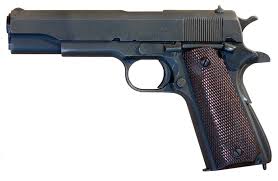
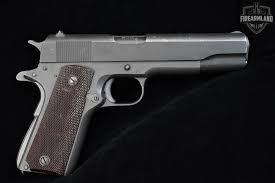
Yet standing quietly among them is a platform that refuses to disappear: the 1911 — and its modern double-stack evolution, the 2011 — chambered in .45 ACP.
More than 100 years after its introduction, the design still holds a loyal following. And for many experienced shooters, there are good reasons why.
Built From Real-World Lessons, Not Marketing
The .45 ACP cartridge and the 1911 pistol didn’t emerge from a focus group or marketing campaign. They were created to solve a real-world problem.
In the early 1900s, the U.S. military sought a handgun cartridge with greater effectiveness than smaller calibers then in service. The result was the .45 ACP, paired with John Moses Browning’s 1911 pistol — a combination that would go on to serve through World War I, World War II, Korea, Vietnam, and beyond.
That long service history matters because it reflects more than theory. It reflects decades of real-world use under demanding conditions.
The .45 ACP fires a heavier bullet than most modern handgun cartridges. While it travels at lower velocity than many 9mm loads, its mass and diameter give it a distinct performance profile that has remained trusted for generations.
Even as ammunition technology has evolved, the .45 ACP continues to meet modern defensive standards.
A Trigger System That Still Stands Apart
One of the defining features of the 1911 platform isn’t the caliber — it’s the trigger.
Unlike striker-fired pistols, which rely on partially cocked firing systems, the 1911 uses a true single-action trigger. The hammer is fully cocked, and the trigger’s only job is to release it.
That simplicity creates a trigger pull that feels clean, consistent, and predictable.
There’s minimal take-up, a clearly defined break, and a short reset. This level of precision allows shooters to maintain excellent control during firing, which contributes to accuracy and confidence.
Even today, many shooters consider the 1911 trigger to be the benchmark against which other handgun triggers are measured.
The 2011: Modern Evolution Without Losing the Core
While the original 1911 design remains popular, the 2011 platform represents its evolution.
The most obvious difference is capacity. Traditional 1911 pistols use single-stack magazines, while 2011 pistols feature double-stack frames that significantly increase round count without abandoning the core mechanics of the design.
The 2011 also incorporates modern features such as modular grip systems, improved ergonomics, and compatibility with optics and accessory mounting.
Despite these upgrades, it retains the same trigger system and operating principles that made the original design so respected.
This combination of classic function and modern capability has made the 2011 especially popular in competitive shooting environments, where precision and speed matter most.
Ergonomics That Continue to Win Over Shooters
Another reason the platform remains relevant is how it feels in the hand.
The grip angle, weight distribution, and balance of the 1911 contribute to natural pointing and stability. The all-metal construction adds weight, which helps manage recoil and maintain control during firing.
While polymer pistols prioritize lightweight carry, many shooters appreciate the stability and handling characteristics that come from the 1911’s steel construction.
The 2011 maintains those advantages while offering increased capacity and modern refinements.
Longevity Through Adaptation
What makes the 1911 and 2011 unique isn’t just their history — it’s their ability to adapt.
Manufacturers continue to produce new versions with updated materials, finishes, and features while preserving the core design. Modern variants can include optics-ready slides, improved safeties, and enhanced durability.
This adaptability has allowed the platform to remain competitive even as handgun technology continues to evolve.
More Than Nostalgia
The continued presence of the 1911 and 2011 isn’t just about tradition. It’s about performance characteristics that still resonate with shooters today.
The combination of a proven cartridge, exceptional trigger control, and solid ergonomics has kept the platform relevant across generations.
While newer handgun designs offer advantages in capacity and weight, the 1911 and its modern descendants continue to offer qualities that many shooters value.
In a market driven by constant innovation, the survival of a century-old design says something important.
It means the fundamentals were right from the beginning.