
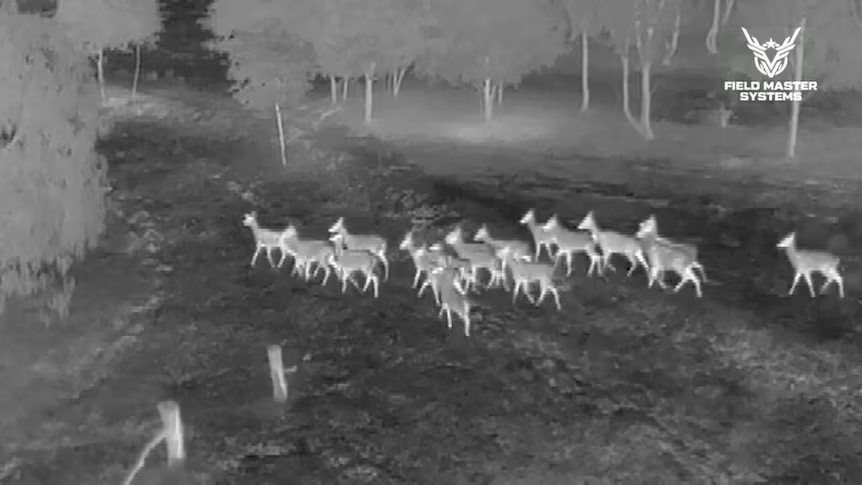
Indiana has filed what is believed to be its first criminal case involving the use of a drone to assist in deer hunting, highlighting growing concerns among wildlife officials about how rapidly advancing technology is changing the landscape of modern hunting.
According to details of the investigation, authorities allege that hunters used a drone to locate and monitor the movements of a specific whitetail buck during deer season. Using drones to assist in the taking of deer is illegal under Indiana wildlife regulations, which are designed to preserve fair chase principles and prevent hunters from gaining an improper technological advantage (Indiana Department of Natural Resources regulations).
The case represents a significant moment in wildlife enforcement, as agencies across the country confront new challenges created by increasingly sophisticated aerial and thermal imaging technology.
How Drones Can Change Hunting
Unlike traditional scouting methods, drones allow users to cover large areas quickly and locate animals in real time. Modern drones equipped with high-resolution cameras and thermal imaging sensors can detect animals hidden in heavy cover, track their movement, and observe behavior patterns from above.
This capability goes far beyond trail cameras, which only capture animals that pass within a fixed field of view. Drones provide immediate information on location, direction, and activity, giving users a level of awareness that was previously impossible through conventional scouting methods (Indiana Department of Natural Resources enforcement guidance).
Wildlife officials argue that this level of surveillance removes much of the uncertainty and skill traditionally associated with hunting.
Why Indiana Prohibits Drone-Assisted Hunting
Indiana law specifically prohibits the use of drones to aid in taking wildlife, including deer. These rules are part of a broader framework intended to maintain ethical hunting standards and ensure animals have a reasonable opportunity to avoid hunters.
Fair chase principles have long been central to wildlife management in North America. They are designed to balance hunting opportunity with conservation and prevent the use of technology that would eliminate the animal’s ability to evade hunters (Indiana Department of Natural Resources).
Authorities believe the suspects in the current case used a drone to locate and track a mature buck, which investigators say provided an unlawful advantage.
Technology Is Outpacing Existing Regulations
Drone technology has advanced rapidly in recent years. Devices that were once limited to military or industrial use are now widely available to consumers. Thermal imaging drones, in particular, have become more accessible and capable of detecting animals even at night or in dense vegetation.
Wildlife agencies across multiple states have begun updating regulations to address these developments, but enforcement remains challenging. Detecting illegal drone use often requires direct evidence or witness reports.
The Indiana case demonstrates that wildlife investigators are beginning to actively pursue violations involving this technology.
Legal Uses of Drones Remain Under Discussion
While using drones to locate animals before or during a hunt is illegal in Indiana, the use of drones in other contexts remains a subject of ongoing debate. Some states allow drones to assist in recovering wounded animals after a legal shot has been taken, as this can help prevent waste and improve recovery rates.
However, wildlife officials emphasize that using drones to locate animals before a hunt fundamentally changes the nature of hunting and raises ethical and conservation concerns (Indiana Department of Natural Resources).
Questions remain about how drone use should be regulated outside of active hunting periods, including whether drones can be used for preseason scouting and how long hunters must wait before pursuing animals after using aerial technology.
A Case That Could Set a Precedent
The prosecution of Indiana’s first drone-related deer hunting case may set an important precedent for future enforcement. As drone technology continues to improve and become more widely used, wildlife agencies are expected to increase scrutiny of how these tools are used in hunting.
Officials say maintaining fair chase standards is essential to preserving both the ethical foundation of hunting and public trust in wildlife management.
The Indiana case underscores a growing reality: technology is changing hunting faster than ever, and regulators are working to ensure that innovation does not undermine the principles that have guided wildlife conservation for generations.
Must be from the city, some weekend Warriors, who have no hunting skills and rely on technology to the job for them.