
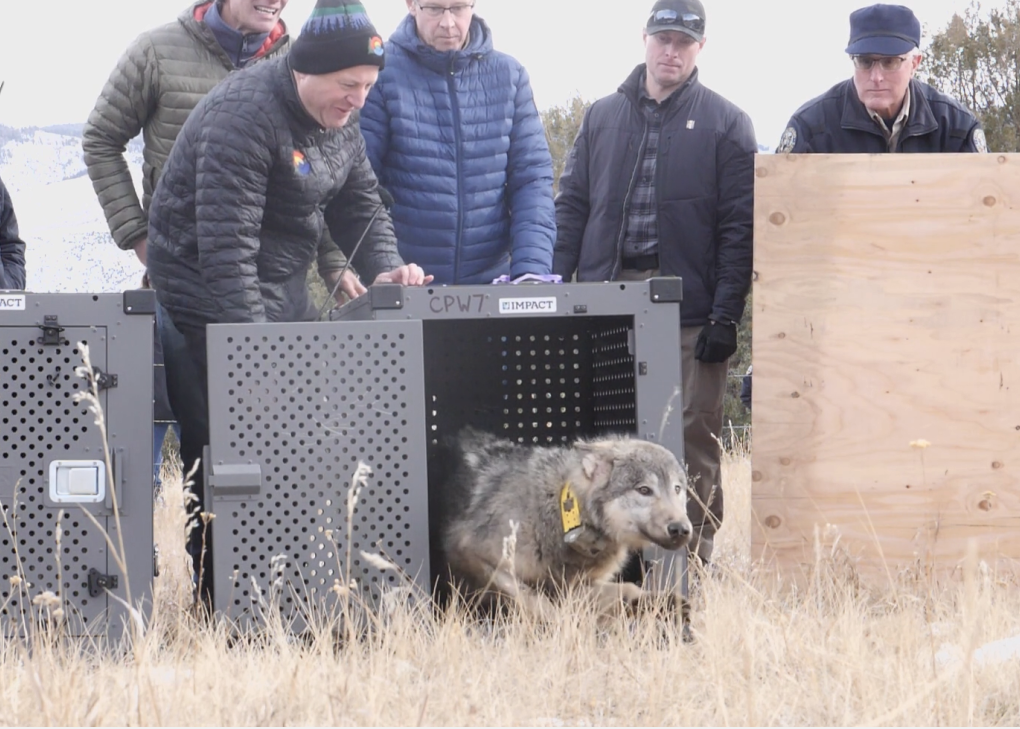
The reintroduction of gray wolves to Colorado marks one of the most significant wildlife restoration efforts in the state’s modern history. After being eradicated from Colorado by the 1940s due to hunting, trapping, and predator control programs, wolves are now being returned to their historic range in the Rocky Mountains. The effort, led by Colorado Parks and Wildlife (CPW), officially began in December 2023 when the first wolves were released on Colorado’s Western Slope.
While many conservationists see the program as a victory for ecosystem restoration, ranchers and rural communities have raised serious concerns about livestock losses, safety, and economic impacts. The debate highlights the complex balance between wildlife conservation and human livelihoods.
Why Wolves Were Reintroduced
The reintroduction effort stems from Proposition 114, a ballot initiative narrowly approved by Colorado voters in 2020. The measure required CPW to develop and implement a plan to restore gray wolves west of the Continental Divide.
Wolves are considered a keystone species, meaning they play a critical role in maintaining healthy ecosystems. Their presence helps regulate prey populations, particularly elk and deer, which can become overpopulated without natural predators.
When wolves control elk numbers and behavior, it can benefit plant life and river systems. Elk tend to avoid overgrazing certain areas when predators are present, allowing vegetation to recover. This can improve habitat for birds, beavers, and other wildlife.
Supporters argue that restoring wolves helps return balance to ecosystems that evolved with predators for thousands of years.
Pros: Ecological and Environmental Benefits
One of the biggest advantages of wolf reintroduction is improved ecosystem health. Wolves naturally manage prey populations, which can prevent overgrazing and promote biodiversity.
In areas like Yellowstone National Park, wolf reintroduction in the 1990s led to measurable environmental improvements. Vegetation rebounded in certain areas, and species like beavers and songbirds benefited from healthier habitats.
Wolves also tend to target weak, sick, or injured animals. This can improve the overall health of prey populations by removing animals more likely to spread disease.
Another benefit is increased biodiversity. Predators create what scientists call a “trophic cascade,” where changes at the top of the food chain affect the entire ecosystem below.
Some supporters also point to tourism. Wolves attract wildlife watchers, photographers, and outdoor enthusiasts, which can bring economic benefits to local communities.
Cons: Livestock Losses and Ranching Impacts
The biggest concern among ranchers is livestock predation. Wolves occasionally prey on cattle, sheep, and other domestic animals, which can result in financial losses for ranchers.
Even when compensation programs are available, ranchers say the losses go beyond the animal itself. Stress caused by wolf presence can affect livestock weight gain, reproduction, and overall herd health.
Many ranchers worry about long-term economic impacts, especially for smaller operations that operate on thin margins.
Colorado has established compensation programs to reimburse ranchers for confirmed wolf-related livestock losses. However, some producers argue that payments do not fully account for indirect losses and added management costs.
Cons: Human Conflict and Rural Opposition
Beyond livestock losses, some rural residents are concerned about safety and the broader impact on their way of life.
While wolf attacks on humans are extremely rare, the presence of large predators near rural communities can create fear and tension.
Some critics also argue that the decision to reintroduce wolves was driven largely by urban voters, while rural communities—who are more directly affected—had less influence.
This has created political and cultural divisions between urban and rural areas of the state.
Challenges of Managing the Wolf Population
Reintroducing wolves isn’t as simple as releasing animals into the wild. Wildlife officials must carefully monitor wolf populations, track movements, and respond to conflicts.
Colorado Parks and Wildlife has fitted many wolves with GPS collars to monitor their location and behavior. This allows wildlife managers to respond quickly if wolves begin targeting livestock.
The long-term goal is to establish a self-sustaining wolf population while minimizing conflicts with humans.
Wildlife officials must balance conservation goals with practical management to ensure the program succeeds.
A Long-Term Experiment With High Stakes
Colorado’s wolf reintroduction represents both an ecological restoration effort and a social experiment. Supporters see it as correcting a historic wrong and restoring a missing piece of the ecosystem. Opponents worry about economic harm and unintended consequences.
The full impact of wolf reintroduction will take years—possibly decades—to fully understand. Success will depend on careful management, cooperation between wildlife officials and ranchers, and the ability to adapt as challenges emerge.
What’s clear is that wolves are once again part of Colorado’s landscape, and their return is reshaping both the environment and the conversation about wildlife conservation in the American West.