

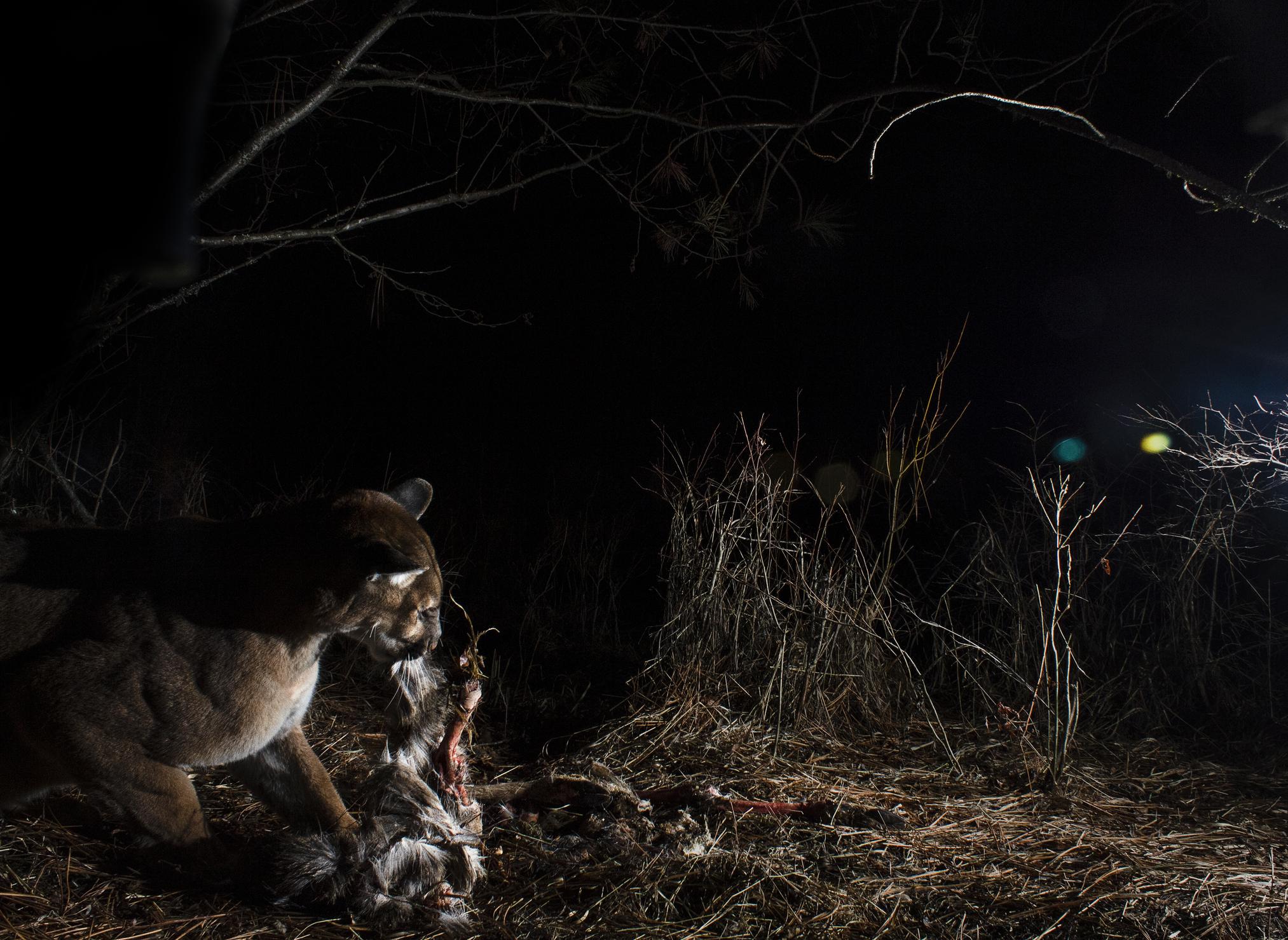
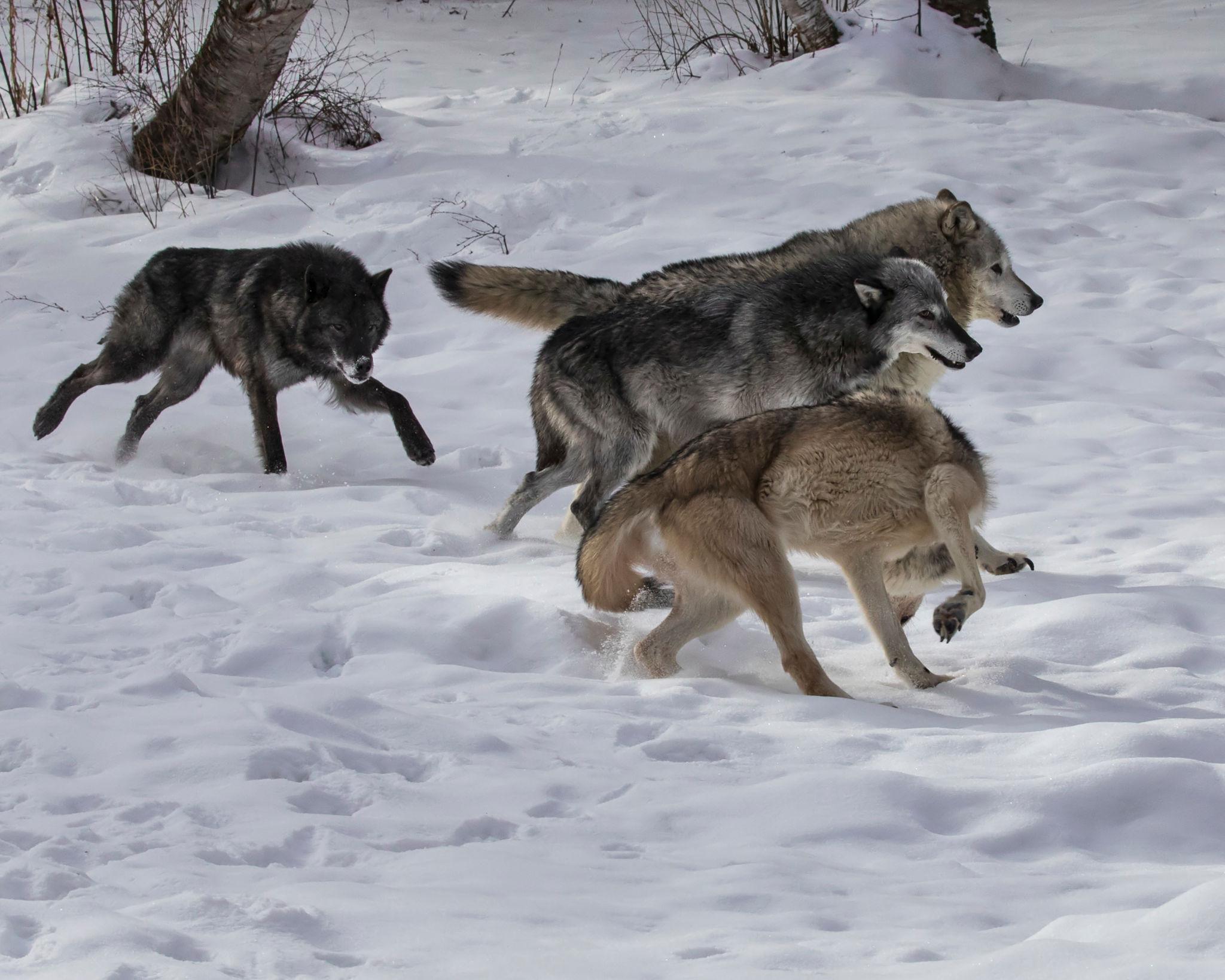
 Mountain lion attacks in wolf country are not a myth, and predator competition is not a theory. Wildlife biologists have long documented that wolves regularly steal cougar kills. When two apex predators share the same landscape and compete for the same prey base, conflict is inevitable—not just between predators, but sometimes with people as well.
Research published by the U.S. Geological Survey (USGS) and multiple state wildlife agencies confirms that gray wolves frequently displace mountain lions from carcasses. Studies conducted in the Northern Rockies show wolves will take over cougar kills when they encounter them, forcing the lion to abandon its meal (U.S. Geological Survey). This behavior—called kleptoparasitism—is well documented in predator ecology.
For a mountain lion, losing a kill is not a minor inconvenience. A cougar may spend days stalking and ambushing a deer or elk. That kill represents a major energy investment. If wolves push the lion off its food, the lion must either go hungry or hunt again sooner than planned.
According to research cited by the Montana Fish, Wildlife & Parks, mountain lions in wolf-occupied territories often shift their behavior, change hunting patterns, and sometimes increase kill rates in response to wolf presence (Montana Fish, Wildlife & Parks). There are documented cases of cougars making multiple kills within short timeframes—more than immediate consumption would require—because carcasses are frequently lost to wolves or scavengers.
This increased kill frequency doesn’t necessarily mean cougars are “wasting” prey. It often reflects disrupted feeding patterns caused by competition.
Stress, Displacement, and Risk-Taking
When apex predators are pressured off traditional hunting grounds, they may move into marginal habitat. Wildlife biologists with the Colorado Parks and Wildlife have noted that mountain lions adjust territory and travel patterns when faced with increased predator competition (Colorado Parks and Wildlife).
Displacement matters. A stressed cougar operating outside its ideal habitat may take greater risks. That can include hunting closer to developed areas, targeting different prey, or shifting to nighttime movement near communities.
Predator competition doesn’t automatically cause attacks on humans—but it does alter predator behavior.
Florida vs. Wolf States
Consider Florida. The state is home to the endangered Florida panther, a subspecies of mountain lion, but there are no established wolf populations in the state. According to the Florida Fish and Wildlife Conservation Commission (FWC), there have been no documented fatal Florida panther attacks on humans in modern history (Florida Fish and Wildlife Conservation Commission).
Meanwhile, states managing both wolves and mountain lions—such as California, Idaho, Montana, and now Colorado—continue to log periodic mountain lion incidents.
The California Department of Fish and Wildlife (CDFW) tracks confirmed mountain lion incidents and has documented attacks over the years while also overseeing a wolf population that has expanded across Northern California (California Department of Fish and Wildlife).
Correlation does not automatically mean causation, but predator-dense landscapes are inherently more complex ecosystems.
Wolves Reintroduced Into Lion Habitat
In December 2023, Colorado released gray wolves into Western Slope habitat already occupied by mountain lions. According to Colorado Parks and Wildlife, the goal of reintroduction is to restore ecological balance (Colorado Parks and Wildlife).
Less than a year after wolves were released into established lion territory, Colorado saw a confirmed mountain lion attack following a relatively quiet stretch of incidents. Wildlife agencies have not formally linked wolf reintroduction to the attack, but predator overlap inevitably increases competition pressure.
When wolves enter lion habitat, prey animals like deer and elk face two apex predators instead of one. That pressure can alter prey movement patterns and force both predators to adjust.
The Role of Predator Management
Predator management is not about eradication. It’s about maintaining sustainable populations while reducing conflict.
The U.S. Fish and Wildlife Service has long stated that active wildlife management—including regulated hunting, population monitoring, and conflict response—is critical for maintaining balance in multi-predator ecosystems (U.S. Fish and Wildlife Service).
Wolves require management. Mountain lions require management. Refusing to manage either species while their territories overlap can intensify competition and increase unpredictable behavior.
When predators compete harder for the same food, energy budgets tighten. Displacement increases. Risk-taking increases.
Ignoring these biological realities doesn’t make them disappear.
A Question Worth Asking
Mountain lion attacks remain rare overall, but they are real. Wolf-cougar competition is real. Documented kill theft is real.
When two apex predators are forced into the same landscape without adaptive management strategies, what happens next?
Wildlife biology tells us competition intensifies. Prey pressure increases. Predator behavior changes.
The debate over predator management is often emotional. But the underlying science is not controversial: apex predators compete, and competition reshapes ecosystems.
The real question isn’t whether wolves steal cougar kills. That’s documented.
The real question is whether we’re willing to manage what happens afterward.
Sources: U.S. Geological Survey; Montana Fish, Wildlife & Parks; Colorado Parks and Wildlife; Florida Fish and Wildlife Conservation Commission; California Department of Fish and Wildlife; U.S. Fish and Wildlife Service.