

 A newly released independent study is challenging the long-running “Rainey Street Ripper” theory that has circulated online in recent years, concluding there is no evidence of a serial killer operating in downtown Austin.
The research, released Tuesday, examined 189 drowning cases in Austin dating back to 2004. The analysis was led by Dr. Kim Rossmo, Professor at the School of Criminal Justice at Texas State University and Director of the Center for Geospatial Intelligence and Investigation. According to the study’s authors, the goal was to evaluate whether patterns in the drownings supported claims of a serial offender targeting victims near the Rainey Street District.
Dr. Rossmo said the speculation surrounding a so-called “Rainey Street Ripper” was largely fueled by social and mainstream media coverage.
“Let’s not spend money and time chasing phantom serial killers because social media is propagating something that’s sensational to get a few more clicks,” Rossmo said.
Data Does Not Support Serial Killer Theory
The study reviewed drowning incidents in and around Lady Bird Lake, including cases near the popular Rainey Street entertainment district. According to findings cited in coverage by FOX 7 Austin, eight victims since 2004 were recovered from areas between Congress Avenue and Interstate 35 around Rainey Street.
However, the majority of bodies were found in other parts of the lake, particularly near Auditorium Shores and Barton Creek, according to the study.
“We found that there were no indications of a serial killer,” Rossmo said. “We found the number of drownings is consistent with the historical frequencies of drownings in Austin, but also comparable to Texas generally.”
The research also noted that men are statistically more likely to drown than women, based on state records. Rossmo said that demographic reality helps explain why most of the victims recovered from Lady Bird Lake have been male, countering online claims that the gender pattern signals a targeted killer.
Causes of Death: Mostly Accidental
In the past three years, authorities have reported at least 38 bodies found in or around Lady Bird Lake, according to data obtained by FOX 7 Austin. The station’s June reporting found that most deaths were attributed to accidental drownings, followed by suicides, drug overdoses, and natural causes.
Only one case among the recent incidents has been ruled a homicide. Approximately half a dozen cases remain undetermined.
The study itself cited FOX 7 Austin’s reporting as one of its references, incorporating publicly available data into its broader historical analysis.
Rossmo also pointed to environmental hazards along the lake as a contributing factor.
“It is, from my understanding, very dangerous because these underwater shelves are, I think, something you’ve reported on,” Rossmo said, referencing prior media coverage of drop-offs and submerged features along the lake’s edge.
Increased Activity Downtown
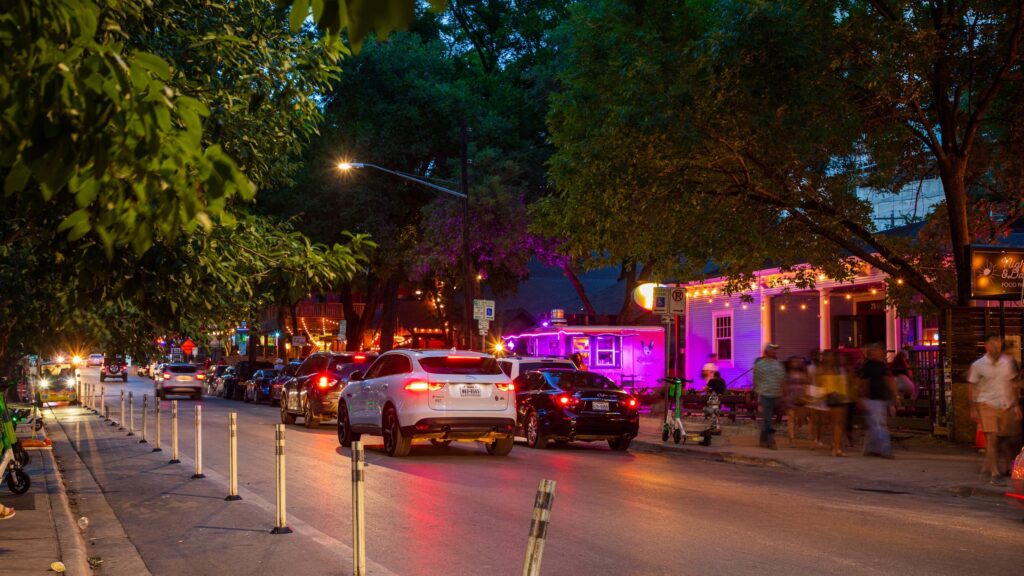
The study also considered the dramatic growth of Austin’s downtown nightlife scene, particularly in the Rainey Street District. Rossmo noted that since the COVID-19 pandemic, the area has experienced a sharp increase in foot traffic and bar activity.
“We have to recognize that downtown Austin, particularly Rainey Street, has seen a dramatic increase — especially since the pandemic — in the number of people going there,” Rossmo said.
Higher foot traffic combined with alcohol consumption near a body of water increases the statistical likelihood of accidental drownings, researchers noted.
Rossmo said he began the analysis in May, and it took him and the other authors the entire summer to complete the study.
Austin Police Stand by Investigations
The Austin Police Department (APD) has consistently maintained that there is no evidence linking the deaths to a serial offender. APD assisted with the academic study and reiterated its position following the report’s release.
“Austin Police detectives conducted thorough investigations into each case and found no indication of foul play. While social media speculation has suggested otherwise, the independent academic study supports the findings of APD investigations and confirms that Austin is not facing a serial killer,” APD said in a statement.
Chief Lisa Davis echoed that sentiment, stating, “Austin Police detectives are committed to fully investigating every case to ensure community safety and provide answers to families. We appreciate the expertise Texas State University brought to this project, and their findings reinforce our own investigative work.”
Social Media vs. Statistical Reality
The “Rainey Street Ripper” theory gained traction on platforms like TikTok and Reddit, where users compiled maps and timelines suggesting a pattern. However, the study’s authors argue that clustering in a popular nightlife district near water is not unexpected when analyzed against broader drowning statistics.
The report concludes that while each death is tragic and deserves thorough investigation, the data does not indicate coordinated or serial criminal activity.
For now, researchers and law enforcement are urging the public to rely on evidence rather than online speculation — and to exercise caution around Lady Bird Lake, particularly at night.
Sources: Texas State University study led by Dr. Kim Rossmo; FOX 7 Austin reporting and data analysis; Austin Police Department official statements.