
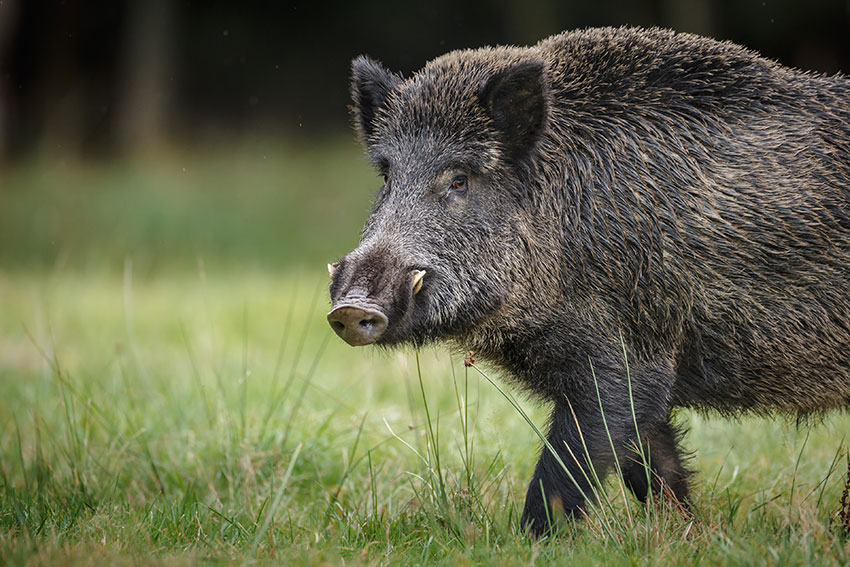
A massive feral hog taken in Texas is turning heads among hunters and wildlife officials, highlighting the growing impact of wild pig populations across the state. The enormous boar, harvested during a recent hunt, quickly drew attention online and among local hunting communities for its unusual size and thick shoulders.
Feral hogs are common across Texas, but animals reaching extreme sizes still surprise even experienced hunters. Wildlife experts say the increasing number of large hogs is tied to a booming population that has spread across nearly every county in the state.
According to the Texas Parks and Wildlife Department, feral hogs are now one of the most destructive invasive species in Texas, with millions roaming the countryside and causing widespread agricultural damage each year.
A Giant Hog in the Field
Photos circulating among hunters show the massive boar stretched across the ground with thick shoulders, long tusks, and a body size far larger than the average wild pig.
While most feral hogs harvested by hunters weigh between 100 and 200 pounds, some boars can grow far larger under the right conditions.
Wildlife officials say mature males can exceed 300 pounds, especially in areas where food sources are abundant and hunting pressure is limited.
According to Texas Parks and Wildlife Department data, feral hogs thrive in a variety of habitats including farmland, river bottoms, brush country, and wooded areas.
Texas Ground Zero for Feral Hogs
Texas has the largest feral hog population in the United States.
The U.S. Department of Agriculture estimates that more than 2.5 million feral hogs live in Texas alone, representing nearly half of the nation’s entire wild pig population.
The animals reproduce quickly, with sows capable of producing multiple litters per year.
According to the USDA, a single sounder of hogs can rapidly expand, making population control extremely difficult.
Economic Damage in the Billions
Feral hogs cause widespread damage to crops, pastureland, and natural ecosystems.
The USDA reports that wild pigs cause more than $2.5 billion in damage across the United States each year, much of it in Texas where agriculture plays a major role in the economy.
The animals tear up fields while rooting for food, damage fences and water systems, and compete with native wildlife for resources.
Texas Parks and Wildlife Department officials say hogs also threaten sensitive habitats and can spread diseases to livestock.
Hunting as a Management Tool
Because of the scale of the problem, Texas has some of the most liberal hunting regulations for feral hogs in the country.
According to the Texas Parks and Wildlife Department, feral hogs can be hunted year-round on private land with landowner permission.
Many ranchers encourage hunters to harvest hogs to reduce population pressure.
Wildlife experts say hunting alone cannot eliminate feral hog populations, but it remains one of the most effective tools available to slow their growth.
Why Some Hogs Grow So Large
Large boars like the one recently harvested often grow old by avoiding heavy hunting pressure and finding reliable food sources.
Agricultural areas, grain fields, and river systems provide ideal habitat for hogs to thrive.
Male hogs also develop thick shoulder shields as they age, which can make them appear even larger and tougher than younger animals.
Wildlife officials note that these massive boars often become solitary and more elusive over time.
A Growing Challenge for Texas
The sight of an enormous hog may excite hunters, but wildlife managers say it also highlights the scale of the feral hog problem.
With millions of animals roaming across Texas landscapes, controlling their numbers remains a constant challenge.
As populations continue to expand, encounters with massive hogs like this one may become more common.
For hunters, the opportunity to harvest a giant boar remains a rare and memorable experience.
For landowners and wildlife officials, it’s another reminder that the feral hog problem in Texas is far from solved.
It is so true, at our deer lease the number of hogs is unbelievable, one reason is that we feed corn for the deep and the hogs find it and continue to return and consume the corn. There is no end to it. You can shoot them every day and they continue to return.