
The Night Crocodiles Became the Deadliest Enemy: The Ramree Island Horror of World War II
A Battlefield Unlike Any Other
World War II is filled with brutal combat stories, but few are as bizarre—or as terrifying—as what happened on Ramree Island in 1945. During a fierce Allied offensive in Burma, hundreds of Japanese soldiers fled into a mangrove swamp in an attempt to escape advancing British forces. What they encountered instead was one of the largest populations of saltwater crocodiles anywhere in the world.
By the time the night was over, the swamp had become a nightmare landscape of mud, darkness, and predators lurking just beneath the water’s surface. The story that emerged from Ramree Island would later be described as possibly the deadliest crocodile attack in recorded history.
Even decades later, the incident stands as one of the strangest intersections of war and the natural world ever documented.
The Strategic Battle for Ramree Island
In early 1945, Allied forces were steadily pushing Japanese troops out of Burma, now known as Myanmar. Ramree Island, located off the country’s western coast, became a key objective in that campaign. The island offered valuable ground for building airfields that could support Allied operations across the region.
According to British military records, troops from the British 26th Indian Division launched an assault on the island in January 1945. The fighting was intense and dragged on for weeks as Japanese defenders attempted to hold their ground.
Eventually, the Japanese forces were pushed into a shrinking defensive pocket. Rather than surrender, roughly 1,000 soldiers attempted to escape into the island’s massive mangrove swamp—a labyrinth of muddy channels, tangled roots, and tidal waterways.
What they likely did not realize was that the swamp was prime territory for one of the world’s most dangerous predators.
A Swamp Built for Predators
Mangrove swamps are some of the harshest environments on Earth. Thick tree roots rise above the waterline, the ground often turns into knee-deep mud, and tidal water constantly floods and drains the terrain. Moving through such a landscape is exhausting and disorienting, especially for soldiers already weakened by combat.
But Ramree’s swamp held a far greater danger than difficult terrain.
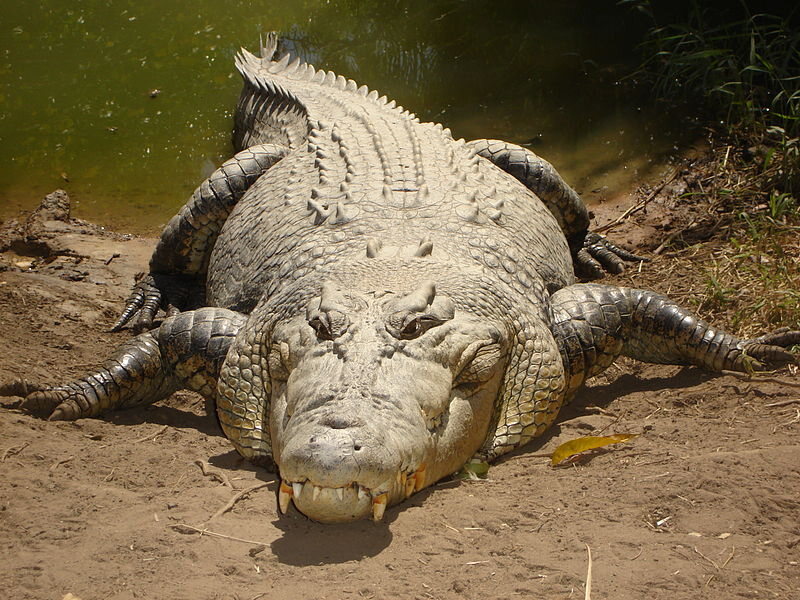
The area was known to support large populations of saltwater crocodiles—the largest reptiles alive today. Adult males can exceed 20 feet in length and weigh more than a ton. These animals are apex predators, capable of explosive ambush attacks and crushing bite forces strong enough to shatter bone.
British naturalist Bruce Wright later described the mangrove swamps of Ramree Island as an ideal crocodile habitat. The warm tidal waters, narrow creeks, and abundant wildlife made it a perfect hunting ground for the massive reptiles.
When hundreds of Japanese soldiers entered the swamp, they unknowingly stepped directly into the crocodiles’ domain.
The Night the Swamp Turned Deadly
British forces quickly surrounded the mangrove swamp, cutting off escape routes. According to wartime accounts, Japanese soldiers inside the swamp were offered the opportunity to surrender, but most refused.
As night fell, the situation inside the swamp began to deteriorate rapidly.
Witnesses stationed nearby reported hearing gunfire and shouting echoing across the water. Soldiers trapped in the mangroves were firing into the darkness, possibly at unseen crocodiles or in panic as conditions worsened.
Bruce Stanley Wright, who was present during the battle, later described the sounds that carried out of the swamp that night. He wrote that the darkness was punctuated by screams, splashing water, and frantic gunshots.
Throughout the night, chaos continued inside the swamp. Soldiers attempting to move through the muddy waterways encountered crocodiles hunting under the cover of darkness. The predators, which are especially active at night, likely took advantage of the sudden influx of humans wading through their territory.
By dawn, the swamp had gone eerily silent.
How Many Soldiers Were Lost?
The exact number of casualties from the Ramree Island incident remains uncertain. British military reports estimated that roughly 1,000 Japanese soldiers fled into the mangrove swamp during the battle.
Only about 20 survivors were reportedly captured when they emerged days later.
Historians believe many of the soldiers died from a combination of factors including crocodile attacks, dehydration, starvation, disease, and gunfire from Allied forces surrounding the swamp.
Because of the dramatic nature of the event, the story eventually made its way into the Guinness Book of World Records, which listed Ramree Island as the site of the deadliest crocodile attack in history.
However, modern historians caution that the exact number of crocodile-related deaths is impossible to confirm. Wartime reports were often incomplete, and few direct witnesses were present inside the swamp.
Still, few experts doubt that the environment itself became deadly for the soldiers trapped there.
When War Collided with Nature
The Ramree Island incident highlights how brutal both war and nature can be. Mangrove ecosystems are already dangerous environments filled with mud, insects, tidal waters, and predators.
For soldiers exhausted from combat, navigating such terrain would have been incredibly difficult. Visibility would have been almost nonexistent at night, and the thick mud would have slowed movement to a crawl.
Meanwhile, saltwater crocodiles—stealthy predators perfectly adapted to murky water—were hunting in the same channels the soldiers were trying to cross.
It was a catastrophic combination of human conflict and natural danger.
A Story That Still Echoes Through History
More than 80 years later, the events on Ramree Island remain one of the most chilling stories of World War II. While debates continue about the exact number of deaths, the incident serves as a powerful reminder of how unpredictable warfare can become.
The mangrove swamps of Ramree Island still exist today, and saltwater crocodiles continue to inhabit the same tidal waterways where the events of 1945 unfolded.
For historians and wildlife experts alike, the story stands as a grim example of what can happen when humans enter one of nature’s most dangerous environments.
On that night in 1945, the battlefield wasn’t just controlled by armies—it was ruled by the predators waiting silently beneath the water.