
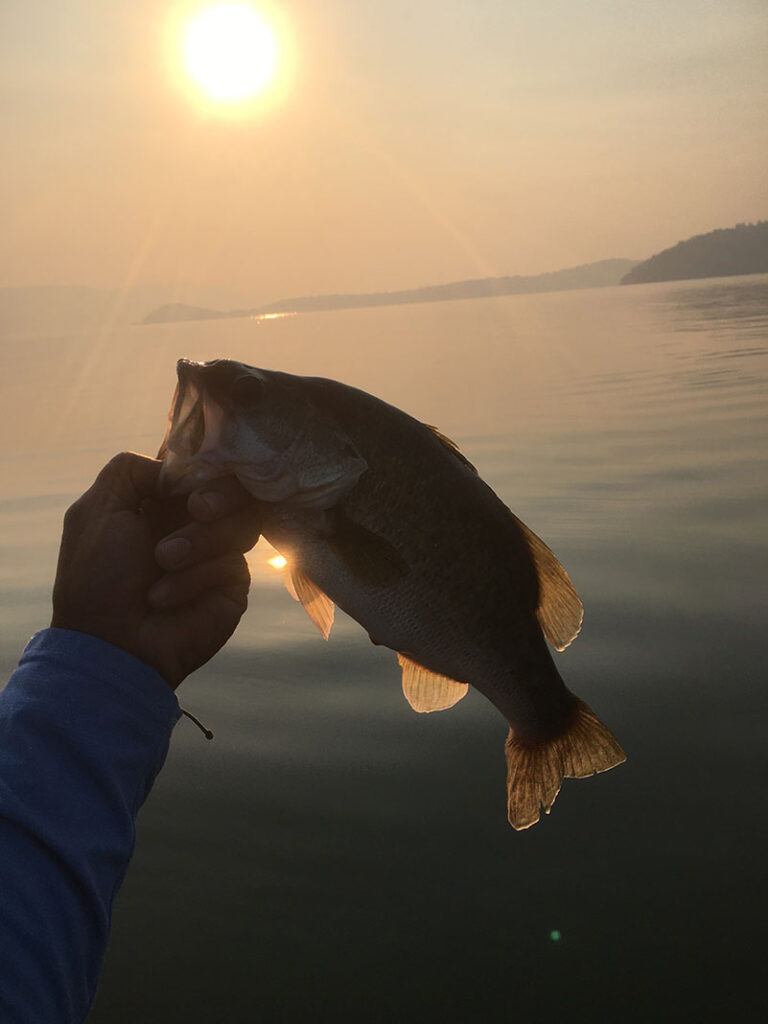
The Best Time of Day to Catch Bass

Timing Matters in Bass Fishing
Bass can be caught throughout the day, but certain periods consistently produce better results.
Understanding when bass are most active can dramatically increase success on the water.
According to fisheries observations from the Texas Parks and Wildlife Department, bass feeding activity often peaks during low-light periods when the fish feel more comfortable leaving cover to hunt prey.
These windows typically occur during early morning and late evening.
Early Morning Feeding Activity
Sunrise is widely considered one of the best times to catch bass.
During early morning hours, cooler temperatures and reduced sunlight allow bass to move into shallow water where they hunt baitfish and insects.
According to seasonal fishing patterns reported by the Florida Fish and Wildlife Conservation Commission, bass often patrol shorelines, grass beds, and shallow flats during the first hours after sunrise.
Topwater lures can be especially effective during this period.
Evening Can Be Just as Productive
As the sun begins to set, bass activity often increases again.
Cooling water temperatures and fading light conditions encourage bass to resume feeding before nightfall.
According to angling reports published by Bassmaster Magazine, many trophy bass are caught during the final hour of daylight when fish move into shallower water.
This period is often referred to by anglers as the “evening bite.”
Midday Fishing Strategies
While bass can be harder to catch during bright midday conditions, they are still present.
During the middle of the day, bass typically move deeper or hide in heavy cover such as docks, vegetation, or submerged timber.
Fishing slower presentations such as jigs or soft plastics near structure can still produce bites even during the hottest hours.
Understanding Bass Behavior
Bass activity is influenced by several factors including water temperature, weather patterns, and seasonal movements.
According to the U.S. Fish and Wildlife Service, predator fish often adjust feeding behavior based on environmental conditions.
Anglers who understand these patterns can greatly improve their chances of success.