
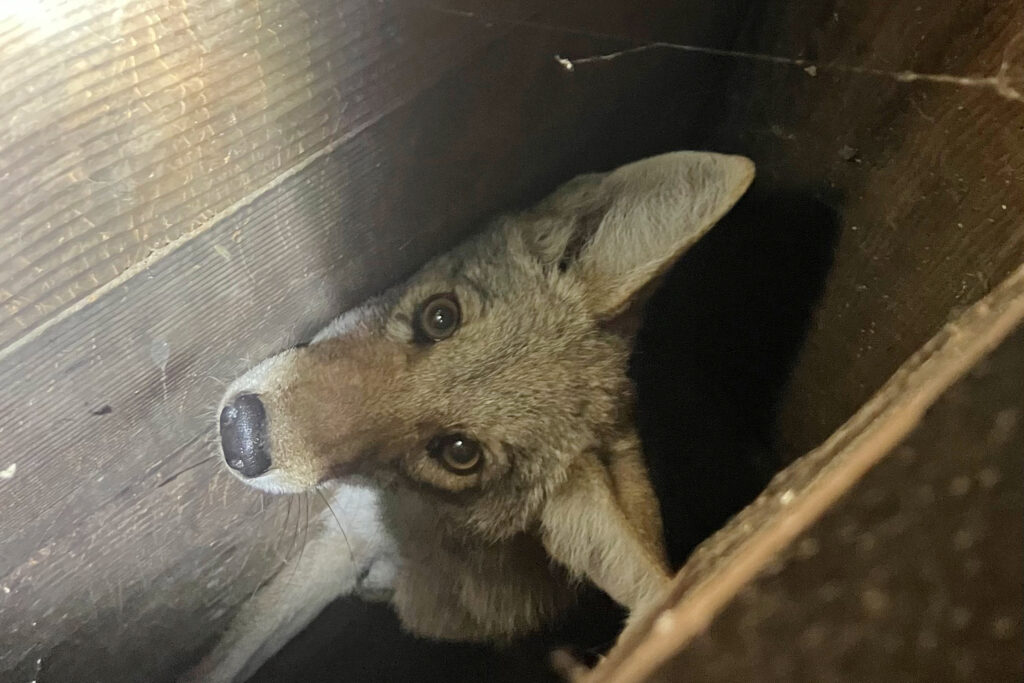
After Hearing Noises for Several Nights in a Row One Family Found Their Unwanted Guest Making a New Home.
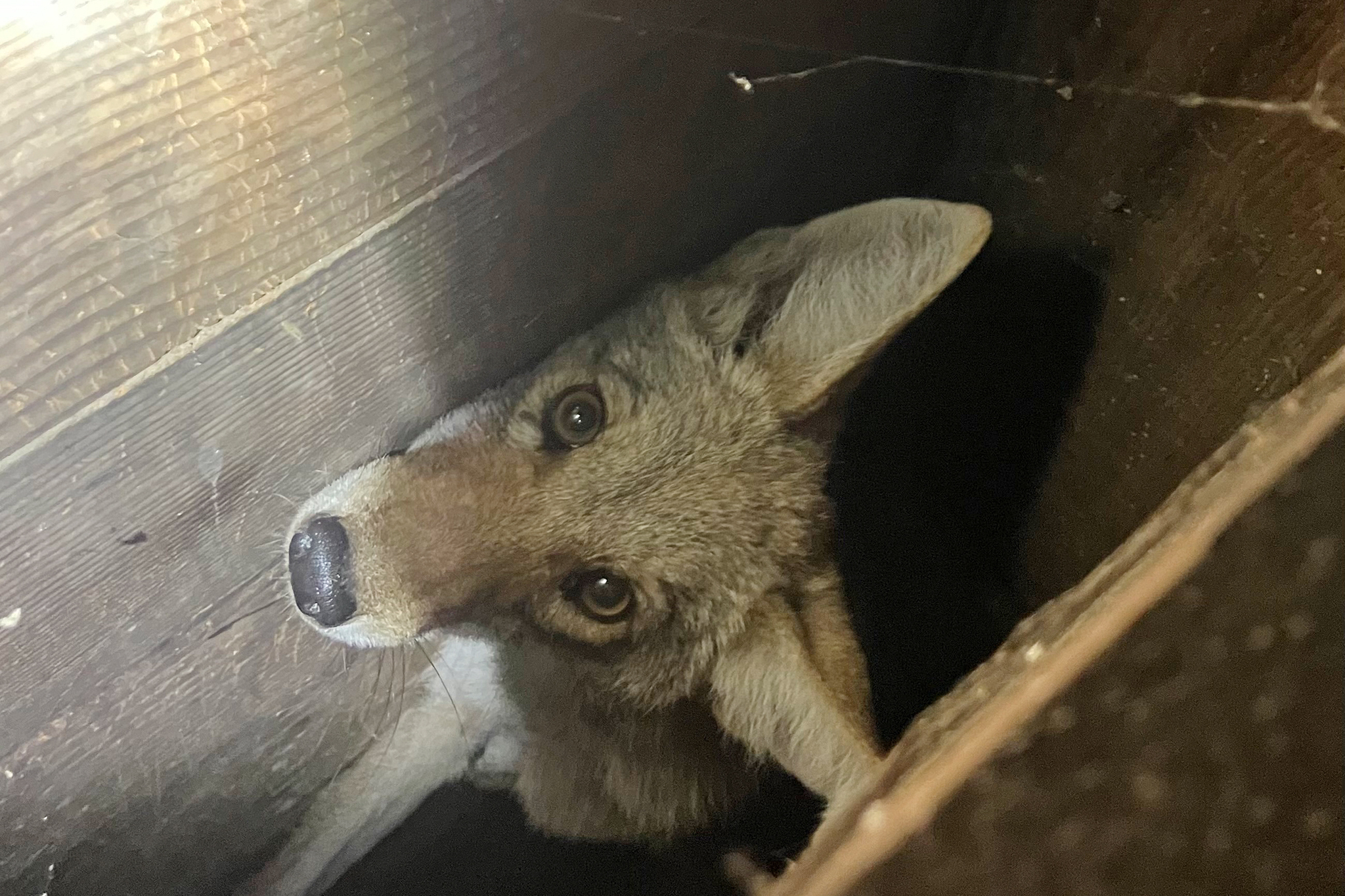
What started as a strange noise beneath a quiet suburban home quickly turned into a tense wildlife encounter when a family discovered a coyote had taken up shelter under their porch. The incident, which unfolded over several days, highlights a growing trend across the United States—predators adapting to suburban environments and living closer to people than ever before.
Strange Noises Lead to a Shocking Discovery
The family first noticed something was off after hearing scratching and movement beneath their porch during the early morning hours. At first, they assumed it was something small—possibly a raccoon or stray cat. But as the noises continued, they decided to investigate.
Peering through the gaps beneath the structure, they were met with an unexpected sight: a full-grown coyote resting in the shaded space under the home.
Wildlife experts say this type of behavior is becoming increasingly common. According to the U.S. Fish and Wildlife Service, coyotes are highly adaptable animals capable of thriving in both rural and urban environments, often seeking shelter in quiet, undisturbed areas such as crawl spaces, decks, and abandoned structures.
Why a Coyote Would Move Under a Home
Coyotes are opportunistic by nature. They look for three things: food, water, and shelter. Suburban neighborhoods often provide all three.
Garbage, pet food, rodents, and even outdoor pet enclosures can attract coyotes into residential areas. Once they arrive, they may take advantage of covered spaces like porches or decks to rest during the day.
According to research from the U.S. Department of Agriculture’s Wildlife Services, coyotes frequently use human structures as temporary dens or resting areas, particularly in areas where natural cover is limited or disturbed.
In this case, the shaded, enclosed space under the porch likely offered a perfect daytime refuge—cool, hidden, and undisturbed.
A Growing Presence in Suburban America
Encounters like this are no longer rare. Coyotes have expanded their range across nearly all of North America, including major cities.
Data from state wildlife agencies and studies cited by the National Park Service show that coyotes are now established in urban areas from Los Angeles to Chicago and New York. Their ability to adapt to human environments has made them one of the most successful predators on the continent.
Unlike larger predators, coyotes can move through neighborhoods undetected, often active during nighttime or early morning hours.
Safety Concerns for Families and Pets
While most coyotes avoid direct contact with humans, their presence near homes can raise legitimate concerns—especially for pets.
According to the Centers for Disease Control and Prevention (CDC), coyotes can pose a risk to small animals such as cats and small dogs, particularly if those animals are left outside unattended.
Wildlife officials stress that coyotes are generally not aggressive toward humans but may become bolder if they become accustomed to food sources in residential areas.
What Wildlife Experts Recommend
After confirming the animal under their porch was a coyote, the family contacted local animal control and wildlife officials. Experts advised against attempting to remove the animal themselves.
The Humane Society of the United States recommends several steps for dealing with coyotes near homes:
-
Remove potential food sources such as unsecured trash or pet food
-
Block access to crawl spaces or areas under structures
-
Use deterrents like noise, lights, or motion-activated devices
-
Supervise pets when outdoors
In many cases, once the area is no longer attractive or accessible, the coyote will move on.
Why These Encounters Are Increasing
As development expands into previously rural or undeveloped land, coyotes are being pushed into closer contact with people. At the same time, suburban environments often unintentionally provide ideal conditions for them to survive.
According to the National Park Service, urban coyotes have learned to navigate neighborhoods efficiently, using greenbelts, drainage systems, and quiet streets as travel corridors.
This combination of habitat loss and adaptability is driving more frequent encounters like the one experienced by this family.
The Bigger Picture
The discovery of a coyote living under a residential porch is a reminder that wildlife is not confined to remote areas. In many parts of the country, it’s already part of everyday life—even if it goes unnoticed.
For homeowners, awareness is key. Understanding how and why animals like coyotes enter neighborhoods can help reduce the chances of conflict.
The Bottom Line
In this case, a family expecting to find a minor nuisance instead discovered a top predator living just feet from their front door. While the situation was ultimately handled safely, it underscores a larger reality—wildlife is adapting, and the line between human spaces and natural habitat is becoming increasingly blurred.
As agencies like the U.S. Fish and Wildlife Service and the National Park Service continue to emphasize, coexistence is possible—but it requires awareness, precaution, and respect for the animals sharing the landscape.