
Why Some States Are Defying Federal Gun Laws

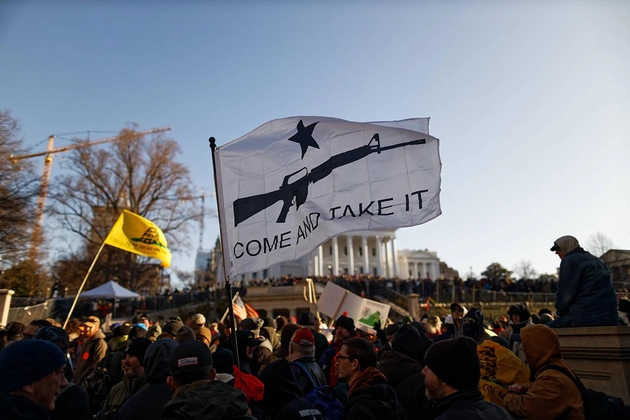
A growing number of states are openly pushing back against federal gun laws, setting up one of the most significant constitutional clashes in modern American politics. From so-called “Second Amendment sanctuary” laws to outright refusals to enforce certain federal regulations, state leaders are increasingly testing the limits of state versus federal authority—and forcing courts to weigh in.
At the center of the debate is a fundamental question: who ultimately has the power to regulate firearms in the United States?
The Rise of “Second Amendment Sanctuary” Laws
Over the past several years, states like Texas, Missouri, and Wyoming have passed laws aimed at limiting the enforcement of federal gun regulations within their borders. These measures are often referred to as “Second Amendment sanctuary laws,” designed to protect residents from what state lawmakers view as federal overreach.
For example, Texas passed legislation prohibiting state and local agencies from enforcing certain federal gun laws that are not mirrored in state law. According to statements from the Texas Legislature, the goal was to reinforce the constitutional right to bear arms while asserting state sovereignty.
Similarly, Missouri’s Second Amendment Preservation Act drew national attention by attempting to penalize local law enforcement agencies that cooperated with federal gun enforcement efforts. According to legal analysis from the U.S. Department of Justice, the law raised serious constitutional concerns.
The Constitutional Argument
Supporters of these laws often rely on the Tenth Amendment, which reserves powers not delegated to the federal government to the states. Their argument is straightforward: while federal law may exist, states are not obligated to enforce it.
This concept, known as “anti-commandeering,” has been upheld in multiple Supreme Court rulings. According to decisions such as Printz v. United States, referenced by the U.S. Supreme Court, the federal government cannot compel state officials to enforce federal regulatory programs.
That legal foundation has become a key pillar for states choosing to step back from federal gun enforcement.
Where the Conflict Begins
While states may decline to enforce federal laws, they cannot nullify them outright. That’s where tensions escalate.
In Missouri’s case, federal courts ultimately struck down key portions of its law. According to rulings cited by the U.S. Department of Justice, the legislation interfered with federal authority and disrupted cooperation between agencies.
Legal experts widely agree that while states can refuse participation, actively obstructing federal enforcement crosses a constitutional line.
A Patchwork of Enforcement
The result is a fragmented system where gun laws—and their enforcement—vary dramatically depending on location.
In some states, local law enforcement works closely with federal agencies like the Bureau of Alcohol, Tobacco, Firearms and Explosives (ATF). In others, cooperation is limited or discouraged by state policy.
According to data and policy tracking from organizations like the Giffords Law Center, this patchwork creates challenges for both enforcement and compliance, particularly when firearms move across state lines.
Political and Cultural Drivers
Beyond legal arguments, the issue is deeply political.
States pushing back against federal gun laws often frame their actions as defending constitutional rights and local control. Leaders in these states argue that federal regulations can be overly broad and fail to reflect the values or needs of their residents.
On the other side, critics argue that weakening cooperation undermines public safety and creates loopholes that can be exploited.
According to reporting and analysis from the Congressional Research Service, the divide reflects broader national disagreements over gun policy, enforcement priorities, and the role of government.
What This Means Going Forward
The tension between state and federal authority isn’t new—but it’s becoming more visible in the gun policy debate.
As more states pass laws limiting cooperation with federal enforcement, legal challenges are likely to continue. Courts will play a central role in defining how far states can go without violating federal authority.
At the same time, federal agencies are adapting, often relying more heavily on their own personnel in states where local cooperation is limited.
The Bottom Line
States defying federal gun laws aren’t necessarily rewriting the rules—but they are reshaping how those rules are applied.
By leveraging constitutional principles like the Tenth Amendment and anti-commandeering, states are carving out space to assert their own policies. But that space has limits, and those limits are still being tested.
In the end, this isn’t just about gun laws.
It’s about power—who holds it, how it’s used, and where the line is drawn between state authority and federal control.