
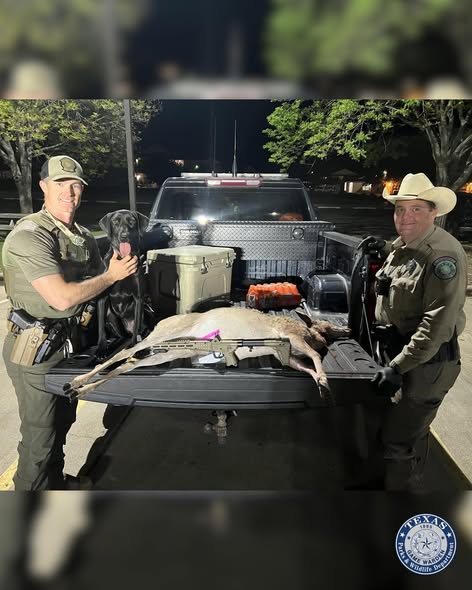
K9 Piper Tracks Down Key Evidence in Texas Poaching Case, Helping Wardens Make Arrest
In Texas, protecting wildlife isn’t just about being in the right place at the right time—it’s about using every tool available. And sometimes, the most valuable tool on the scene isn’t human.
It’s a K9.
Earlier this week in Kerr County, a suspected poaching case turned into a textbook example of how Texas Game Warden K9 teams are changing the way wildlife crimes are investigated—and prosecuted.
A Call From a Landowner
The case began when a landowner contacted a Texas game warden to report suspected illegal hunting activity on their property.
In rural Texas, that’s not something taken lightly.
When wardens arrived, they quickly found evidence that confirmed the suspicion—a deer had been killed on the property. But as is often the case with poaching, the suspect wasn’t on scene, and the trail wasn’t immediately obvious.
That’s where the investigation began.
Following the Evidence

Wardens worked the scene and began piecing together what had happened. Their efforts led to the identification of a suspect, and eventually, the recovery of the deer from the suspect’s garage.
But building a solid case takes more than suspicion and circumstantial evidence.
It takes proof.
And that’s where the K9 team stepped in.
Enter K9 Piper
A Texas Game Warden K9 handler responded to assist, bringing along K9 Piper—a trained detection dog used in wildlife crime investigations.
Piper’s job isn’t just tracking people.
These K9s are trained to locate:
- Shell casings
- Firearms evidence
- Wildlife remains
- Other hard-to-spot clues
At the scene, K9 Piper got to work.
And found exactly what investigators needed.
The Piece That Tied It Together
Piper located a spent shell casing that had been missed during the initial search—something small enough to go unnoticed, but critical to the case.
That casing was later matched to ammunition found in a firearm possessed by the suspect.
That connection matters.
It moves a case from possibility… to evidence.
And in situations like this, that’s often the difference between charges sticking—or falling apart.
Building the Case
With the additional evidence in hand, wardens continued their investigation.
After obtaining a signed affidavit of non-consent from the landowner, authorities moved forward with the arrest.
The suspect now faces multiple charges, including:
- Hunting without landowner consent
- Taking a white-tailed deer during a closed season
- Hunting without a valid license
Each of those violations carries serious consequences in Texas, where wildlife laws are strictly enforced to protect both landowners and natural resources.
Why K9 Teams Matter
Cases like this highlight something many people don’t see:
Wildlife enforcement isn’t just about catching someone in the act.
It’s about building a case that holds up.
According to Texas Parks and Wildlife, K9 teams play a critical role by helping wardens locate evidence that would otherwise be missed—especially in outdoor environments where clues can be scattered, hidden, or easily overlooked.
Whether it’s a single shell casing or a hidden piece of evidence, that extra capability makes a difference.
Protecting More Than Just Wildlife
Poaching isn’t just a wildlife issue.
It impacts:
- Private property rights
- Conservation efforts
- Fair chase hunting traditions
When someone hunts illegally—especially on private land without permission—it undermines all of that.
That’s why cases like this matter.
They send a clear message that illegal activity won’t be ignored—and that wardens have the tools to track it down.
The Bottom Line
What started as a landowner’s suspicion turned into a solid case thanks to investigation, teamwork, and one highly trained K9.
K9 Piper didn’t just find a shell casing.
She helped connect the dots.
And in doing so, helped ensure that a wildlife crime didn’t go unanswered.
Because in Texas, protecting the land, the wildlife, and the people who respect both isn’t optional.
It’s the job.