
Braided vs. Monofilament: When, Where, and How to Use Each Fishing Line

Walk down any tackle aisle and you’ll see it—rows of fishing line in every color, thickness, and material imaginable. And if you’ve spent any time fishing, you’ve probably heard the debate:
Braid or mono?
The truth is, both have their place. The best anglers don’t pick one—they understand when to use each and why. If you match your line to the conditions, you’ll catch more fish. It’s that simple.
What Makes Braided Line Different
Braided Fishing Line
Braided line is made by weaving multiple strands together, creating a line that’s incredibly strong for its diameter.
What that means on the water:
- No stretch → Instant hooksets
- Thin diameter → Longer casts
- High strength → Great for heavy cover
Braid is all about sensitivity and power. You feel everything—from subtle bites to bottom structure—and when you set the hook, there’s no delay.
When to Use Braid
Braid shines in situations where strength and control matter most:
- Heavy cover (grass, brush, timber)
- Frog fishing on topwater
- Flipping and pitching
- Fishing thick vegetation
If you need to pull a fish out of cover, braid gives you the advantage.
Where Braid Struggles
It’s not perfect.
Braid is:
- Highly visible in clear water
- More prone to slipping on certain knots
- Less forgiving due to zero stretch
That lack of stretch can actually cost you fish if you’re not careful—especially with treble hooks.
What Makes Monofilament Different
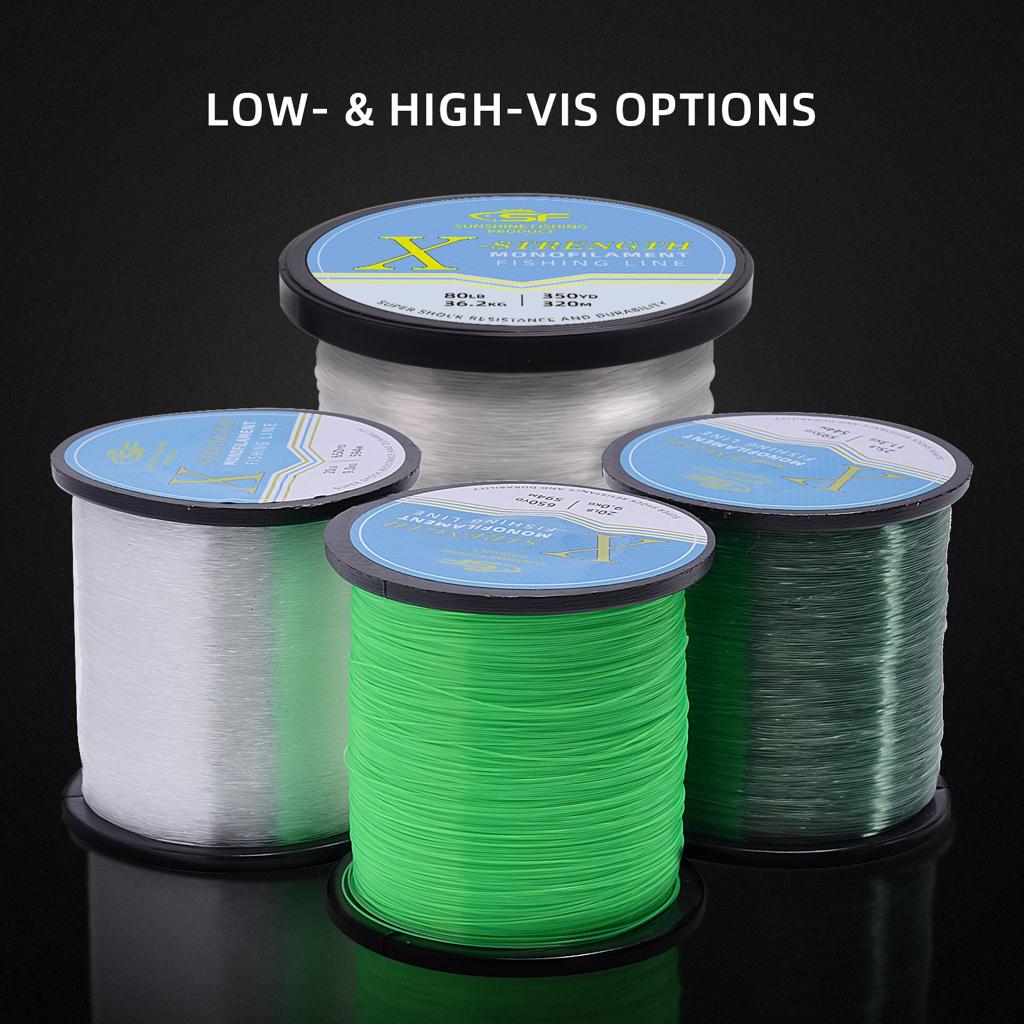
Monofilament Fishing Line
Monofilament (mono) is the classic fishing line most anglers started with.
It’s a single strand of nylon, and it behaves very differently from braid.
Key characteristics:
- Stretch → Absorbs shock
- Floating properties → Great for topwater
- Lower visibility → Better in clear water
Mono is more forgiving, which makes it ideal for certain techniques and for anglers who don’t want to lose fish due to aggressive hooksets.
When to Use Mono
Mono is a great choice for:
- Topwater baits (poppers, walking baits)
- Crankbaits and treble hook lures
- Clear water conditions
- Beginner setups
That stretch actually helps keep fish pinned, especially when they surge or jump.
Where Mono Falls Short
Compared to braid, mono:
- Has less strength for its diameter
- Breaks down over time (UV exposure)
- Doesn’t cut through vegetation well
It’s not built for heavy cover or brute-force situations.
The Best of Both Worlds: Braid + Leader
One of the most popular setups today is combining both.
Using braid as your main line with a mono (or fluorocarbon) leader gives you:
- Strength and sensitivity from braid
- Stealth and stretch from the leader
This setup works especially well in:
- Clear water with structure
- Finesse fishing
- Situations where visibility matters
It’s a balance—and for many anglers, it’s the go-to.
Line Color: It Matters More Than You Think
Fishing line color isn’t just about looks—it can affect both you and the fish.
High-Visibility Braid (Green, Yellow, Orange)
Best for:
- Watching line movement
- Detecting subtle bites
- Fishing around cover
These colors help you see what’s happening—but they’re also more visible to fish.
That’s why many anglers pair bright braid with a clear leader.
Low-Visibility Lines (Clear, Blue, Moss Green)
Best for:
- Clear water
- Pressured fish
- Finesse presentations
These colors blend into the environment, making them harder for fish to detect.
When Color Really Matters
If you’re fishing:
- Dirty water → Color matters less
- Clear water → Go more natural
- Heavy cover → Visibility to you matters more than stealth
Matching Line to Technique
Here’s a simple way to think about it:
- Power fishing in cover? → Braid
- Reaction baits with treble hooks? → Mono
- Clear water finesse? → Braid + leader or straight mono
Don’t overcomplicate it.
Match the line to what you’re doing.
The Biggest Mistake Anglers Make
Trying to use one line for everything.
No single line does it all.
If you’re serious about fishing, you’ll eventually run:
- Braid on one setup
- Mono (or another option) on another
Because different situations demand different tools.
The Bottom Line
Braid and mono aren’t competing—they’re complementary.
Each has strengths. Each has weaknesses.
The anglers who consistently catch fish are the ones who understand when to use each one—and don’t hesitate to switch when conditions change.
Because in fishing, small adjustments make a big difference.
And your line is one of the most important choices you make.