
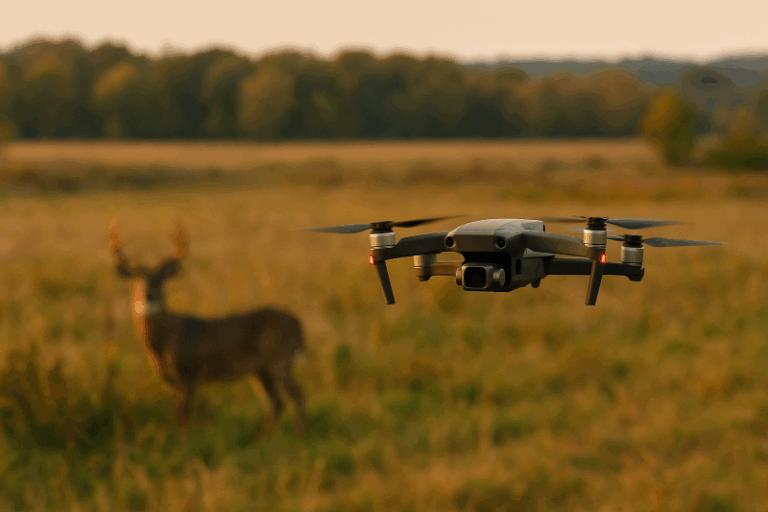
Hunter Caught Using Drones to Track Trophy Animals
A hunting violation involving the use of drones to locate and track trophy animals is drawing attention across the outdoor community—and reigniting debate over technology, ethics, and fair chase.
Wildlife officials say the case highlights a growing issue as advanced technology becomes more accessible to hunters.
The Incident
According to reports from state wildlife authorities, a hunter was cited after being caught using a drone to locate big game animals prior to attempting a hunt.
Officials say the individual used the drone to scout areas, identify the location of animals, and gain an advantage before heading into the field.
That’s where the problem begins.
Why Drone Use Is Illegal in Hunting
In many states, using drones to assist in hunting is prohibited.
According to the Texas Parks and Wildlife Department, drones cannot be used to locate, track, or monitor wildlife for the purpose of hunting. Similar restrictions exist across much of the country.
The reasoning is straightforward:
- It removes the challenge of locating animals
- It creates an unfair advantage
- It undermines ethical hunting practices
The Principle of Fair Chase
At the center of the issue is the concept of fair chase.
Fair chase means hunting animals in a way that does not give the hunter an improper or overwhelming advantage.
According to the Boone and Crockett Club, fair chase is a cornerstone of ethical hunting, ensuring that animals have a reasonable chance to evade the hunter.
Using drones to locate animals from the air directly conflicts with that principle.
Technology vs. Ethics
Modern hunting already includes a range of tools:
- Trail cameras
- GPS mapping
- Rangefinders
But drones take things further.
They allow hunters to:
- Cover large areas quickly
- Spot animals from above
- Track movement in real time
For many in the hunting community, that crosses a line.
According to discussions supported by the U.S. Fish and Wildlife Service, wildlife regulations often evolve to address new technologies that could disrupt sustainable and ethical hunting practices.
Enforcement Is Increasing
As drone use becomes more common, wildlife agencies are increasing enforcement efforts.
Game wardens are now actively watching for:
- Drone activity in hunting areas
- Suspicious scouting patterns
- Reports from other hunters
Violations can result in:
- Fines
- Loss of hunting privileges
- Confiscation of equipment
Reaction From the Hunting Community
The case has sparked strong reactions.
Many hunters support strict enforcement, arguing that using drones removes the skill and effort that define hunting.
Others acknowledge the appeal of new technology but agree it shouldn’t be used in ways that give an unfair advantage.
There is broad agreement on one point:
Hunting should still require hunting.
The Bigger Issue
This isn’t just about one incident.
It reflects a larger question about where to draw the line as technology continues to evolve.
If drones are allowed, what comes next?
That’s the concern many wildlife agencies are trying to address before the problem grows.
The Bottom Line
The hunter cited for using a drone to track trophy animals is a reminder that not all tools belong in the field.
According to the Texas Parks and Wildlife Department, the Boone and Crockett Club, and the U.S. Fish and Wildlife Service, ethical hunting depends on maintaining fair chase and respecting the balance between hunter and animal.
Technology will keep advancing.
But the core of hunting shouldn’t change.