
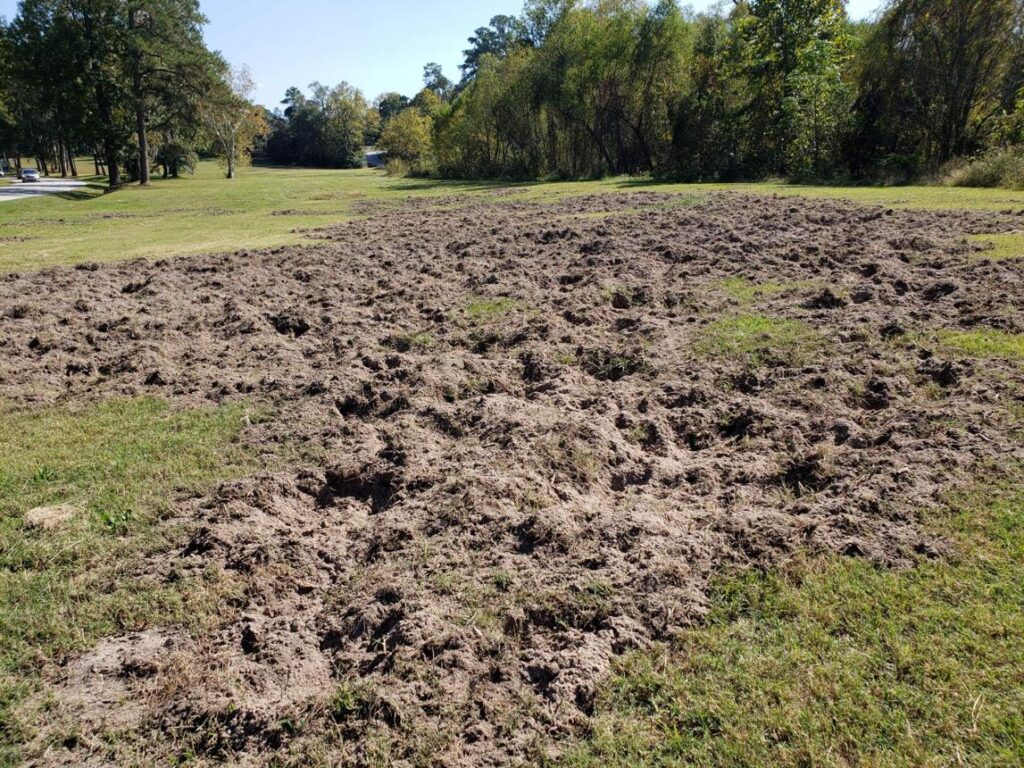
Giant Hog Tears Up Llano County Property—Landowner Says Damage Happened Overnight

A Llano County property owner says they woke up to what looked more like a construction zone than a pasture after a massive feral hog reportedly tore through sections of their property overnight, leaving behind rooted-up ground, damaged fencing, and frustration that many Texas landowners know all too well.
And according to neighbors?
This may not be the first time.
“It Looked Like Someone Took a Plow to It”
The landowner, who reportedly lives outside Llano near a small acreage tract, said the destruction became obvious early the next morning.
Grass was ripped up.
Fresh rooting covered large sections of ground.
And one area near a feeder looked like something had simply bulldozed through it.
“It looked like someone took a plow to the yard,” one nearby resident reportedly said after seeing the damage.
But this wasn’t farm equipment.
According to neighbors, trail camera photos later appeared to show an unusually large feral hog roaming the property overnight.
The Problem With Big Hogs
Most Texans know feral hogs are destructive.
But large mature boars can become especially problematic.
Big hogs often:
- Root aggressively for food
- Tear up yards and roads
- Damage fences
- Destroy feeders and water systems
- Spook deer and livestock
According to the Texas A&M AgriLife Extension Service, feral hogs cause an estimated tens of millions of dollars in agricultural and property damage every year in Texas.
That damage includes:
- Destroyed pastures
- Soil erosion
- Damaged hay fields
- Torn-up lawns and landscaping
And unfortunately for landowners?
The problem often happens overnight.
Why Llano County Is Seeing More Hog Problems
Much of the Texas Hill Country—including Llano County—has experienced growing feral hog pressure in recent years.
According to the Texas Parks and Wildlife Department, hog populations continue expanding because of:
- High reproduction rates
- Mild winters
- Reliable food and water sources
- Limited natural predators
A sow can produce multiple litters per year, which means populations rebound quickly—even after aggressive hunting or trapping efforts.
That’s part of why many ranchers say controlling hogs feels like an endless battle.
One Giant Hog—or an Entire Group?
Neighbors reportedly believe a particularly large boar may be responsible for much of the destruction.
But wildlife experts warn there is often more happening than people realize.
According to Texas A&M AgriLife Extension Service, hog damage frequently comes from sounders, or family groups of hogs, even if one giant animal appears to stand out on trail cameras.
In other words:
If one big hog is showing up, chances are he’s not alone.
Why Hog Damage Gets Expensive Fast
For smaller acreage owners, hog destruction can feel personal.
A torn-up ranch road or pasture is frustrating enough.
But when hogs start damaging:
- Septic areas
- Water lines
- Landscaping
- Feeders
- Food plots
…the costs add up quickly.
Landowners in the Hill Country often spend thousands trying to stay ahead of hog damage through:
- Trapping
- Night hunting
- Thermal optics
- Exclusion fencing
And even then, success is usually temporary.
The Debate Over Control Methods
Hogs continue to fuel debate across Texas over what control methods work best.
Some landowners favor:
- Trapping entire sounders
- Helicopter removal
- Thermal hunting at night
Others argue more aggressive statewide measures may eventually be needed.
According to the Texas Parks and Wildlife Department, recreational hunting alone rarely eliminates hog populations long term.
Population control often requires repeated effort year after year.
The Bottom Line
A giant hog reportedly tearing up property in Llano County has become the latest reminder that feral pigs remain one of the most frustrating wildlife problems facing Texas landowners.
According to Texas A&M AgriLife Extension Service and Texas Parks and Wildlife Department, hog populations continue causing widespread property damage across the state—and large mature boars can make a mess in a hurry.
For many Hill Country landowners, the story feels familiar:
You go to bed with a clean property.
Then wake up wondering what happened overnight.