
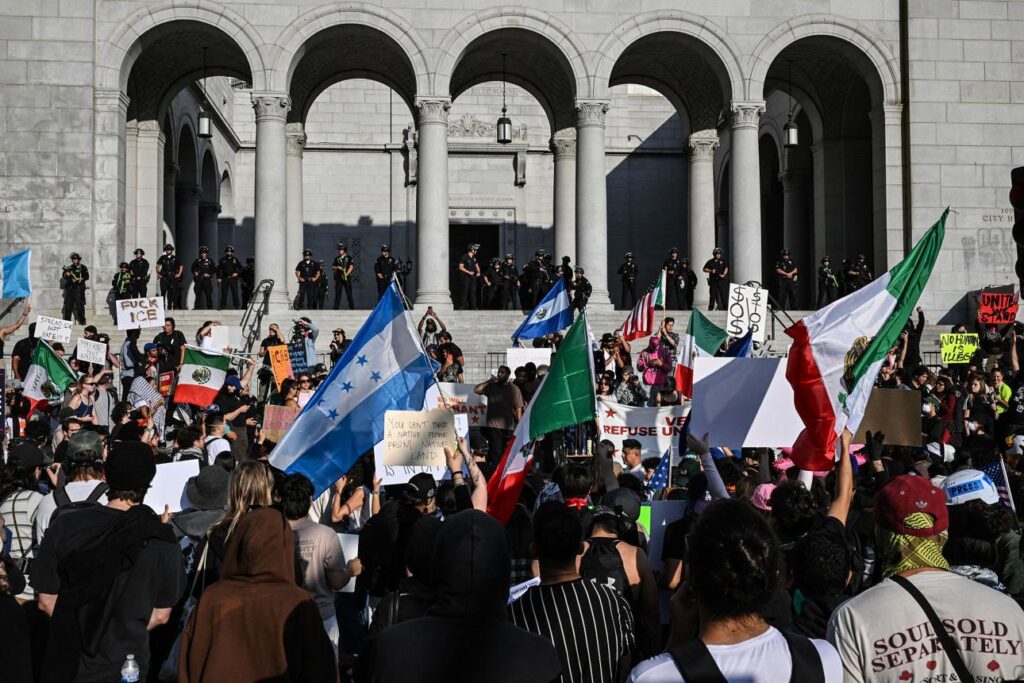
How Sanctuary Cities Are Changing Immigration Policy

Few issues in American politics are as divisive—or as misunderstood—as sanctuary cities.
Supporters argue they make communities safer by encouraging cooperation between immigrants and local law enforcement. Critics say they undermine federal immigration law and weaken border enforcement. But regardless of where someone stands politically, one thing is increasingly clear:
Sanctuary city policies are reshaping how immigration enforcement works in the United States.
And in many cases, they are changing the balance of power between local governments and the federal government itself.
What Is a Sanctuary City?
Despite the name, there is no single legal definition of a “sanctuary city.”
In practice, sanctuary jurisdictions are cities, counties, or states that limit cooperation with federal immigration enforcement agencies, particularly the U.S. Immigration and Customs Enforcement (ICE).
Policies vary widely.
Some cities prohibit local police from asking about immigration status during routine interactions. Others refuse to honor ICE detainer requests unless accompanied by judicial warrants. Some limit the sharing of immigration-related information altogether.
According to the Congressional Research Service, sanctuary policies generally stem from the idea that local governments should prioritize local policing rather than act as extensions of federal immigration enforcement.
That distinction has become one of the central legal and political battlegrounds in immigration policy.
Why Sanctuary Cities Exist
Supporters argue sanctuary policies improve public safety.
The core argument is simple: immigrants—including undocumented immigrants—are less likely to report crimes or cooperate with police if they fear deportation.
According to the American Immigration Council, local officials in sanctuary jurisdictions often argue that trust between immigrant communities and police improves crime reporting, witness cooperation, and public safety outcomes.
Police chiefs in some major cities have echoed that concern, arguing that local law enforcement works best when residents feel safe contacting authorities without fear of immigration consequences.
For supporters, sanctuary policies are viewed as a practical policing strategy—not necessarily an immigration position.
The Criticism: Undermining Federal Law
Critics see things very differently.
Opponents argue sanctuary jurisdictions interfere with federal immigration enforcement by refusing to cooperate with ICE and making it harder to remove people who are in the country illegally.
According to the U.S. Department of Homeland Security, ICE detainers are requests asking local law enforcement to temporarily hold individuals so federal authorities can assume custody.
When jurisdictions decline those requests, critics argue dangerous individuals may be released back into communities rather than transferred to immigration authorities.
This criticism has intensified following several high-profile crimes involving undocumented immigrants, often becoming flashpoints in national political debates.
For many conservatives, sanctuary city policies symbolize a broader conflict over immigration enforcement and state sovereignty.
The Legal Fight Over Power
At the center of the sanctuary city debate is a constitutional question:
Can the federal government force local governments to participate in immigration enforcement?
So far, courts have generally sided with local governments.
According to rulings referenced by the Congressional Research Service, federal authorities cannot compel state or local officials to enforce federal immigration law under what is known as the anti-commandeering doctrine.
That legal principle comes from the Tenth Amendment, which limits federal authority over state governments.
In practical terms, this means local governments can decline cooperation—even though federal immigration law still applies.
That distinction has reshaped how immigration policy functions on the ground.
A Patchwork Immigration System
The result is an increasingly fragmented enforcement landscape.
In some cities, local police work closely with ICE.
In others, cooperation is extremely limited.
That means immigration enforcement can look dramatically different depending on where someone lives.
Cities like Chicago, San Francisco, and New York have adopted strong sanctuary-style policies, while states like Texas and Florida have moved aggressively in the opposite direction, passing laws requiring greater cooperation with federal immigration enforcement.
According to the Migration Policy Institute, this growing divide has effectively created a patchwork immigration system where enforcement varies significantly across jurisdictions.
How Sanctuary Cities Are Influencing National Policy
Sanctuary policies are no longer just local issues.
They are increasingly influencing national immigration debates, court rulings, and political campaigns.
Federal administrations from both political parties have attempted to pressure sanctuary jurisdictions through lawsuits, funding disputes, or executive actions. But local governments continue testing the limits of federal authority.
At the same time, sanctuary policies have helped shape broader conversations around deportation priorities, asylum policy, and local versus federal power.
In many ways, cities have become laboratories for competing immigration philosophies.
The Bigger Political Divide
What makes sanctuary cities so politically explosive is that both sides claim public safety and constitutional principles are on their side.
Supporters argue local trust improves policing and community stability.
Critics argue selective enforcement weakens the rule of law.
Neither side appears willing to back down.
And as immigration remains one of America’s defining political issues, sanctuary cities are likely to remain at the center of the debate.
The Bottom Line
Sanctuary cities are doing more than changing local policing—they are reshaping how immigration law works in practice across the United States.
By limiting cooperation with federal agencies, local governments have created new tensions between federal authority, state power, and community policing.
Whether viewed as a safeguard for immigrant communities or a challenge to immigration enforcement, one reality is clear:
Sanctuary cities are no longer a side issue in immigration policy.
They’ve become one of its defining forces.