
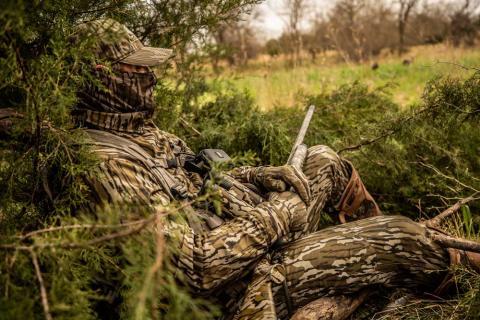
Hunter Thought a Turkey Was Coming In—Then He Saw What Was Actually Running Toward Him

The woods had settled into that quiet stillness turkey hunters know well. The sun was barely up, the morning air still cool, and somewhere in the distance, a gobbler had answered. Settled against the base of an oak tree with a shotgun across his lap, the hunter worked a few soft yelps through his turkey call and waited for what he assumed would eventually be a longbeard slipping through the timber.
Then he heard movement.
At first, it sounded promising. Leaves crunched softly in the brush, and branches shifted just enough to suggest something was moving with purpose toward the sound of the call. The hunter reportedly leaned forward, expecting to finally catch the first glimpse of a turkey weaving carefully through the woods.
But what stepped out from the brush was not a gobbler.
It was a bobcat.
A Predator Comes to the Call
The hunter later described the moment as equal parts exciting and unsettling. Instead of the familiar shape of a tom turkey easing through the woods, he found himself staring at one of the forest’s most elusive predators moving directly toward him.
According to the National Wild Turkey Federation, turkey calls do not just attract gobblers. Predators such as bobcats, coyotes, foxes, and even birds of prey are known to investigate turkey sounds, particularly during nesting season when vulnerable hens and poults become easy targets.
The bobcat reportedly appeared focused, slipping silently through the timber with surprising confidence. Unlike a turkey, which might pause, strut, or cautiously work its way toward a call, predators often move with purpose when they believe food may be nearby.
That direct approach can make encounters feel especially intense for hunters who are focused entirely on incoming birds.
Why a Bobcat Would Respond to Turkey Calls
While the moment felt strange, wildlife experts say it actually makes sense.
According to the Texas Parks and Wildlife Department, bobcats are opportunistic predators that feed on rabbits, rodents, birds, and other small prey. Wild turkeys—particularly young poults and nesting hens—can occasionally become part of that equation.
Turkey vocalizations can unintentionally signal opportunity.
Soft yelps, excited cutting, fighting purrs, or sounds that resemble distressed birds may convince a predator that something vulnerable is nearby. Because bobcats rely heavily on stealth and surprise while hunting, they often investigate cautiously but directly, especially in thick cover where they feel concealed.
For hunters, that can lead to a surreal moment where something entirely unexpected suddenly appears inside shotgun range.
The Moment Everything Changed
As the animal continued moving closer, the hunter reportedly froze for a moment trying to process what he was seeing.
At first, he thought the movement might still be a turkey hidden in heavy cover. But when the animal fully stepped into view, there was no mistaking it. The bobcat appeared locked onto the source of the calling, moving carefully but confidently through the brush.
Turkey hunting tends to sharpen every sense. Hunters spend long stretches of time watching shadows, listening for movement, and waiting for subtle signs of an approaching bird. That level of focus makes surprises feel even more dramatic because the brain becomes conditioned to expect one very specific thing.
A turkey.
Not a predator.
The hunter later said the encounter unfolded quickly. At some point, the bobcat either caught movement, picked up scent, or simply realized something was off. Just as suddenly as it appeared, the cat reportedly turned and disappeared back into the timber.
The entire encounter lasted only moments.
But it was the kind of moment hunters remember for years.
Predator Encounters During Turkey Season Are More Common Than Many Realize
Although a bobcat responding to a turkey call feels unusual, predator encounters during turkey season happen more often than many hunters realize.
According to the National Wild Turkey Federation, predators frequently key in on turkey activity because wild turkeys represent an important food source in many ecosystems. Coyotes, raccoons, foxes, bobcats, and feral hogs all prey on turkey nests, eggs, or young birds.
Many hunters report coyotes appearing during turkey setups, especially after aggressive calling sequences. Bobcat encounters happen less frequently because of the animal’s secretive behavior, but wildlife officials say healthy bobcat populations exist across much of the country.
According to the Texas Parks and Wildlife Department, bobcats are found across nearly all of Texas and much of North America, though their elusive nature means most people rarely see one in daylight.
That rarity is part of what made this encounter so memorable.
The Wild Side of Turkey Hunting
Turkey hunting has always been about more than chasing birds. Hunters who spend enough spring mornings in the woods eventually find themselves witnessing moments most people never get to experience.
Sometimes it is a coyote slipping silently across a logging road at sunrise. Sometimes it is a deer appearing out of fog-covered timber. And every once in a while, something far less expected answers the call.
For one hunter, a spring turkey setup turned into a close encounter with one of the woods’ quietest predators.
He thought a gobbler was coming.
Instead, the woods had something else in mind.