
3 Texas Counties Declare Disaster Over Screwworm Threat—Officials Say Federal Response Is Falling Short

Growing fears surrounding the return of the New World screwworm have pushed several Texas counties into emergency action after local officials declared disaster conditions and called for stronger federal involvement to stop what many ranchers fear could become a devastating outbreak.
Officials in at least three South Texas counties have now declared local disaster emergencies tied to the growing screwworm threat, arguing that current federal and state support has not moved fast enough as concerns intensify near the Texas-Mexico border. According to reporting from Texas Public Radio, county judges in Kinney, Jim Hogg, and Uvalde counties issued emergency disaster declarations while urging stronger action to contain the flesh-eating parasite before it spreads deeper into the state.
For ranchers, wildlife managers, and livestock producers, the concern feels deeply personal.
Many believe Texas is facing a threat capable of severely damaging cattle, deer populations, exotic wildlife, pets, and potentially rural economies if containment efforts fail.
What Exactly Is the Screwworm?
Despite the name, the New World screwworm is not technically a worm.
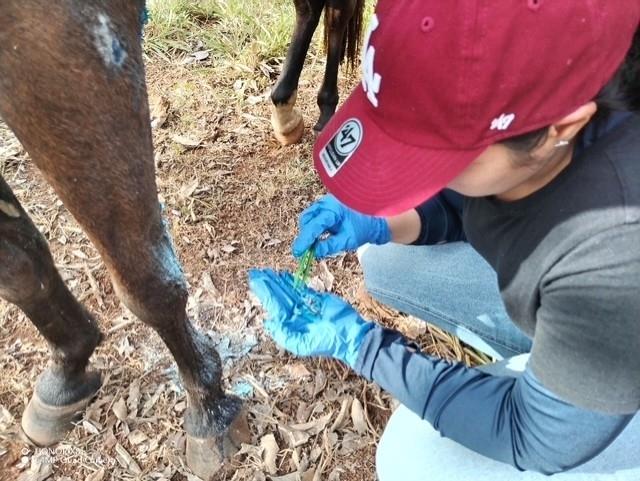
According to the Texas Parks and Wildlife Department and the United States Department of Agriculture, the screwworm is a parasitic fly whose larvae hatch inside open wounds of warm-blooded animals and begin feeding on living flesh. Unlike maggots that typically feed on dead tissue, screwworm larvae actively burrow into healthy tissue, enlarging wounds and creating severe infections that can quickly become fatal if left untreated. Recent confirmation of a screwworm-positive calf in Zavala County marked the first confirmed Texas case in roughly six decades, raising alarm across ranch country.
According to Reuters, the confirmed case involved a three-week-old calf near La Pryor, Texas, where federal personnel quickly deployed trapping and containment efforts to prevent further spread. Ranchers and local officials, however, worry the single confirmed case may only represent the beginning of a larger problem.
County Officials Say More Help Is Needed
The disaster declarations issued by South Texas counties reflect growing frustration among some local leaders who believe communication and resources have not matched the seriousness of the threat.
According to Texas Public Radio, officials in affected counties argued that federal agencies have not provided enough timely information regarding screwworm movement in Mexico or how close infestations may be to Texas livestock operations. Some county leaders also expressed concern that local governments remain largely responsible for reassuring ranchers despite limited access to updated data.
Val Verde County Judge Lewis Owens told Texas Public Radio that poor communication has only fueled anxiety among local communities, arguing that ranchers deserve better information as the situation develops. Officials fear delays in response could allow the parasite to spread rapidly among livestock and wildlife populations.
The frustration has grown strong enough that some officials are now urging broader national emergency measures to accelerate resources and containment efforts.
Governor Abbott Expands Texas Disaster Response
Texas Governor Greg Abbott has already expanded the state’s emergency posture surrounding screwworm concerns.
According to Abbott’s office, Texas first issued a statewide disaster declaration in January 2026 after screwworm infestations in Mexico continued moving north toward the U.S. border. The declaration empowered the Texas New World Screwworm Response Team to mobilize state resources and coordinate with federal agencies before the parasite entered Texas.
Following confirmation of the recent Texas case, Abbott expanded emergency efforts again this week, authorizing additional state resources and prioritizing counties nearest the outbreak. During a recent briefing, Abbott reportedly described the situation as requiring faster action, warning that screwworm can spread “like wildfire” if not aggressively controlled.
Texas officials are also working alongside the USDA to expand sterile fly release efforts, one of the primary tools historically used to eradicate screwworm populations.
Why Ranchers Are So Worried
For Texas livestock producers, the concern extends far beyond one infected calf.
According to USDA estimates cited by Texas Public Radio and Reuters, a widespread screwworm outbreak could cost Texas billions of dollars in livestock losses and economic disruption. Texas cattle operations remain central to the national beef supply, meaning even limited outbreaks could create ripple effects reaching well beyond ranch country.
Wildlife could also face consequences.
According to the Texas Parks and Wildlife Department, screwworm infestations can affect deer, exotic species, feral hogs, pets, and nearly any warm-blooded animal with an untreated wound. Because larvae feed on living tissue, untreated infestations can quickly become severe.
Many ranchers still remember stories from older generations describing the devastation screwworm once caused before it was eradicated from the United States in the 1960s through sterile fly programs.
That history explains why today’s warnings feel so serious.
The Bottom Line
Three Texas counties have now declared disaster emergencies over the growing screwworm threat, while local leaders continue pushing for stronger federal involvement and faster containment measures.
Although only one confirmed Texas case currently exists, ranchers and county officials fear the flesh-eating parasite could spread quickly if aggressive action does not keep pace.
For rural Texas, the concern goes far beyond one infected calf.
Many believe the state is racing to stop a problem that could reshape ranching, wildlife management, and livestock production if it gains ground.