
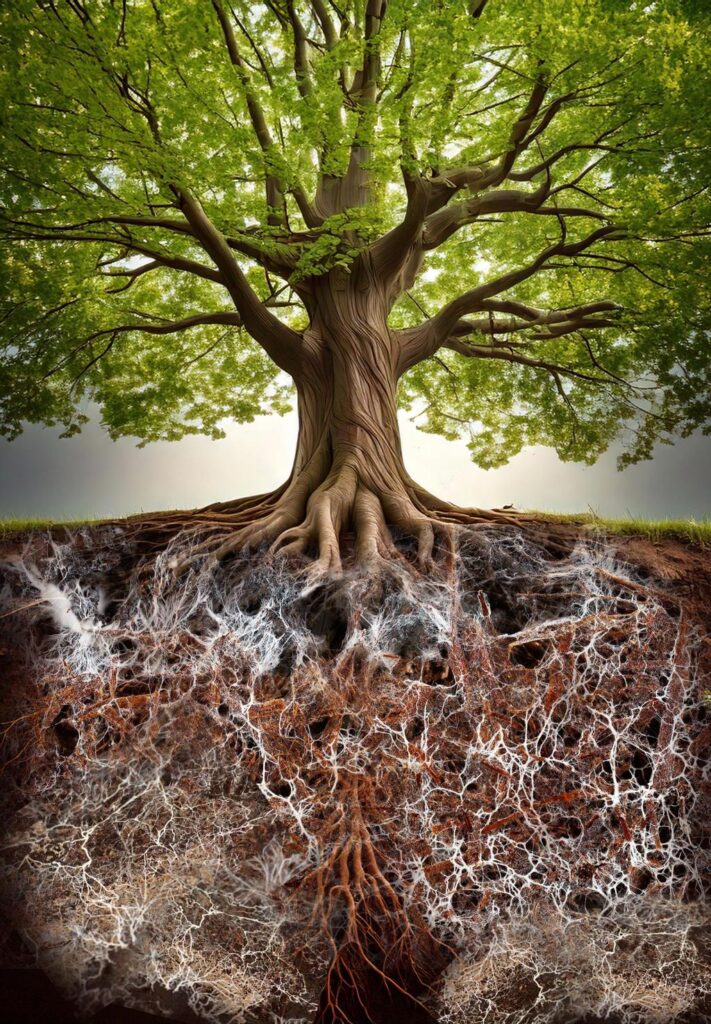
Something Straight Out of Sci fi – Scientists Say Forests Cut Down 100 Years Ago Are “Talking” Underground—And the Network May Be Older Than the Trees

A growing body of ecological research is changing how scientists think about forests, and the findings sound almost unbelievable at first.
According to ecologists studying underground fungal systems, forests that were clear-cut generations ago may still remain connected beneath the soil through ancient fungal networks that predate many of the trees now growing above them. Even forests replanted or naturally regrown after heavy logging may still rely on underground biological systems that survived the destruction.
In simple terms:
The forest underground may be much older than the forest people see.
And researchers increasingly believe trees are sharing nutrients, chemical signals, and stress warnings through those hidden networks.
What Scientists Mean by “Forest Communication”
Researchers are not claiming trees talk the way humans do.
Instead, scientists studying forest ecology describe underground fungal systems known as mycorrhizal networks—massive webs of fungi that connect plant roots underground. According to research published through the Nature and the National Science Foundation, fungi form symbiotic relationships with tree roots, helping plants exchange nutrients such as nitrogen, phosphorus, carbon, and water while potentially transmitting chemical signals linked to stress or disease. (nature.com)
Scientists sometimes call this system the “wood wide web.”
According to forest ecologist Suzanne Simard of the University of British Columbia, research suggests trees connected through fungal systems may support seedlings, share resources, and respond to environmental stress in surprisingly coordinated ways. Her work studying Douglas fir forests found evidence that older trees sometimes transfer carbon to younger or shaded trees through underground fungal relationships. (scientificamerican.com)
The idea sounds strange.
But the science keeps growing.
Some Underground Networks May Be Older Than the Forest Itself
One of the most fascinating discoveries involves timing.
According to ecologists, fungal systems underground often survive disturbances far better than trees themselves. In forests clear-cut decades or even a century ago, portions of fungal communities can sometimes persist underground or gradually rebuild from surviving fragments faster than people expect.
According to research published in the journal Ecology Letters, mycorrhizal fungal networks may remain surprisingly resilient after disturbance and continue influencing how forests regenerate long after logging or wildfire events occur. Researchers increasingly believe these systems play major roles in helping young forests recover by improving nutrient flow and soil stability. (onlinelibrary.wiley.com)
That means a forest replanted after clear-cutting may technically be new overhead.
But underground, parts of the system may still carry ecological memory from much older ecosystems.
Some fungi themselves may survive for extraordinary lengths of time.
According to research from the United States Forest Service, certain fungal organisms can spread across enormous underground areas and survive for centuries or longer, making them among the oldest living biological systems in some forests. (fs.usda.gov)
Scientists Still Debate How Much Trees “Communicate”
Not every ecologist agrees on how far the science goes.
Some researchers caution against overstating underground communication, arguing that while fungal nutrient exchange clearly exists, the idea of forests acting like coordinated communities may sometimes be exaggerated in popular media.
According to researchers publishing in Nature Ecology & Evolution, evidence strongly supports nutrient sharing and biological interaction, but scientists continue debating how intentional or complex those relationships truly are. (nature.com)
Even skeptics, however, generally agree on one thing:
Forests are far more interconnected than people once believed.
What appears quiet above ground often hides extraordinary biological activity below.
Why This Matters Outdoors
For hunters, hikers, campers, and anyone who spends time in the woods, the research changes how forests feel.
A stand of timber no longer looks like isolated trees competing against one another. Instead, ecologists increasingly describe forests as connected living systems where survival depends heavily on cooperation underground.
That perspective matters when discussing logging, wildfire recovery, habitat restoration, and conservation.
Because what happens below the soil may shape recovery above it for generations.
A forest cut a century ago may still carry invisible pieces of its original identity underground.
The Bottom Line
Scientists increasingly believe forests clear-cut generations ago remain connected through underground fungal networks that may predate many of the trees now standing above them.
According to ecological research, these fungal systems help move nutrients, stabilize ecosystems, and potentially allow forests to respond to stress in ways researchers are only beginning to understand. While scientists still debate how much trees truly “communicate,” one thing has become harder to deny:
Forests are far more alive beneath the surface than most people ever imagined.