

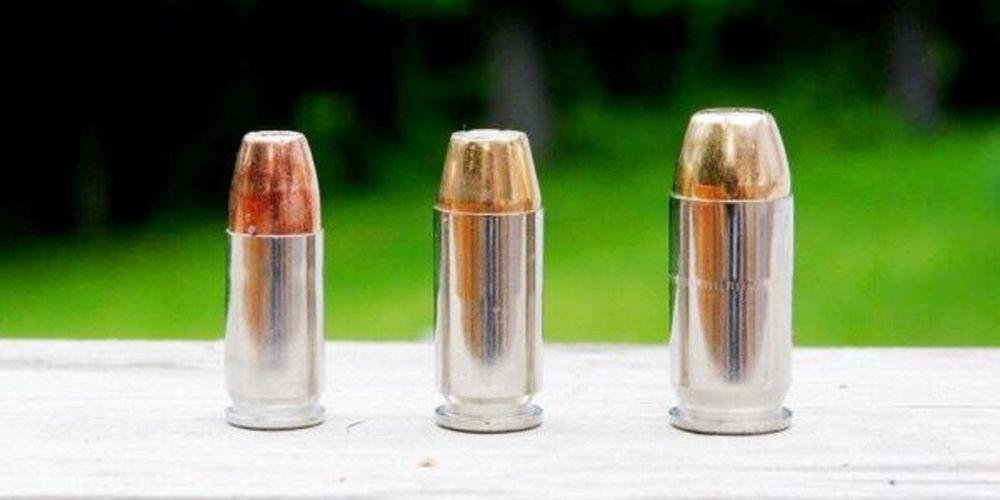

For years, the .40 S&W was king. Law enforcement agencies across the country adopted it. Gun manufacturers built entire product lines around it. And shooters trusted it as the ideal balance between the speed of the 9mm and the power of the .45 ACP. But times have changed. Modern ammunition has improved dramatically, and today many shooters are asking a fair question: is the .40 caliber still necessary?
The answer isn’t as simple as yes or no. It depends on performance, recoil, capacity, cost, and how modern bullet technology has reshaped the playing field.
Why the .40 S&W Existed in the First Place
To understand whether the .40 still matters, you have to look at why it was created. The cartridge was developed in 1990 after the FBI began searching for a round with more stopping power than the 9mm but without the recoil and size of the 10mm.
The result was the .40 Smith & Wesson — a cartridge that offered heavier bullets and more energy than 9mm, while still fitting into handgun frames designed for smaller calibers.
Law enforcement quickly embraced it. By the late 1990s and early 2000s, the .40 S&W had become the dominant law enforcement cartridge in the United States.
It was widely seen as the “best of both worlds.”
Modern 9mm Changed Everything
Fast forward to today, and the biggest threat to the .40 isn’t the .45 ACP — it’s the modern 9mm.
Advancements in bullet design, especially bonded jacketed hollow points, have dramatically improved 9mm performance. Modern defensive 9mm ammunition now expands more reliably and penetrates to FBI standards, reducing the performance gap that once existed between it and larger calibers.
At the same time, the 9mm offers clear advantages:
-
Less recoil
-
Higher magazine capacity
-
Lower ammunition cost
-
Faster follow-up shots
These benefits aren’t theoretical. They directly impact real-world shooting performance. Less recoil means shooters can maintain control and accuracy more easily, especially under stress.
This is one of the major reasons many law enforcement agencies — including the FBI — transitioned back to the 9mm after years of using the .40.
The Recoil Factor Matters More Than People Admit
One of the biggest downsides of the .40 S&W is recoil. While it’s not as heavy as the .45 ACP, the .40 produces a sharper, snappier recoil impulse than the 9mm.
This can make it harder for some shooters to maintain accuracy during rapid fire.
In controlled testing environments, shooters often perform better with 9mm simply because they can shoot it faster and more accurately.
Shot placement has always mattered more than caliber alone. A well-placed 9mm round is far more effective than a poorly placed .40.
Capacity and Cost Favor the 9mm
Another area where the .40 struggles is efficiency.
Because the cartridge is wider, magazines typically hold fewer rounds compared to 9mm in the same size handgun. For example, a handgun that holds 17 rounds of 9mm may only hold 13–15 rounds in .40.
That may not seem like much, but capacity matters.
Cost is another major factor. 9mm ammunition is almost always cheaper than .40 S&W. This allows shooters to practice more frequently, which ultimately improves skill and confidence.
More practice leads to better outcomes than relying on marginal ballistic differences.
Does the .40 Still Have Advantages?
Despite its declining popularity, the .40 S&W isn’t obsolete. It still offers real advantages.
It generally delivers more energy than the 9mm, especially with heavier bullet weights. It also produces a larger diameter projectile than the 9mm, which can result in larger wound channels under ideal conditions.
Some shooters also prefer its balance between the lighter recoil of the 9mm and the heavier push of the .45 ACP.
Additionally, many surplus law enforcement pistols in .40 caliber are available at excellent prices, making them an affordable entry point for new handgun owners.
The cartridge still works — and works well.
The .45 ACP Isn’t Going Anywhere Either
The .45 ACP remains popular for its own reasons. It fires a heavier, wider bullet than both the 9mm and .40, and many shooters prefer its slower, more controllable recoil impulse.
But like the .40, the .45 faces capacity and cost disadvantages compared to the 9mm.
Modern ammunition has narrowed the performance gap between all three calibers.
Today, the differences are smaller than ever.
So, Is the .40 Still Needed?
The honest answer: it’s no longer necessary — but it’s not useless.
Modern 9mm ammunition has become so effective that it meets the needs of most shooters, law enforcement agencies, and defensive applications. Its lower recoil, higher capacity, and lower cost make it the practical choice for many.
The .40 still offers solid performance and remains effective, but its original purpose — bridging the gap between 9mm and .45 — is less critical now that modern bullet design has improved across the board.
For new shooters, the 9mm is often the most logical choice.
For existing .40 owners, there’s no urgent need to switch. The cartridge remains fully capable and effective.
The Bottom Line
The .40 S&W isn’t dead — but it’s no longer dominant.
It filled an important role at a time when ammunition technology hadn’t caught up. Now, with modern bullet performance leveling the field, the 9mm has reclaimed its position as the most versatile and widely used handgun cartridge.
Still, the .40 remains part of the lineup — a reminder of how firearms evolve with technology.
In the end, shot placement, training, and reliability matter far more than caliber alone.