


There’s fishing—and then there’s noodling.
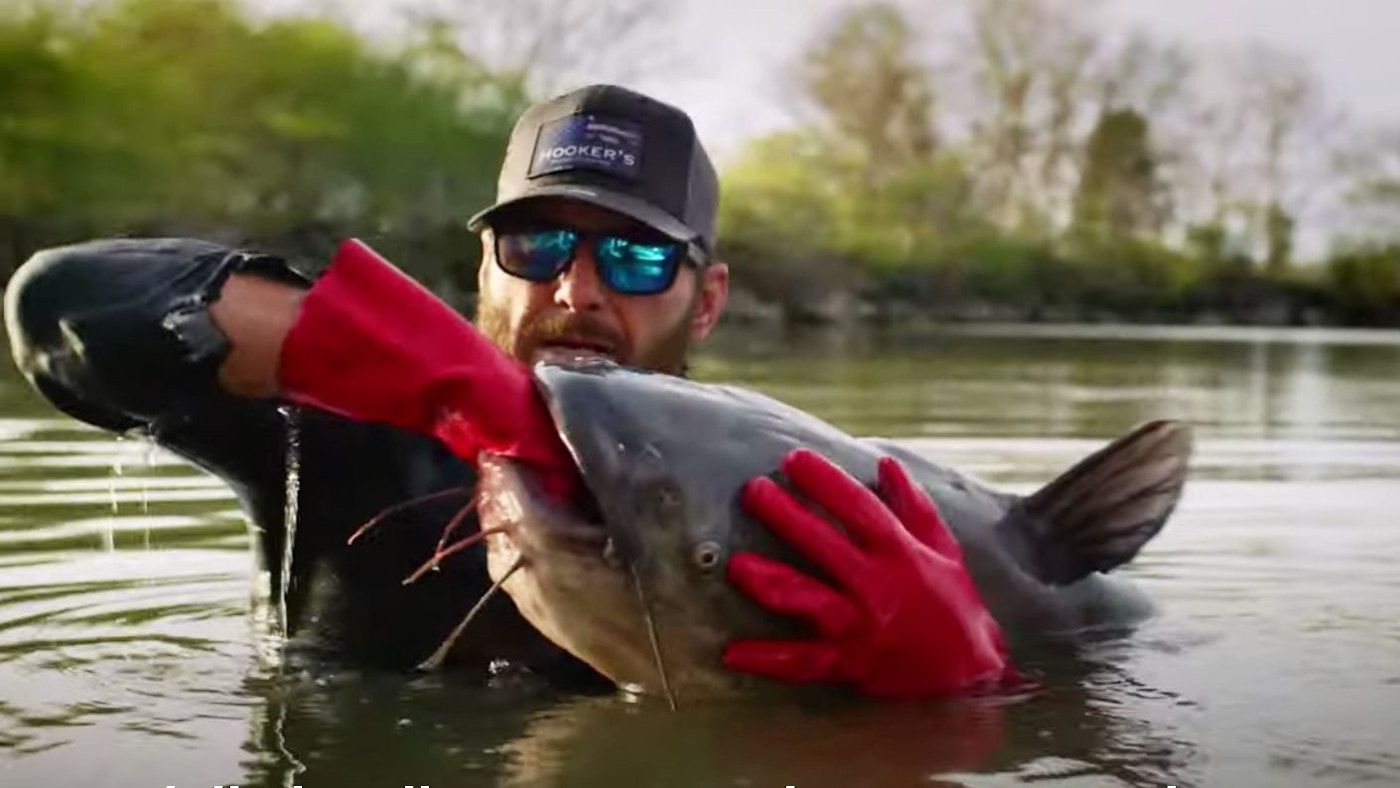
Also known as hand fishing, noodling is exactly what it sounds like: reaching your bare hand into underwater holes, hoping a giant catfish bites you so you can pull it out. It’s intense, unpredictable, and not for the faint of heart. But for those who do it, noodling isn’t just a way to catch fish—it’s a tradition rooted in skill, timing, and a healthy dose of courage.
If you’ve ever thought about trying it, here’s what you need to know before sticking your hand underwater.
What Is Noodling?
Noodling is a method of catching catfish—most commonly flathead, blue, or channel catfish—using your hands instead of rods or nets. During spawning season, catfish look for dark, enclosed spaces to build nests. These spaces can include submerged logs, undercut banks, rock crevices, and man-made structures.
When a catfish is guarding its nest, it becomes territorial. If you reach into its space, it may bite your hand in defense. That bite is your opportunity.
Once the fish bites, you grab hold and pull it out.
It sounds simple. It isn’t.
Flathead catfish caught this way often weigh anywhere from 20 to 50 pounds, and much larger fish are possible.
When and Where to Go Noodling


The best time to noodle is during catfish spawning season, which typically runs from late spring through early summer when water temperatures reach around 70 to 80 degrees. During this time, catfish actively guard nests and are more likely to bite.
Noodling is most common in southern states like Texas, Oklahoma, Mississippi, and Arkansas, where warm water and abundant catfish populations create ideal conditions.
Look for areas such as:
-
Undercut riverbanks
-
Submerged logs
-
Rock piles
-
Bridge pilings
-
Man-made holes or cavities
Catfish prefer dark, enclosed spaces where they feel protected.
Always check your state’s regulations before noodling, as it’s not legal everywhere and seasons vary.
How to Noodle: Step-by-Step Basics

The basic idea is simple, but execution takes practice and patience.
Step 1: Locate a likely hole
Feel along banks, logs, or underwater structures for cavities large enough to hold a catfish.
Step 2: Reach in carefully
Slowly insert your hand and feel around. Be cautious—catfish aren’t the only creatures that use these spaces.
Step 3: Wait for the bite
If a catfish is present, it may bite your hand defensively. The bite can feel like strong pressure and sandpaper due to the fish’s rough mouth.
Step 4: Grab and secure the fish
Once bitten, grip the fish firmly, often by the lower jaw or inside the mouth, and pull it out.
Step 5: Get help if needed
Large catfish are powerful. Many noodlers work in teams to help land the fish safely.
Safety Concerns You Must Take Seriously

Noodling can be dangerous, and safety should always come first.
Risk of injury from fish:
Large catfish have strong jaws and rough teeth. They can cause cuts, bruises, and sprains.
Drowning risk:
Strong currents, deep holes, and underwater obstructions can trap or disorient you.
Other animals:
Turtles, snakes, and other wildlife may also occupy holes.
Entrapment hazards:
Your arm or clothing can become stuck in tight spaces.
The Texas Parks and Wildlife Department advises anglers to always fish with a partner and be aware of environmental hazards when fishing in rivers and lakes.
Never noodle alone.
Gear That Can Help
While noodling is often done bare-handed, some equipment can improve safety:
-
Gloves for protection
-
Proper footwear for traction
-
A partner to assist
-
A rope or flotation device
Avoid loose clothing that could snag underwater.
How Beginners Should Get Started
The best way to start is by going with experienced noodlers. They can show you proper technique, safe locations, and what to expect.
Start in shallow water where you can stand comfortably. Avoid strong currents and deep areas until you gain experience.
Be patient. It may take time before you find your first fish.
Why People Love Noodling
Noodling isn’t just about catching fish. It’s about the experience. The adrenaline. The challenge. The connection to the water.
There’s nothing quite like reaching into the unknown and pulling out a fish the size of your leg with nothing but your hands.
It’s raw, unpredictable, and unforgettable.
Just remember: respect the risks, follow the laws, and never go alone.