
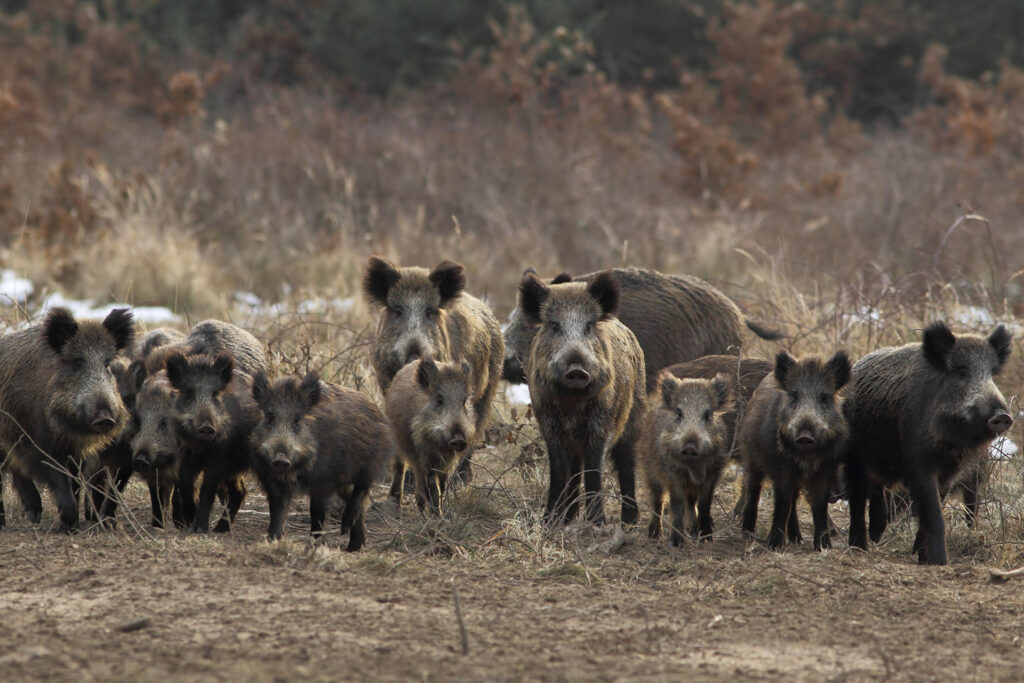
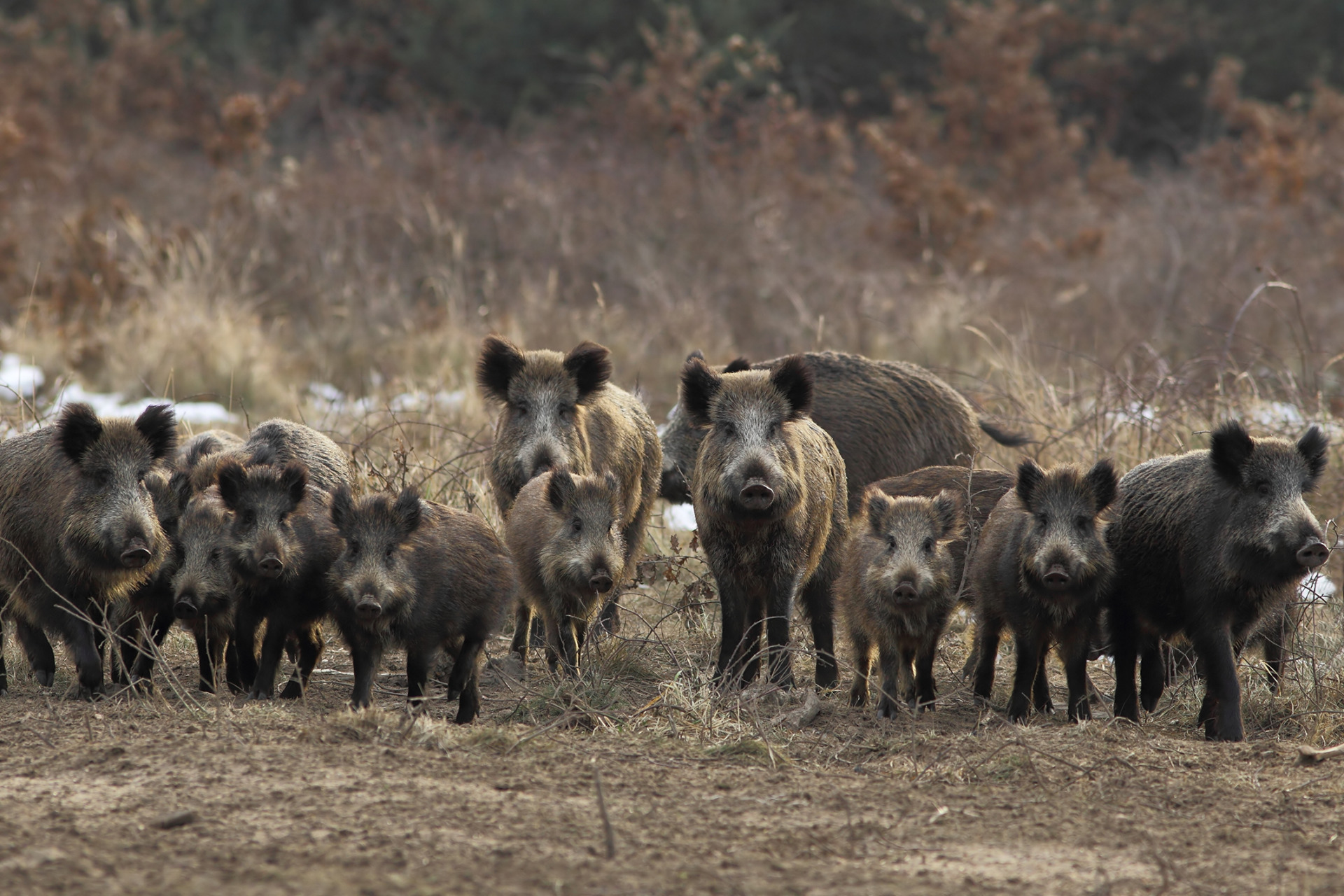
Feral hogs have become one of the most destructive invasive species in the United States, causing widespread damage to farmland, native ecosystems, and wildlife habitats. With populations rapidly expanding across large portions of the country, many landowners and wildlife managers are asking a critical question: can hunting and trapping actually control the feral hog population?
The short answer is that hunting and trapping can help reduce local numbers, but most experts say they are unlikely to eliminate feral hogs entirely. According to the U.S. Department of Agriculture, feral hog populations now exceed six million animals in the United States, with the majority found in Texas and across the Southeast. The USDA notes that these animals cause more than $1.5 billion in agricultural and environmental damage every year.
Understanding how hunting and trapping affect feral hog populations requires looking at how quickly these animals reproduce and how wildlife agencies attempt to manage them.
Why Feral Hogs Are So Hard to Control
Feral hogs are extremely adaptable animals with one of the fastest reproductive rates among large mammals in North America. According to Texas A&M AgriLife Extension, a sow can begin breeding as early as six months of age and may produce two litters each year, with four to six piglets per litter.
This explosive reproduction means populations can grow rapidly if even a portion of the animals survive. Wildlife researchers at Texas A&M University estimate that roughly 60 to 70 percent of a feral hog population must be removed annually just to keep numbers from increasing.
Because of this reproductive capacity, removing only a small number of animals through hunting often has little long-term impact on population growth.
The Role of Hunting in Hog Control
Hunting remains one of the most common methods used to reduce feral hog numbers, particularly on private land where hog damage can be severe. Many states allow year-round hunting of feral hogs with few restrictions in an effort to encourage population control.
According to the Texas Parks and Wildlife Department, feral hogs are considered a non-native invasive species, meaning hunters may pursue them year-round without a closed season on private property with landowner permission.
Hunting can be effective at removing individual animals or small groups, especially when hunters target areas experiencing heavy agricultural damage. Night hunting, thermal optics, and aerial hunting from helicopters have also become more common tools in some regions.
However, wildlife biologists say hunting alone rarely removes enough animals to significantly reduce populations over large areas. The U.S. Department of Agriculture notes that hunting pressure can sometimes scatter hog groups, making them harder to capture or remove later.
Why Trapping Is Often More Effective
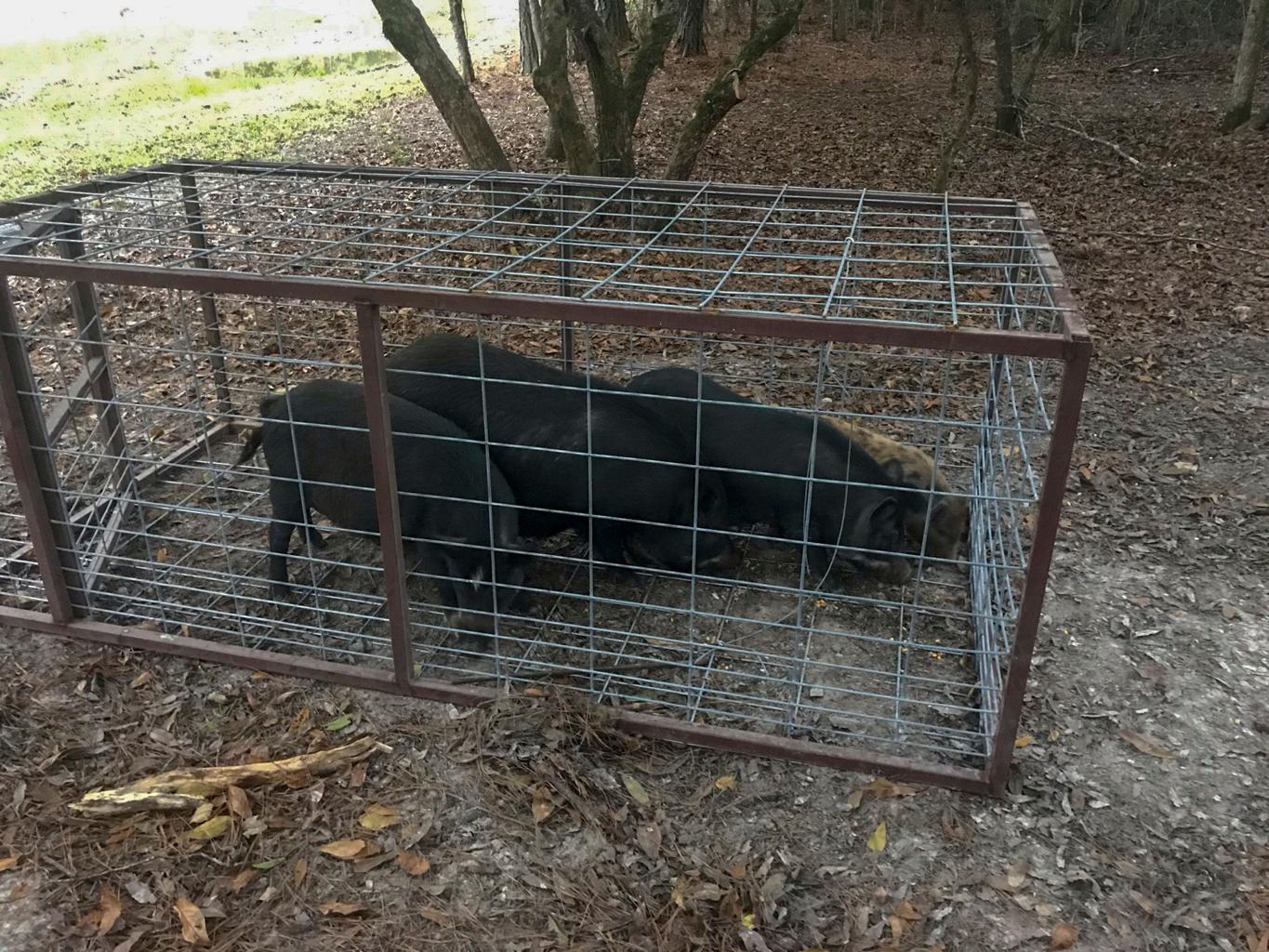
Many wildlife experts believe trapping is the most efficient method for removing large numbers of feral hogs from a property. Unlike hunting, which usually removes one animal at a time, trapping can capture entire sounders—the social groups in which hogs typically travel.
According to Texas A&M AgriLife Extension, corral traps designed to capture entire groups of hogs can dramatically increase removal rates compared to traditional hunting methods. Modern traps often use remote-triggered gates and cameras, allowing landowners to ensure the entire group enters the trap before it closes.
Capturing entire sounders is important because leaving even a few animals behind allows the population to rebuild quickly.
Wildlife specialists say this strategy is one of the most effective ways to slow population growth in localized areas.
The Limits of Hunting and Trapping
Despite their usefulness, hunting and trapping still face major challenges when it comes to controlling feral hog populations across large regions.
According to the USDA Animal and Plant Health Inspection Service, feral hogs are highly intelligent animals that quickly adapt to human pressure. They can become nocturnal, avoid traps, and move into new areas when disturbed.
Additionally, the vast range of hog populations across millions of acres makes coordinated control efforts difficult. Even if a landowner successfully removes hogs from one property, new animals often migrate in from surrounding areas.
This constant movement is one reason feral hog populations have continued expanding across the United States over the past several decades.
Combining Multiple Control Methods
Because hunting and trapping alone often cannot keep up with hog reproduction, wildlife managers increasingly use multiple strategies to control populations.
According to the U.S. Department of Agriculture, large-scale control programs may include aerial removal from helicopters, professional trapping teams, and coordinated efforts between neighboring landowners.
Some research programs are also exploring new technologies such as fertility control and specialized toxicants designed specifically for feral hogs.
While these tools are still being studied, wildlife officials say coordinated management across large regions is likely necessary to make significant progress against expanding hog populations.
A Growing Challenge for Wildlife Managers
Feral hogs now occupy at least 35 U.S. states and continue spreading into new areas. Their rooting behavior destroys crops, damages pastures, erodes stream banks, and threatens native wildlife populations.
According to the National Wildlife Research Center, feral hogs compete with native species for food and may prey on ground-nesting birds, reptiles, and young deer.
These impacts have made feral hog management a major priority for wildlife agencies and agricultural organizations across the country.
The Bottom Line
Hunting and trapping remain valuable tools in the fight against feral hogs, particularly for landowners trying to reduce damage on their property. Removing animals through these methods can help lower local populations and protect farmland and wildlife habitat.
However, most wildlife experts agree that hunting and trapping alone are unlikely to completely control feral hog populations across the United States. Because these animals reproduce so quickly and spread across vast areas, successful management typically requires coordinated efforts using multiple control strategies.
For now, hunters, landowners, and wildlife officials will continue working together to slow the spread of one of the most destructive invasive species in North America.