
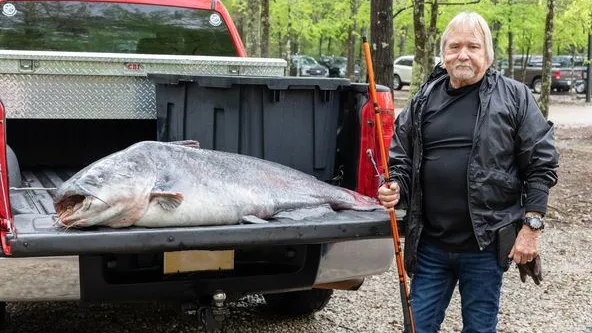
5 of the Largest Catfish Ever Caught in the U.S.—Record Giants and Where They Were Caught
Catfish fishing represents one of the most popular angling pursuits across America, with millions of anglers seeking these bottom-dwelling giants each year. The United States is home to several catfish species, including blue catfish, channel catfish, and flathead catfish, with blue catfish being the largest species found in American waters. These fish can grow to extraordinary sizes in the right conditions, making them prized catches for sport fishermen.
The largest catfish ever caught in the United States include specimens weighing over 140 pounds, with most record-breaking catches coming from major river systems and reservoirs across the country. Understanding where these massive fish have been caught and what factors contribute to their exceptional growth can help you appreciate the scale of these achievements. The records showcase catches from diverse waterways, ranging from Virginia’s Kerr Lake to the mighty Mississippi River, demonstrating the widespread distribution of trophy-sized catfish throughout America.
1) 143-pound blue catfish caught in Kerr Lake, Virginia, 2011
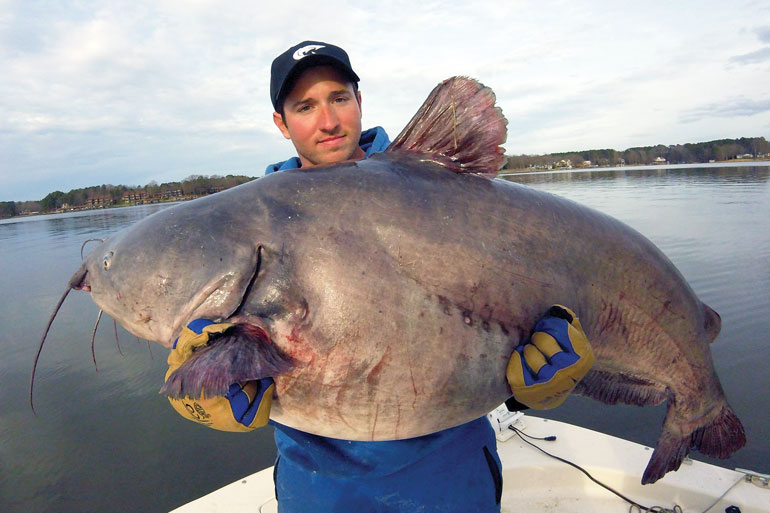
Richard Nicholas Anderson made fishing history when he caught a 143-pound blue catfish at Kerr Lake on June 18, 2011. The massive fish measured 57 inches in length with a girth of 43.5 inches.
This catch took place at John H. Kerr Reservoir, also known as Buggs Island Lake, near Clarksville, Virginia. Anderson was on a father-and-son fishing trip when he landed this record-breaking blue catfish.
The Virginia Department of Game and Inland Fisheries confirmed the catch as a new state record. This blue catfish far exceeded the previous Virginia record of 109 pounds, which had been caught just three months earlier at the same lake. You’ll find that Kerr Lake has become known for producing exceptionally large blue catfish.
2) 114-pound blue catfish caught in Mississippi River, Louisiana
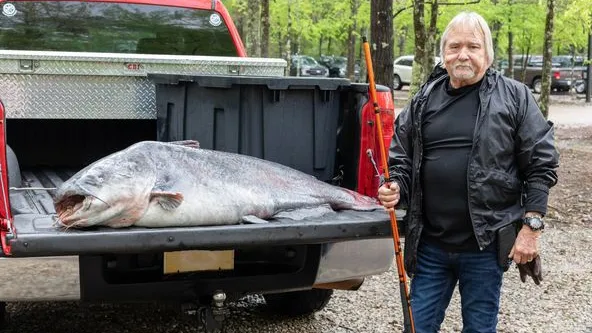
A massive blue catfish weighing 114 pounds was caught in Louisiana’s portion of the Mississippi River. A twelve-year-old angler landed this impressive fish while fishing with relatives.
This catch represents Louisiana’s largest recorded fish. The Mississippi River system provides ideal habitat for blue catfish to reach exceptional sizes.
Blue catfish are the largest catfish species native to North America. They thrive in the deep channels and strong currents of major river systems like the Mississippi, where abundant food sources support their growth to remarkable weights.
3) 101-pound blue catfish jug-fished in Ohio River, Ohio
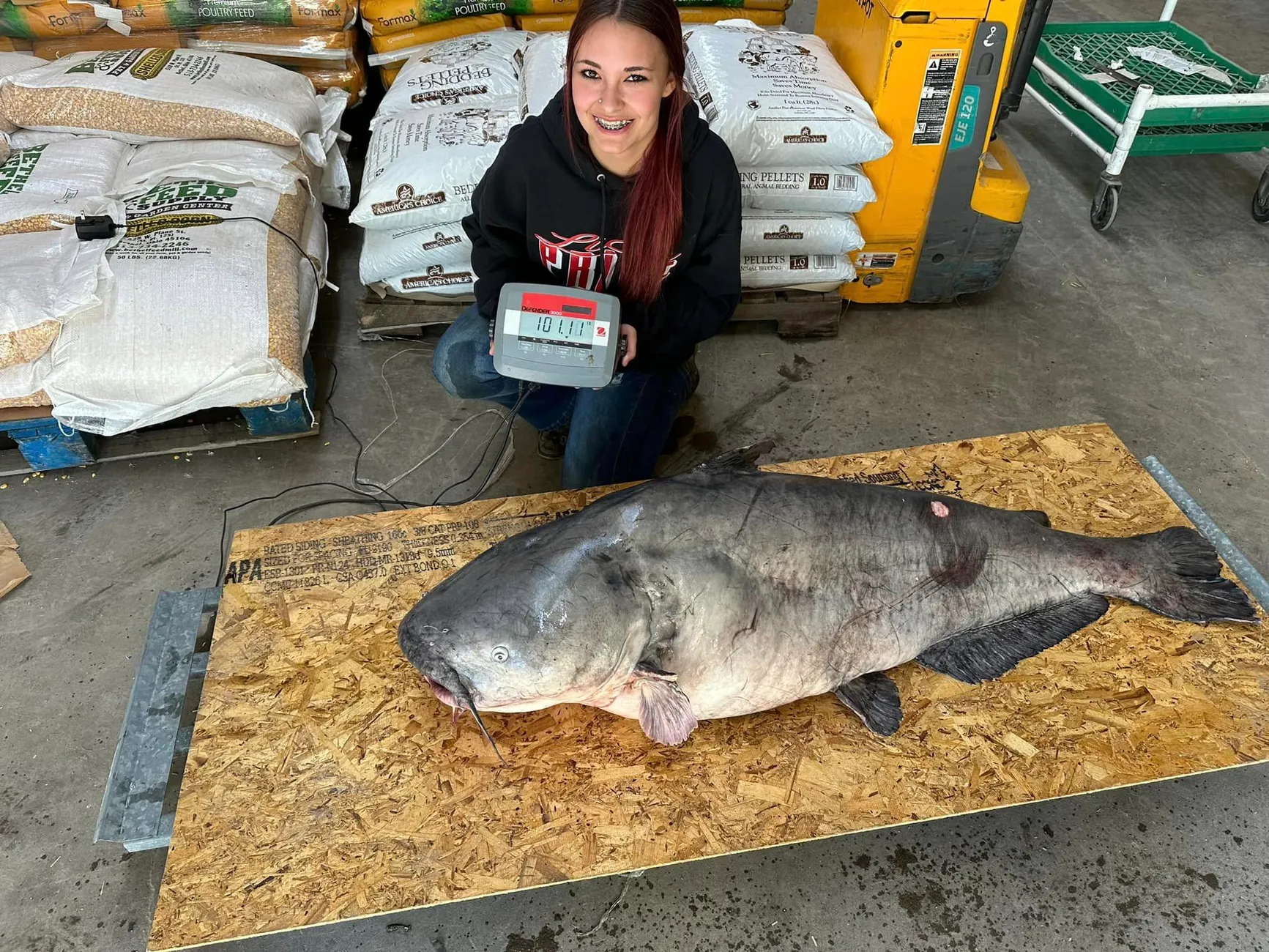
Jaylynn Parker, a 15-year-old from New Richmond, made fishing history when she caught a massive 101-pound blue catfish in the Ohio River on April 7, 2024. The fish measured 56 inches long and was caught in Clermont County.
Parker used the jug fishing method, which involves suspending a baited hook beneath a large jug or float. She was fishing with her dad and a family friend in the backwaters when she hooked the monster catfish.
The 101.11-pound blue catfish became the new Ohio state record, surpassing the previous record of 96 pounds caught by Chris Rolph in 2009. The Ohio Department of Natural Resources and the Outdoor Writers of Ohio officially verified Parker’s catch as the state record.
4) Record-breaking white catfish caught in California, 22 pounds
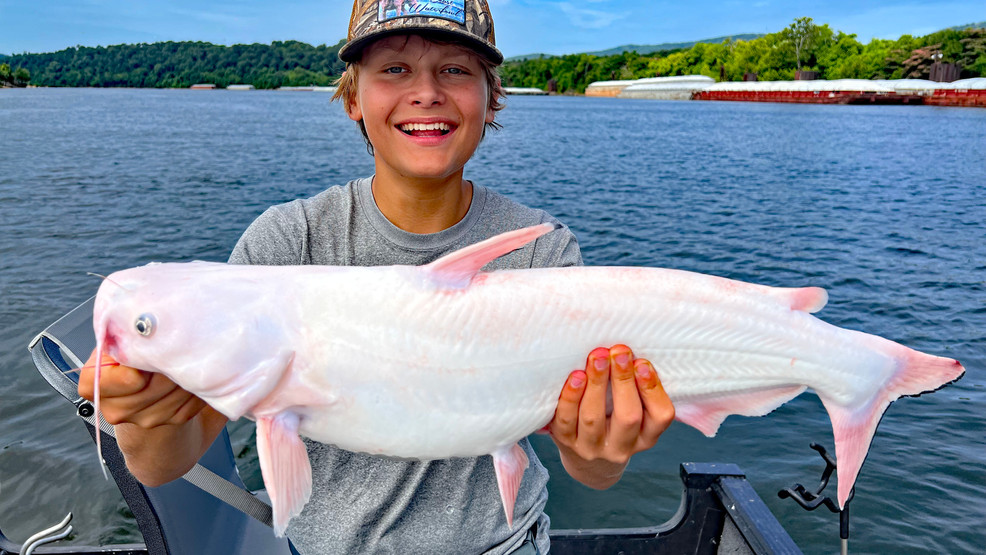
California holds an impressive white catfish record that exceeds even the international standard. The California state record white catfish weighs 22 pounds, caught in 1994 from a park pond in Sacramento County.
This catch is particularly notable because it outweighs the IGFA world record by more than two and a half pounds. The IGFA world record stands at 19 pounds, 5 ounces, caught by Russell D. Price in Oakdale, California in 2005.
You’ll find this discrepancy interesting, as California’s official state record is heavier than the recognized world record. White catfish of this size are exceptionally rare, making this 22-pound specimen a remarkable achievement in freshwater fishing.
5) Notable blue catfish populations in Mississippi, Missouri, Ohio, and Rio Grande basins
Blue catfish are native to the Mississippi River basin from western Pennsylvania to southern South Dakota, extending south to the Gulf of Mexico. These fish thrive in the Mississippi, Missouri, and Ohio river basins, as well as the Rio Grande drainage.
You’ll find blue catfish populations in Missouri’s big rivers that support both recreational and commercial fisheries. The Mississippi River hosts particularly robust populations that attract anglers seeking trophy-sized fish.
These big-river fish prefer swift chutes and pools with noticeable current. The native range extends south along the Gulf Coast to Belize and Guatemala, making these basins crucial habitats for the species.
Understanding Catfish Species in the United States
The United States hosts three primary catfish species that dominate fishing records: blue catfish, channel catfish, and flathead catfish. Each species has unique characteristics and geographic preferences that influence where anglers find record-breaking specimens.
Distribution of Major Catfish
The blue catfish is the largest catfish species in the United States, with its native range covering the Mississippi, Missouri, Ohio, and Rio Grande river basins. You’ll find these fish in large rivers and reservoirs throughout the southern and midwestern states.
Channel catfish have the widest distribution of all catfish species. Approximately eight million anglers hunt channel catfish each year, making them the most popular species. You can catch them in streams, rivers, lakes, and ponds across almost every state.
Flathead catfish prefer warm, slow-moving waters with plenty of cover. They inhabit major river systems and large reservoirs, particularly in the Mississippi River watershed and southern states. These fish typically stay near submerged logs, rock formations, and deep holes during daylight hours.
Distinctive Traits of Record-Holding Species
Blue catfish display a slate-blue to white coloration and have a deeply forked tail. They grow larger than any other North American catfish species, with Texas holding the record for the largest blue catfish at 121.5 pounds, caught in 2004.
Channel catfish feature scattered dark spots on their sides and a more rounded anal fin than blues. California’s official state record stands at 22 pounds, though the IGFA world record is 19 pounds, 5 ounces.
Flathead catfish have a flattened head, square tail, and mottled yellow-brown coloring. They’re aggressive predators that prefer live prey over scavenging. Unlike blue and channel catfish, flatheads are solitary hunters that ambush their food rather than actively pursuing it.
Factors Contributing to Record Catfish Sizes
Record-breaking catfish achieve their massive sizes through a combination of optimal water conditions, abundant food sources, and the strategic techniques anglers use to target these trophy fish.
Environmental and Habitat Influences
Large river systems and reservoirs provide the ideal conditions for catfish to reach record sizes. Deep pools with steady water flow, ample dissolved oxygen, and stable temperatures allow catfish to thrive for decades.
The availability of prey fish like shad, herring, and other baitfish directly impacts catfish growth rates. Waters with robust forage populations produce larger specimens because catfish can feed consistently throughout their lifespan. Some blue catfish live 20 to 30 years, giving them extended time to accumulate mass.
Water temperature plays a critical role in metabolism and feeding behavior. Warmer southern waters in states like Texas and Virginia extend the active feeding season, allowing catfish to consume more calories annually compared to northern populations.
Key habitat factors include:
- Water depth and structure
- Seasonal flow patterns
- Abundance of natural food sources
- Water quality and oxygen levels
Angling Methods and Techniques
Targeted fishing methods significantly increase your chances of catching trophy catfish. Heavy tackle rated for 30 to 80 pounds allows you to handle the power of massive fish without equipment failure.
Fresh cut bait like skipjack herring, shad, or bluegill attracts large catfish more effectively than processed baits. Positioning bait in deep holes, channel bends, and near underwater structures where big catfish patrol increases contact rates.
Jug fishing and trotlines enable you to cover extensive water areas simultaneously, improving your odds of encountering record-class fish. Rod-and-reel techniques using circle hooks reduce gut-hooking and improve survival rates for catch-and-release scenarios.
Night fishing produces better results because large catfish become more active after dark when they move into shallower feeding zones.