

For centuries, farmers, sailors, and outdoorsmen relied on nature to predict the weather long before modern forecasting existed. Many of these traditional sayings—often dismissed as “old wives’ tales”—were passed down through generations as practical ways to anticipate storms, changing temperatures, or incoming rain.
Surprisingly, several of these sayings actually have scientific explanations. Meteorologists say many traditional weather proverbs are based on careful observation of atmospheric conditions and animal behavior.
According to the National Oceanic and Atmospheric Administration, early weather folklore often reflected real patterns in atmospheric pressure, cloud formation, and wind movement.
Here are five classic weather sayings that science suggests may actually be true.
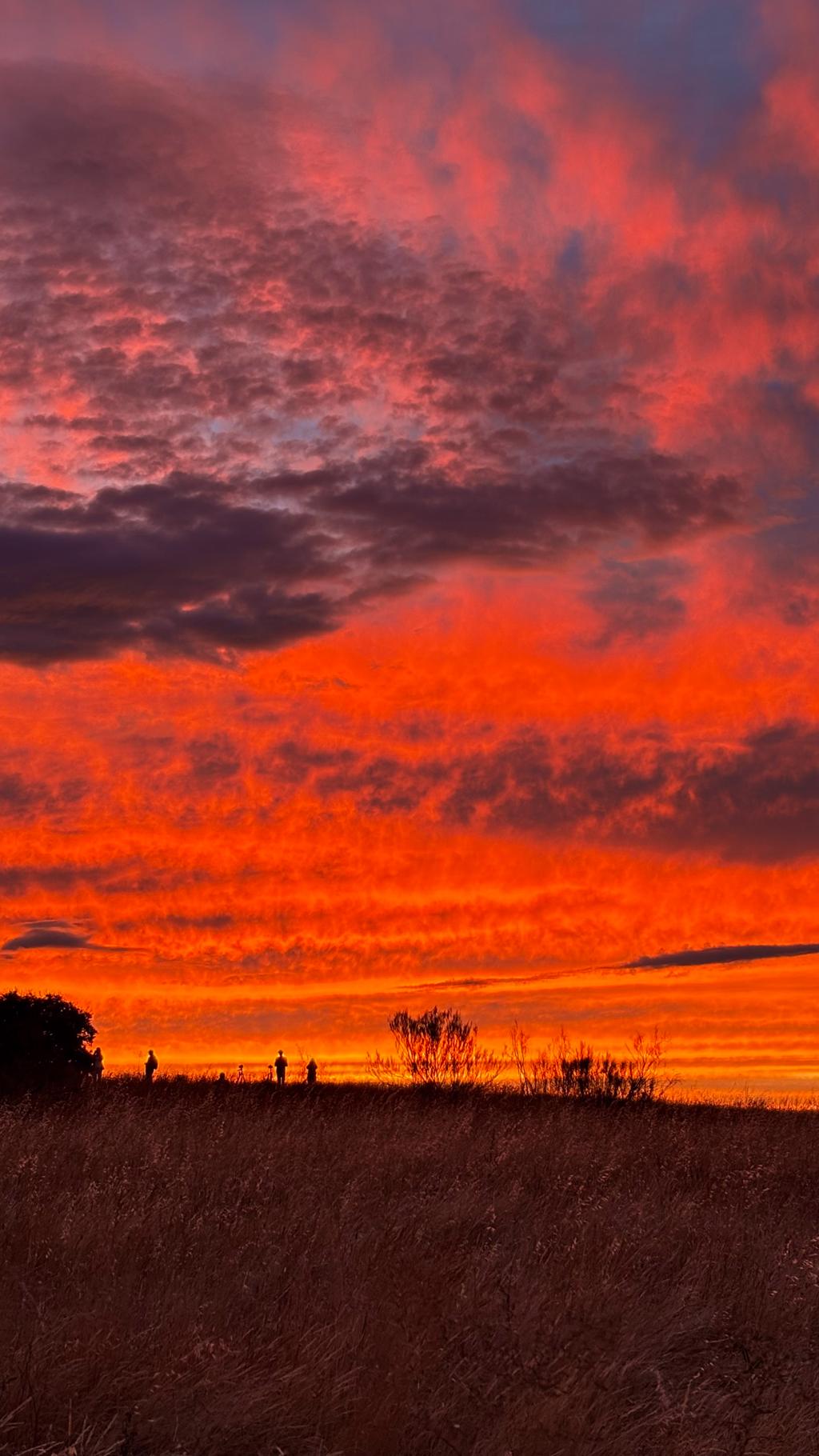
“Red Sky at Night, Sailor’s Delight”
One of the most famous weather sayings goes:
“Red sky at night, sailor’s delight. Red sky in morning, sailor’s warning.”
This proverb dates back centuries and was commonly used by sailors navigating open seas.
Meteorologists say the saying has a strong scientific basis. According to the National Weather Service, a red sunset often indicates that dry, stable air is moving in from the west, which usually means fair weather the following day.
However, a red sunrise may suggest that sunlight is shining through moisture in the atmosphere from an approaching storm system.
While not perfect, this saying reflects real atmospheric patterns tied to the movement of weather systems.
“Ring Around the Moon Means Rain Soon”
If you’ve ever looked up at the night sky and seen a glowing halo around the moon, you may have heard the saying that rain is on the way.
That halo is caused by ice crystals in high-altitude cirrus clouds, which often form ahead of large storm systems.
According to atmospheric research summarized by the National Aeronautics and Space Administration, these ice crystals bend light and create a circular halo around the moon.
Because cirrus clouds frequently appear before storms arrive, the old saying that a ring around the moon means rain is often accurate.
“When Cows Lie Down, Rain Is Coming”
Many farmers believe that cattle lying down in a field can signal approaching rain.
While cows lie down for many reasons—including rest and digestion—weather conditions may influence their behavior.
Agricultural researchers note that falling air pressure often occurs before storms, and animals are sometimes sensitive to these changes.
According to animal behavior studies referenced by the University of Arizona Cooperative Extension, livestock may adjust their behavior before storms due to shifts in atmospheric pressure or humidity.
Although the connection isn’t always reliable, it may explain why farmers have long associated resting cattle with incoming rain.
“Swallows Flying Low Means a Storm Is Coming”
Bird behavior has long been used as a natural weather signal.
One common saying suggests that when swallows fly low to the ground, rain or storms may be approaching.
This observation actually relates to insect behavior. Many flying insects stay closer to the ground when humidity rises before a storm.
Since swallows feed on these insects, the birds follow their food source and fly lower than usual.
Meteorologists from the National Weather Service note that increased humidity and falling air pressure can influence insect flight patterns, which indirectly affects bird activity.
In this case, the behavior of animals reflects real changes in atmospheric conditions.
“Crickets Chirp Faster When It’s Warmer”
The sound of crickets on a summer night isn’t just background noise—it can also reveal the temperature.
For decades, people have used the rate of cricket chirps to estimate outdoor temperature.
Scientists have actually studied this phenomenon. According to biological research summarized by the Library of Congress, cricket chirping speeds increase as temperatures rise because warmer conditions increase the insects’ metabolic activity.
Some formulas even allow people to estimate temperature based on how many chirps occur within a certain time period.
Weather Wisdom Passed Through Generations
While modern meteorology relies on satellites, radar systems, and advanced computer models, many traditional weather sayings contain surprising scientific truth.
For generations, people closely observed the natural world to detect patterns in clouds, animal behavior, and atmospheric changes.
Although these old sayings should not replace modern forecasts, they remind us that careful observation of nature can still provide clues about the weather.
In many cases, the wisdom passed down through generations was rooted in real science—even if the people who first noticed these patterns didn’t fully understand why they worked.