
Across generations of American hunters, certain firearms have earned something more than popularity — they’ve earned permanence. They’ve ridden in scabbards on horseback, leaned against oak trees in deer camps, rattled in duck blinds, and introduced countless young hunters to the field.
What makes a rifle or shotgun timeless isn’t trend appeal or marketing hype. It’s durability. It’s innovation that mattered. It’s production numbers in the millions. And it’s the simple fact that when hunters head into the woods, these guns still get the call.
Together, they represent more than a century of field-proven performance.
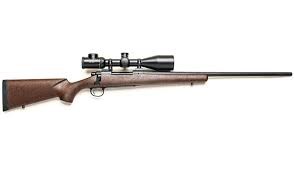
The Remington Model 700
Introduced in 1962, the Remington Model 700 refined bolt-action design into something both affordable and incredibly precise. Its roots trace back through earlier Remington models influenced by military Springfield actions of the World War I era, but the 700 elevated the platform into a civilian powerhouse.
At its core is the famed “three rings of steel” design — a recessed bolt face surrounded by a barrel and receiver ring that enclose the cartridge head. Combined with dual locking lugs, the result is exceptional strength and consistent lockup. That consistency translated into accuracy.
With more than five million rifles produced, the Model 700 became the best-selling bolt-action rifle in history. Chambered in everything from .243 Winchester to .30-06 and magnum calibers, it proved adaptable for nearly every North American big game species.
More importantly, it set a benchmark for precision that modern rifles still chase.
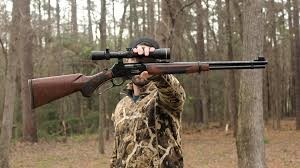
The Marlin Model 336
When the Marlin Model 336 debuted in 1948, it modernized a design lineage stretching back to the 1893 rifle patented by L.L. Hepburn. Its improvements weren’t cosmetic — they were practical.
The 336 introduced a round bolt and machined ejection port, but its most important innovation was side ejection. Unlike top-eject lever guns, the 336 made scope mounting straightforward, allowing hunters to adapt to the optics revolution without abandoning traditional handling.
Chambered most famously in .30-30 Winchester and .35 Remington, the 336 became a deer woods staple. Its compact size, quick cycling, and manageable recoil made it ideal for thick timber and brush country. With production numbers estimated between 3.5 and 6 million units, it ranks among the most popular sporting rifles ever made in the United States.
The 336 bridged tradition and modernity — and that’s why it still resonates.
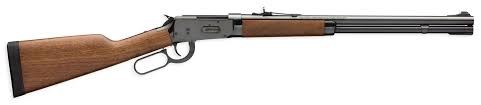
The Winchester Model 94
Designed by John Browning and introduced in 1894, the Winchester Model 94 became synonymous with deer hunting in America. It was one of the first sporting rifles built around smokeless powder cartridges, most notably the .30-30 Winchester.
That cartridge, pushing velocities around 2,000 feet per second, changed the game. It delivered flatter trajectories and improved penetration compared to black powder rounds, all in a lightweight, fast-handling lever gun.
The Model 94 went on to become the best-selling lever-action rifle of all time, with millions produced over more than a century. Slim, balanced, and dependable, it earned its place in truck racks and saddle scabbards across the country.
For many hunters, “deer rifle” simply meant Model 94.
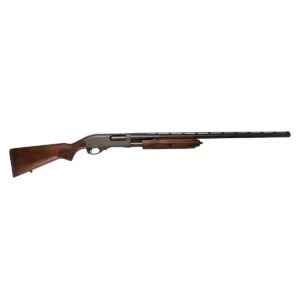
Remington 870 and Mossberg 500
While rifles often steal the spotlight, no hunting camp is complete without a reliable pump shotgun. Two dominate the conversation: the Remington 870 and the Mossberg 500.
The Remington 870, introduced in 1950, built its reputation on smooth operation and rugged steel construction. It quickly became one of the best-selling shotguns ever produced, with millions manufactured for hunters, law enforcement, and military use.
Its twin action bars provided reliable cycling, and its modularity allowed it to adapt to everything from waterfowl blinds to turkey woods. Available in multiple gauges and configurations, it remains a benchmark for pump guns.
The Mossberg 500, introduced in 1960, offered similar durability with a slightly different philosophy. Featuring an ambidextrous tang safety and aluminum receiver, it became known for practical field toughness at an accessible price point. Its versatility and reliability made it a staple in upland, waterfowl, and home-defense roles alike.
Both shotguns endure because they simply work — season after season, in mud, rain, and freezing marshes.
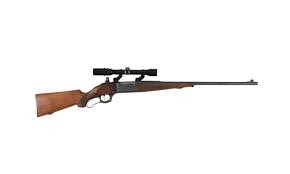
The Savage Model 99
The Savage Model 99 was something different. Introduced in the late 19th century and produced well into the 20th, it featured a hammerless lever-action design and a rotary magazine that allowed the safe use of spitzer (pointed) bullets.
That innovation gave it ballistic advantages over traditional tubular-magazine lever guns. Chambered in cartridges like .300 Savage, it offered performance competitive with early bolt actions while maintaining the rapid handling of a lever rifle.
The 99 combined sleek lines with serious capability. Though no longer produced, it remains highly respected among collectors and hunters who appreciate its engineering foresight.
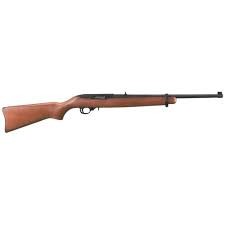
The Ruger 10/22
No list of timeless hunting firearms would be complete without the Ruger 10/22. Introduced in 1964, this semi-automatic .22LR rifle became one of the most produced rimfires in history.
Lightweight, affordable, and reliable, the 10/22 excels in small-game hunting and target practice alike. Its detachable rotary magazine and modular design sparked an entire aftermarket ecosystem, allowing owners to customize nearly every component.
Yet despite its adaptability, the core design remains simple and rugged — a trait that explains why it has introduced generations to marksmanship and squirrel hunting.
Why They Endure
Each of these firearms achieved massive production numbers — not because of hype, but because hunters kept buying them. They handled the transition to smokeless powder. They adapted to modern optics. They survived weather, recoil, and hard use.
Their designs weren’t gimmicks. They were solutions.
From bolt-action precision to lever-action speed, from pump-gun reliability to rimfire simplicity, these firearms cover nearly every hunting application in North America — deer, small game, upland birds, waterfowl, turkey, and beyond.
They remain in circulation because they earned trust the old-fashioned way: by performing when it mattered.
In an era of constantly rotating product cycles and tactical trends, these classics stand apart. They don’t need reinvention. They don’t need flashy marketing.
They endure because they work.
And in the hunting world, that’s the only test that counts.