
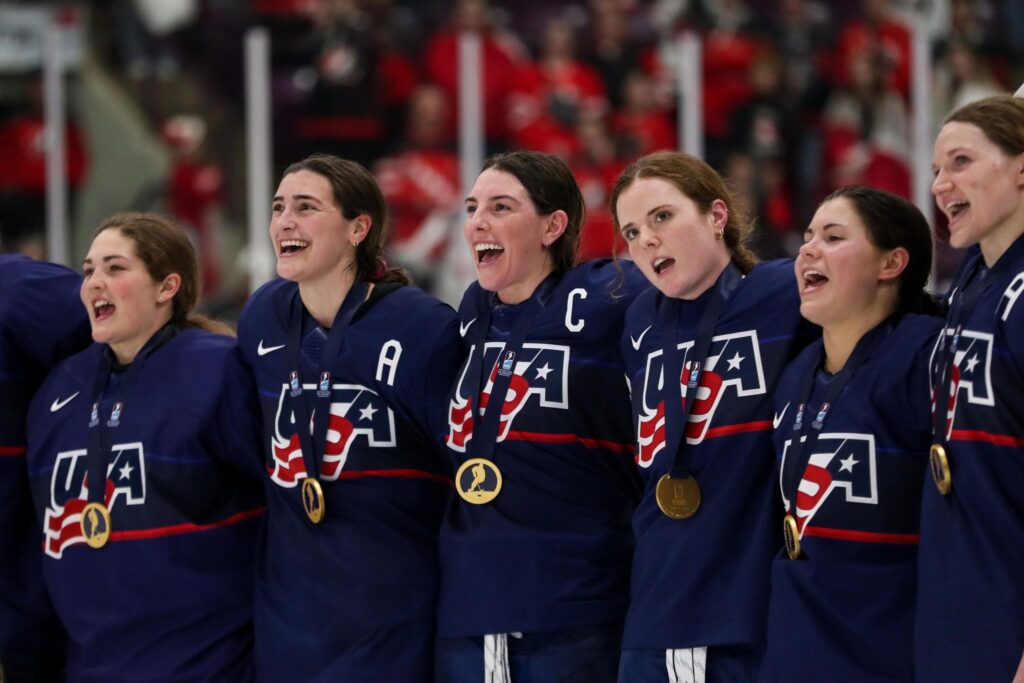


Forty-six years after the “Miracle on Ice” stunned the world in 1980, American hockey has delivered a new golden chapter.
In a historic showing on the international stage, both the U.S. men’s and women’s hockey teams captured gold, igniting celebrations across the country and drawing inevitable comparisons to the legendary run at Lake Placid. While the circumstances were different, the emotion felt familiar: pride, disbelief, and a sense that something bigger than sport had just happened.
A Legacy Revisited
In 1980, a group of American college players shocked the heavily favored Soviet Union en route to gold at the Winter Olympics in Lake Placid. The victory, forever known as the Miracle on Ice, became one of the defining moments in American sports history.
Now, 46 years later, a new generation of U.S. players has written its own story.
The men’s team battled through a gauntlet of elite competition, blending veteran leadership with young speed and grit. Their championship performance was not about one shocking upset — it was about resilience, depth, and executing under pressure when the stakes were highest.
On the women’s side, the U.S. team continued its dominance on the world stage. For years, American and Canadian women’s hockey programs have set the standard globally. This gold medal run reaffirmed the United States’ place at the top, showcasing relentless forechecking, disciplined defense, and clutch scoring in key moments.
A Defining Tournament
Both teams faced intense competition throughout the tournament. The men’s squad navigated tight defensive matchups and high-scoring showdowns alike, proving they could win in multiple styles. Goaltending stood tall when needed, and special teams execution made the difference in critical moments.
The women’s team displayed its trademark physicality and speed, controlling puck possession and capitalizing on power-play opportunities. In the gold medal game, composure under pressure separated champions from contenders.
When the final horn sounded for each team, sticks flew, gloves dropped, and players piled together in celebration — an image that instantly resonated with fans across generations.
More Than a Medal
The significance of this moment goes beyond hardware.
For the men’s program, it represents a continuation of growth. Since 1980, the United States has consistently produced elite NHL talent and competitive international rosters. Winning gold again underscores how far the development system has come — from youth leagues to college programs to professional ranks.
For the women’s team, the victory is another milestone in a movement that continues to elevate women’s hockey worldwide. Increased investment, visibility, and professional opportunities have strengthened the sport’s foundation, and this gold medal is a testament to that progress.
Bridging Generations
The Miracle on Ice was about improbable belief in the face of overwhelming odds. This modern triumph is about sustained excellence and global competitiveness.
Yet the emotional thread connecting them is unmistakable.
Fans who remember 1980 saw echoes of that spirit — the American flag draped across shoulders, the anthem sung with emotion, the sense that sport can unify a nation, if only for a moment.
Younger fans witnessed a defining experience of their own — a reminder that history isn’t just something you watch on documentaries. Sometimes, you get to live it.
A Golden Standard
Hockey in the United States has never been stronger. Youth participation continues to grow, collegiate programs remain competitive, and American-born players increasingly dominate professional leagues.
This dual gold-medal achievement solidifies a powerful message: the United States is not just a contender in international hockey — it is a standard.
Forty-six years after one of the greatest upsets in sports history, American hockey once again stands atop the podium.
Different era. Different players. Same flag.
And once again — golden.