

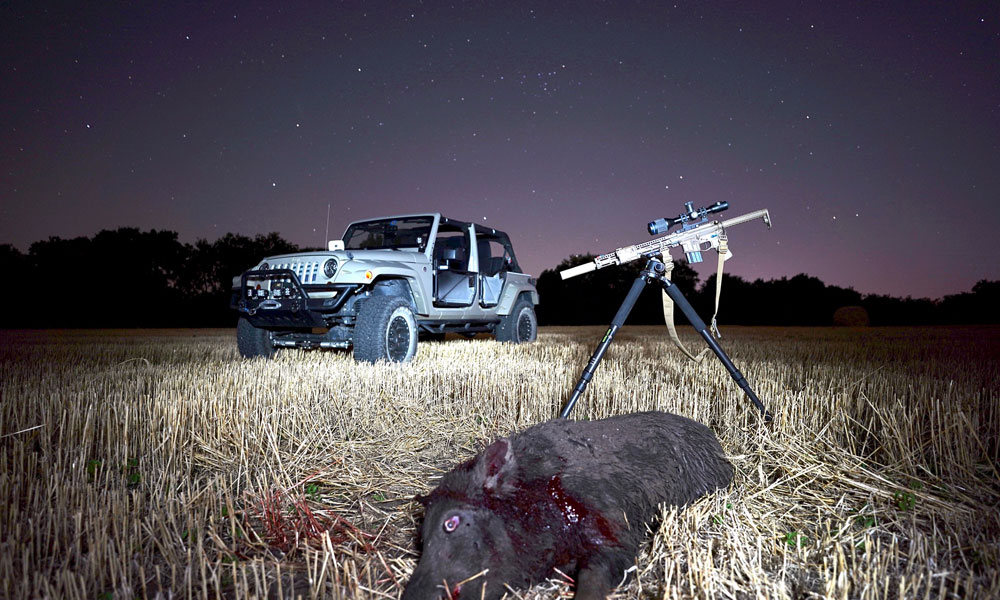
Feral hogs are one of the most destructive invasive species in the United States, causing extensive agricultural damage and disrupting native ecosystems. Because hogs are primarily nocturnal, many hunters rely on specialized optics to locate and harvest them after dark. Two of the most common technologies used for nighttime hog hunting are night vision and thermal imaging.
Both systems allow hunters to operate in low-light conditions, but they work in very different ways. Understanding the advantages and limitations of each can help hunters choose the best equipment for their specific hunting conditions.
How Night Vision Works
Night vision technology amplifies existing light to create a visible image in dark environments. These devices gather ambient light from sources such as moonlight, starlight, or distant artificial lighting and intensify it to produce a bright image that allows hunters to see in the dark.
According to optics experts at the National Optical Astronomy Observatory, night vision devices use image intensifier tubes that multiply small amounts of available light thousands of times to produce a usable image.
Most night vision scopes produce a green-colored image because the human eye can distinguish more detail in shades of green than other colors.
For hog hunters, night vision can provide clear identification of animals, terrain, and surrounding vegetation when enough ambient light is present.
How Thermal Imaging Works
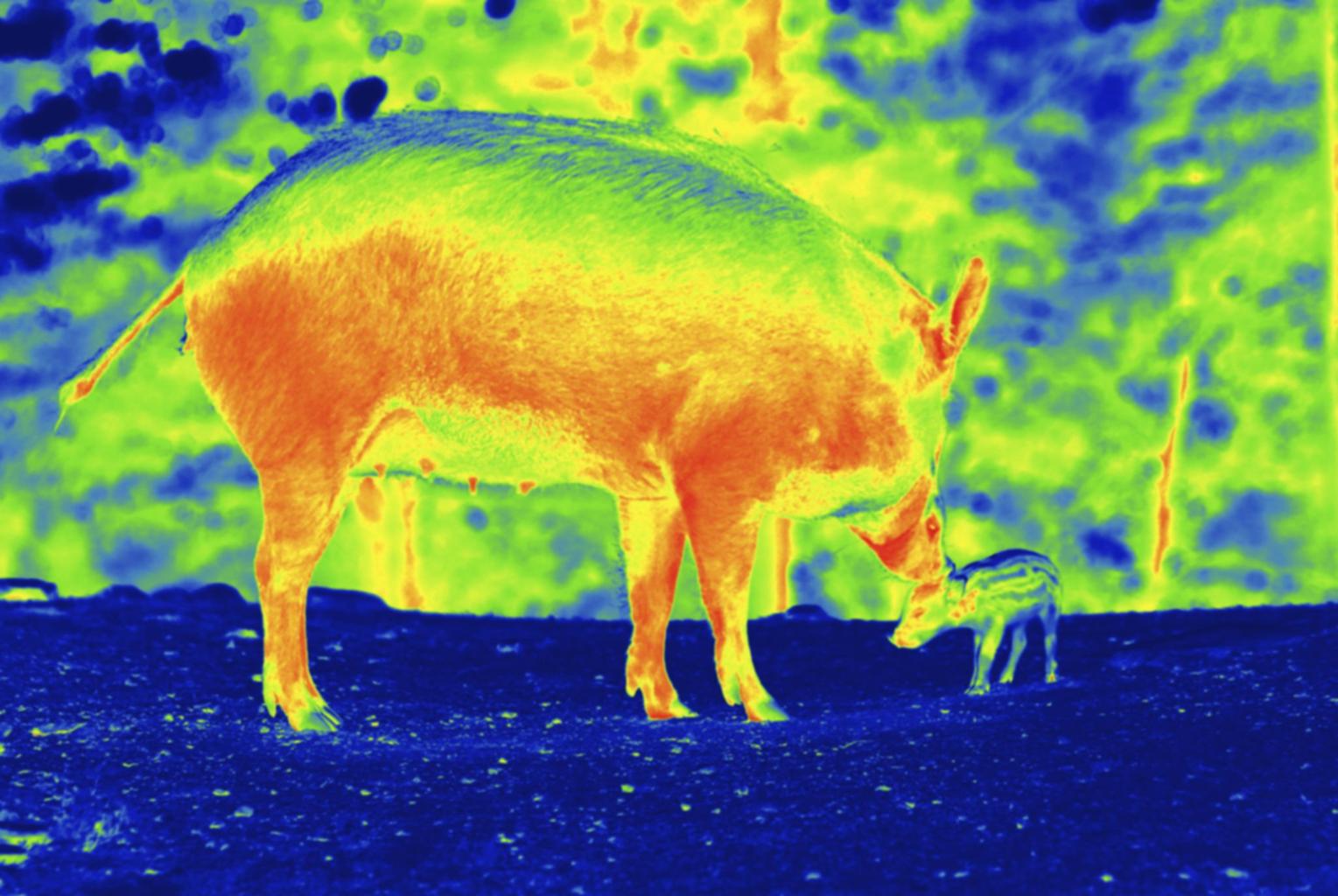
Thermal optics function very differently from night vision devices. Instead of amplifying light, thermal scopes detect heat differences between objects.
According to the U.S. Army’s Night Vision and Electronic Sensors Directorate, thermal imaging devices detect infrared radiation emitted by warm objects and convert it into a visible image that highlights heat signatures.
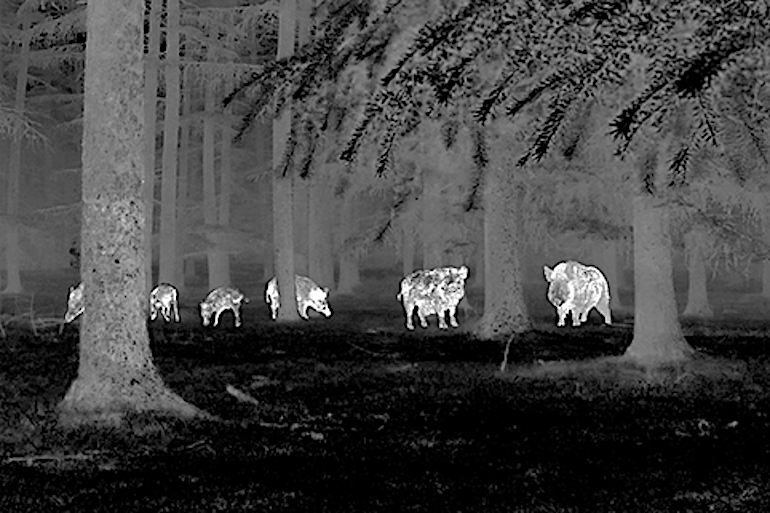
Because thermal imaging relies on heat rather than light, it works in complete darkness and can detect animals hidden in brush, tall grass, or light vegetation.
This ability to pick up heat signatures makes thermal optics extremely effective for locating hogs that would otherwise be invisible to the human eye.
Why Thermal Is Popular for Hog Hunting
Thermal imaging has become increasingly popular among hog hunters because it excels at locating animals across large areas.
Feral hogs often move through fields, thick brush, or tall grass at night. Thermal optics allow hunters to quickly scan these areas and detect animals based on their heat signatures.
According to hog hunting specialists at Texas A&M AgriLife Extension, thermal technology can dramatically improve the ability to locate feral hog groups, especially when animals are hidden by vegetation or darkness.
Thermal scopes are also effective in fog, light rain, or smoke conditions where traditional night vision devices may struggle.
Because of these advantages, many hunters use thermal optics primarily for spotting animals before switching to a rifle-mounted optic to take the shot.
Where Night Vision Still Excels
While thermal optics are extremely effective at detecting animals, night vision devices still offer several advantages.
One of the biggest benefits of night vision is image detail. Night vision provides a clearer view of terrain, vegetation, and animal features compared to thermal imaging, which often shows animals as heat silhouettes.
This can make species identification easier when multiple animals are present.
Night vision equipment is also generally less expensive than thermal optics. According to outdoor gear reviewers at Field & Stream, quality night vision scopes can cost significantly less than comparable thermal systems, making them attractive for hunters on a budget.
In areas where ambient light is available, night vision can provide a more natural-looking image for precise shooting.
Many Hunters Use Both
Because thermal and night vision technologies each offer unique advantages, many experienced hog hunters choose to use both systems together.
A common setup involves using a handheld thermal monocular to scan fields and locate hogs from a distance. Once the animals are spotted, the hunter switches to a night vision scope or thermal rifle scope to make the shot.
According to hog control specialists at Texas A&M AgriLife Extension, this approach allows hunters to quickly locate hogs while still maintaining the ability to identify targets clearly before firing.
Using both technologies can significantly increase hunting success rates, especially when targeting large sounders of hogs moving through open fields at night.
Legal Considerations
Hunters should always check local regulations before using night vision or thermal optics for hunting.
Many states allow nighttime hog hunting with specialized optics because feral hogs are classified as invasive species. For example, the Texas Parks and Wildlife Department allows nighttime hunting of feral hogs on private property with landowner permission.
However, regulations vary by state, and certain equipment restrictions may apply depending on the location.
Understanding local wildlife laws is essential before pursuing hogs at night.
Choosing the Right Option
The choice between night vision and thermal ultimately depends on hunting conditions, budget, and personal preference.
Thermal optics are excellent for locating animals in total darkness and scanning large areas quickly. Night vision devices provide better terrain detail and can be more affordable for hunters starting out.
Both technologies have proven highly effective in helping hunters control feral hog populations, particularly in areas where traditional daytime hunting is less productive.
A Powerful Tool for Hog Hunters
As feral hog populations continue expanding across the United States, nighttime hunting has become an increasingly important method for managing these destructive animals.
Modern optics have transformed how hunters approach nighttime predator and hog hunting. Whether using night vision, thermal imaging, or a combination of both, these technologies allow hunters to safely and effectively locate animals that would otherwise remain hidden in the darkness.
For landowners dealing with hog damage or hunters looking to increase their nighttime success, choosing the right optic can make a significant difference when pursuing one of North America’s most challenging invasive species.