
8 Fish That Will Eat Almost Anything

Nature’s Opportunistic Predators
Spend enough time fishing and you quickly learn that some fish are far pickier than others. While certain species feed selectively on specific insects or forage, others are far less discriminating. These aggressive predators will attack nearly anything they believe might be food.
For anglers, these species are often the most exciting to target. Their aggressive feeding behavior makes them willing to strike lures, bait, and sometimes even objects that clearly aren’t natural prey.
According to fisheries research published by the U.S. Fish and Wildlife Service, opportunistic feeding is a survival strategy that allows predators to take advantage of whatever food sources are available in their environment.
Across North America’s rivers, lakes, and coastal waters, several fish have developed reputations for eating almost anything they encounter.
Largemouth Bass
Largemouth bass may be one of the most opportunistic freshwater predators in North America.
Bass feed heavily on baitfish such as shad and bluegill, but their diet extends far beyond small fish. Anglers have documented bass eating frogs, snakes, ducklings, mice, and even small birds.
According to research conducted by biologists with the Texas Parks and Wildlife Department, largemouth bass diets shift depending on what prey is most abundant in their habitat.
This adaptability is one reason bass fishing remains one of the most popular sports in the United States.
Flathead Catfish
Flathead catfish are among the largest freshwater predators in American rivers.
Unlike some catfish species that primarily scavenge, flatheads actively hunt live prey. Their diet often includes fish, crayfish, and occasionally small mammals that enter the water.
According to data from the Missouri Department of Conservation, flathead catfish can grow to exceed 100 pounds and are capable of consuming surprisingly large prey relative to their size.
Anglers targeting trophy flatheads often use live bait because the fish instinctively respond to struggling prey.
Northern Pike
Northern pike are famous for their aggressive nature and lightning-fast strikes.
These toothy predators inhabit lakes and rivers throughout the northern United States and Canada. Pike often ambush prey from vegetation or structure before launching explosive attacks.
According to fisheries research from the Minnesota Department of Natural Resources, northern pike diets include fish, frogs, small birds, and even other pike.
Their willingness to strike large lures is one reason pike fishing is so popular among anglers.
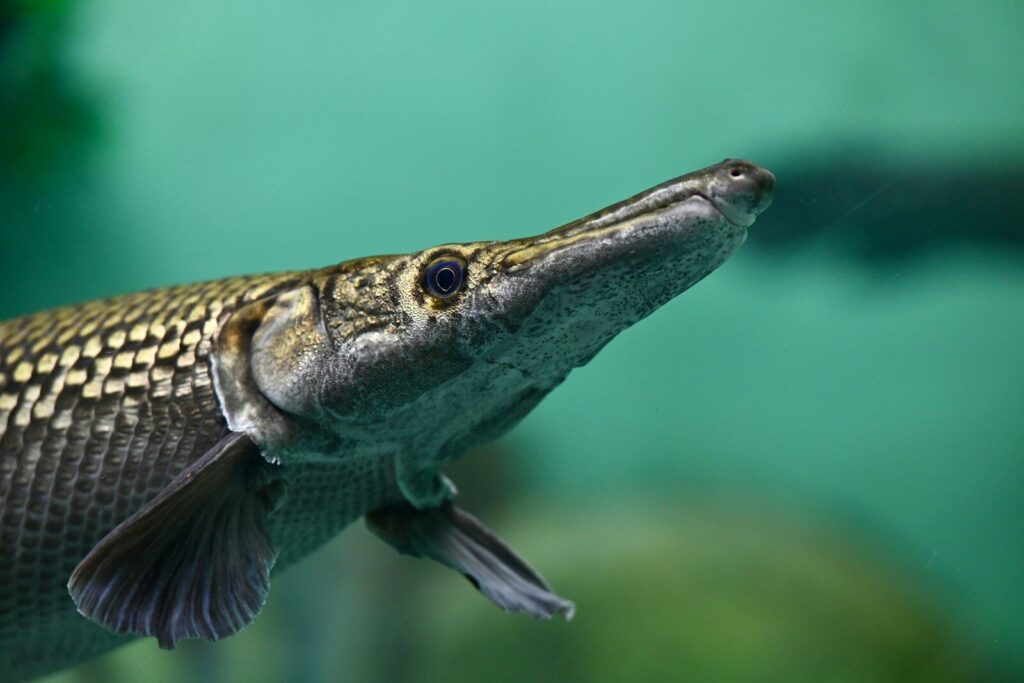
Alligator Gar
Few freshwater fish look as prehistoric as the alligator gar.
Native to rivers and reservoirs across the southern United States, this ancient predator has existed for millions of years with relatively little evolutionary change.
According to studies conducted by the U.S. Geological Survey, alligator gar primarily feed on fish but will opportunistically consume waterfowl and other animals that enter the water.
Their enormous size—sometimes exceeding 300 pounds—makes them one of the most formidable predators in freshwater ecosystems.
Blue Catfish
Blue catfish are another species known for their aggressive feeding habits.
These fish are capable of reaching sizes well over 100 pounds and are common in large rivers and reservoirs.
According to fisheries research published by the Virginia Department of Wildlife Resources, blue catfish diets include fish, mussels, insects, and various aquatic organisms.
Because they are opportunistic feeders, blue catfish readily strike a wide variety of baits ranging from cut fish to artificial lures.
Snakehead
The northern snakehead has gained notoriety as an invasive species in several U.S. waterways.
Native to Asia, snakeheads are aggressive predators capable of consuming fish, amphibians, and small mammals.
According to the U.S. Fish and Wildlife Service, snakeheads are particularly concerning because of their ability to reproduce quickly and dominate ecosystems.
Anglers targeting snakeheads often use topwater lures because the fish aggressively attack prey near the surface.
Barracuda
Moving into saltwater, few fish are as aggressive as barracuda.
These sleek predators are famous for their speed and razor-sharp teeth. Barracuda often attack shiny objects that resemble injured baitfish.
According to marine research from the National Oceanic and Atmospheric Administration, barracuda feed primarily on fish but are known to strike a wide variety of moving objects in the water.
Their aggressive behavior makes them a thrilling catch for saltwater anglers.
Bull Sharks
While technically more famous as ocean predators, bull sharks frequently enter freshwater rivers and estuaries.
Bull sharks are opportunistic hunters that consume fish, turtles, birds, and even other sharks.
According to research from the Florida Museum of Natural History, bull sharks have one of the most varied diets among large predators.
Their ability to thrive in both saltwater and freshwater environments allows them to hunt in areas where few other sharks can survive.
Opportunistic Feeding in the Wild
Fish that eat almost anything often thrive in changing environments.
Their adaptability allows them to take advantage of whatever food sources are available, whether that means chasing baitfish, ambushing frogs, or attacking artificial lures thrown by anglers.
For fishermen, these aggressive predators provide some of the most exciting action on the water.
And somewhere beneath the surface, one of these opportunistic feeders may already be eyeing the next thing that splashes nearby—whether it’s prey, bait, or something it simply can’t resist attacking.