
Thinking About Reloading Your Own Ammo? Here’s What You Need to Know Before You Start

For a lot of shooters, there comes a point where buying factory ammo just isn’t enough. Prices fluctuate, availability comes and goes, and the idea of building something tailored to your rifle or handgun starts to sound pretty appealing.
That’s usually when reloading enters the conversation.
Reloading your own ammunition isn’t just about saving money—it’s about control, consistency, and understanding every part of the round you’re firing. But it’s also something that requires attention to detail and a serious respect for the process.
What Reloading Actually Is
At its core, reloading is the process of assembling ammunition using four main components:
- Brass casing
- Primer
- Powder
- Bullet
Instead of buying a complete round, you’re taking a fired casing and rebuilding it into a usable cartridge.
It sounds simple—and at a high level, it is—but every step matters. Precision is everything.
Why So Many Shooters Get Into It
There’s a reason reloading has stuck around for generations.
Cost Control
Over time, reloading can reduce your cost per round—especially for rifle calibers. It’s not always cheaper upfront, but long term, it adds up.
Accuracy
This is where reloading really shines. Factory ammo is built to work in every firearm. Reloading allows you to fine-tune a round for your firearm.
That difference can show up on target.
Independence
Anyone who’s been through an ammo shortage knows how frustrating it can be. Reloaders aren’t immune—but they’re often better prepared.
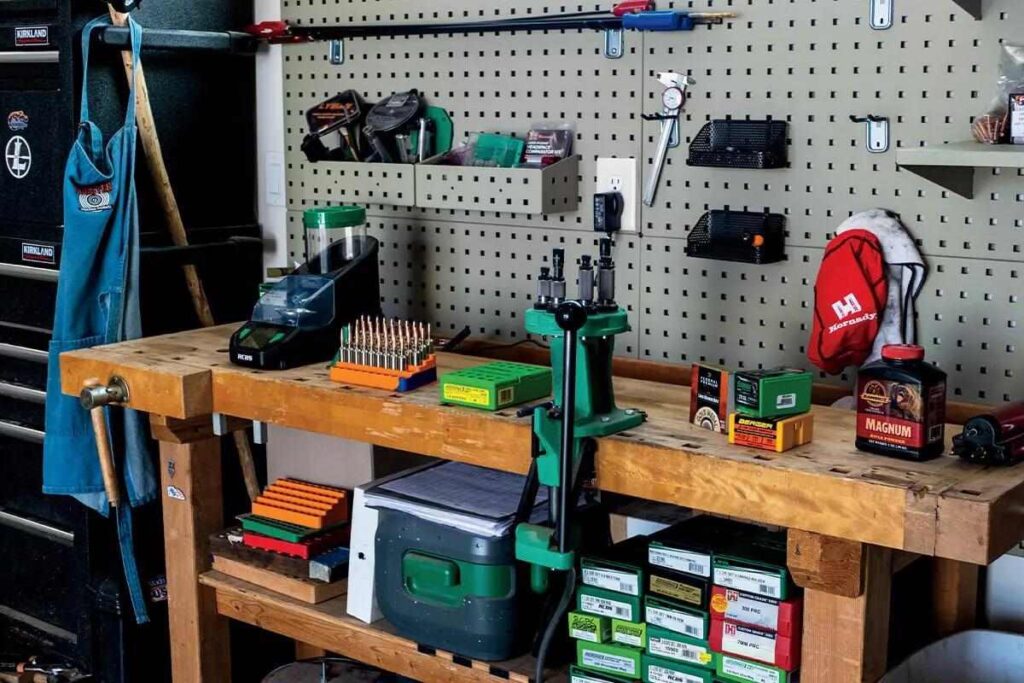
The Setup: Building Your Bench
Getting started means putting together a basic reloading setup.
Most beginners start with:
- A single-stage press (simple, reliable, and easier to learn on)
- Caliber-specific dies
- A powder scale
- Measuring tools like calipers
- A way to clean brass
- A trusted reloading manual
That last one matters more than anything else.
Manuals from companies like Hornady, Lyman, or Speer provide tested load data and safety guidelines. They’re not optional—they’re essential.
The Process (At a High Level)
Without getting into the weeds, reloading follows a general flow:
You start by cleaning and inspecting your brass. From there, the casing is resized and prepared for a new primer. Powder is measured carefully, and a bullet is seated to the correct depth.
That’s the big picture.
But what separates good reloaders from bad ones is consistency. Every round should be as close to identical as possible.
Where People Get Into Trouble
Reloading rewards patience—and punishes shortcuts.
Some of the most common mistakes include:
- Using the wrong powder
- Inconsistent measurements
- Skipping inspections on brass
- Rushing through the process
Small errors can lead to big problems. That’s why experienced reloaders tend to move slowly and double-check everything.
The Importance of Following Data
If there’s one rule that matters above all else, it’s this:
Only use published load data from trusted sources.
Don’t guess. Don’t improvise. Don’t assume two powders are interchangeable.
Every component plays a role in pressure and performance. Changing even one variable without proper data can create unsafe conditions.
Reloading isn’t the place for trial and error.
Start Simple and Build From There
If you’re just getting into it, keep it simple.
Start with one caliber. Learn the process. Get comfortable with your equipment. Focus on consistency before trying to optimize performance.
There’s plenty of time to experiment later.
More Than Just Ammo
What surprises a lot of people is how much reloading changes the way they think about shooting.
You start paying attention to details you never noticed before—how different loads perform, how your firearm reacts, how small changes can make a difference.
It adds another layer to the experience.
The Bottom Line
Reloading isn’t for everyone—but for those willing to put in the time, it’s one of the most rewarding parts of shooting.
It gives you control. It builds confidence. And it connects you more closely to every round you fire.
But it also demands discipline.
Because at the end of the day, you’re not just making ammo.
You’re responsible for it.