

Where Big Bass Hide: 6 Structures Every Angler Should Fish to Find Giants

Catching small bass is one thing.
Catching big bass consistently is something else entirely.
The difference usually isn’t luck. It’s location.
Big bass don’t roam aimlessly. They position themselves around structure that gives them three things: food, cover, and an advantage over prey. If you’re not fishing the right areas, it doesn’t matter what lure you’re throwing—you’re fishing empty water.
If you want to find bigger fish, these are the six structures you need to focus on.
1. Points: Natural Ambush Zones
Points are one of the most reliable places to find bass year-round.
These are areas where land or structure extends into the water, creating a transition from shallow to deep. Bass use points as highways—moving up to feed and dropping back to deeper water when conditions change.
Focus on:
- Main lake points for bigger fish
- Secondary points during pre-spawn and post-spawn
Work different depths until you find where they’re holding. Big bass often sit just off the edge, waiting to ambush bait.
2. Drop-Offs and Ledges: Where Depth Changes Fast
Any sudden change in depth is a magnet for bass.
Drop-offs and ledges create a clear line where fish can move between feeding zones and safety. Big bass especially like to sit just off the break, conserving energy while waiting for something to come by.
Best approach:
- Fish parallel to the ledge
- Work baits slowly along the depth change
This is where patience pays off—and where some of the biggest bass in the lake live.
3. Docks: Shade, Cover, and Easy Meals
Docks are bass magnets, especially in pressured lakes.
They provide:
- Shade
- Structure
- Consistent food sources
Big bass love to tuck up under docks during the day, especially in warmer months.
Skip your bait under the platform and hit the darkest areas. That’s where the bigger fish tend to sit.
If you’re not comfortable skipping yet, now’s the time to learn—it’s one of the most effective techniques there is.
4. Vegetation Edges: The Perfect Line
Grass lines and weed edges are some of the most productive areas in any lake.
Bass use them as:
- Cover to hide
- Feeding lanes to ambush prey
The key is the edge—not the thickest part of the grass.
Fish along:
- Outside edges where grass meets open water
- Pockets and holes within vegetation
This is especially effective in the summer when bass rely on cover to stay cool and conserve energy.
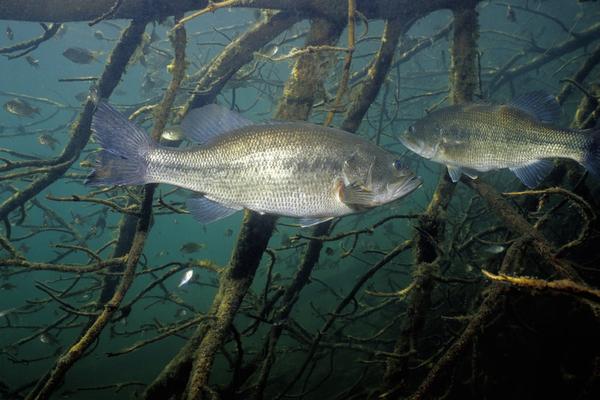
5. Submerged Timber and Laydowns
Fallen trees and underwater timber create ideal ambush points.
They break up the water column and give bass a place to hide while staying close to feeding areas.
Big fish will often position themselves:
- On the deeper side of the structure
- Near the thickest cover
These areas can be tough to fish, but that’s part of what makes them productive—fewer anglers are willing to put in the effort.
Use weedless setups and take your time working through the cover.
6. Rock and Riprap: Heat and Habitat
Rocky areas hold bass for multiple reasons.
Rocks:
- Retain heat
- Attract baitfish
- Provide hard structure
Riprap banks, rocky points, and chunk rock areas are all prime spots.
In cooler months, rock can be especially effective because it warms up faster than surrounding areas, drawing in bait—and the bass that follow.
Fish these areas methodically, making contact with the bottom whenever possible.
Why Structure Matters More Than Lures
A lot of anglers spend too much time worrying about what bait to throw.
But location will always matter more.
You can throw the best lure in the world—but if there aren’t any fish there, it won’t matter.
On the other hand, if you’re fishing the right structure, even a simple bait can produce.
That’s the difference.
How Big Bass Use Structure Differently
Smaller bass tend to school and move more freely.
Big bass don’t.
They:
- Hold tighter to cover
- Conserve energy
- Position themselves for high-percentage feeding opportunities
That’s why targeting structure is so important.
You’re not just looking for fish—you’re looking for the fish that are set up to feed efficiently.
And those are usually the bigger ones.
The Bottom Line
If you want to catch bigger bass, you have to fish where they live.
Points, ledges, docks, vegetation, timber, and rock—these aren’t random spots.
They’re the places where bass have everything they need to survive and thrive.
Find these structures, learn how to fish them effectively, and you’ll start seeing a difference.
Because big bass aren’t everywhere.
But when you find the right structure…
They’re exactly where they’re supposed to be.