
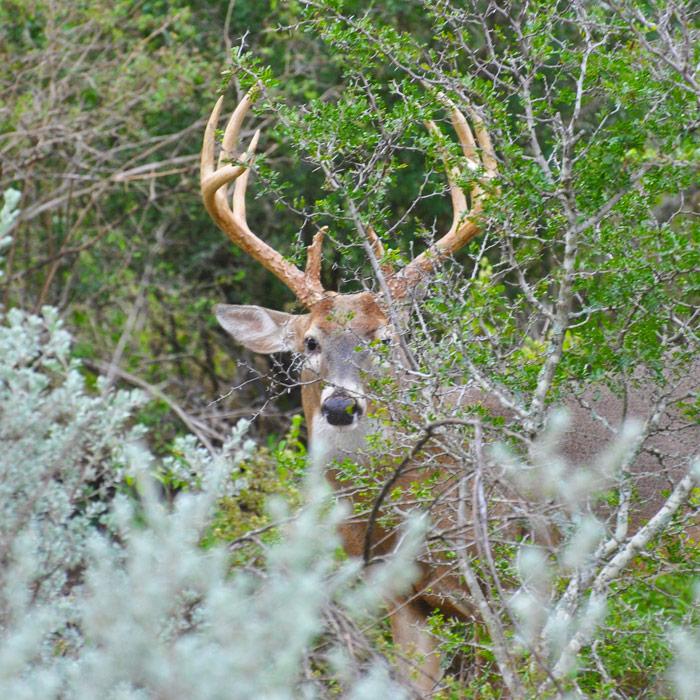
Why Big Bucks Avoid Feeders (And What They’re Doing Instead)

Feeders are everywhere—especially in Texas.
Spin corn long enough, and you’ll have deer showing up daily. Cameras fill up. Does pile in. Young bucks hang around.
But the one deer you’re actually after?
He’s nowhere to be found.
Or worse…
He’s showing up—but only in the middle of the night.
Feeders Create Pressure—Fast
Feeders concentrate activity.
That sounds like a good thing, but for mature bucks, it’s a red flag. The moment consistent human scent, vehicle traffic, or hunting pressure builds around a feeder, older deer take notice.
They didn’t get big by being careless.
They recognize patterns:
- Feed goes off at the same time
- Hunters show up shortly after
- Movement increases around that location
And once they connect those dots, they adjust.
Mature Bucks Don’t Like Open Exposure
Most feeders are set up in relatively open areas to allow visibility and shot opportunities.
That’s great for hunters.
Terrible for mature bucks.
Older deer prefer:
- Thick cover
- Edge habitat
- Terrain that gives them an escape route
Standing in the open—even for a quick meal—goes against everything that’s kept them alive.
So instead, they hang back.
They stage in the shadows, scent-check the area, and often never step fully into the open during daylight.
Nocturnal Patterns Take Over
One of the most common trail cam frustrations is this:
The biggest buck on the property only shows up at night.
That’s not random.
That’s strategy.
As pressure builds, mature bucks shift their movement to:
- After dark
- Early pre-dawn hours
- Times when human activity is lowest
Feeders don’t stop working.
They just stop working during legal shooting light.
They’re Eating—Just Not There
Here’s the mistake many hunters make:
They assume if bucks aren’t hitting feeders, they’re not feeding.
That’s not true.
They’re just feeding somewhere else.
Mature bucks often prefer:
- Native browse
- Acorns (when available)
- Natural food plots
- Edge vegetation near bedding areas
These food sources offer one thing feeders don’t:
Security.
Wind Matters More Than Corn
A big buck will almost always approach a feeding area from downwind.
If the wind isn’t right, he won’t show.
And if a feeder location doesn’t allow him to safely scent-check before entering, he’ll avoid it entirely during daylight.
That’s why you’ll often see:
- Tracks around feeders
- Sign nearby
- But no daylight photos
He’s there.
Just not where you want him.
Hunting the Edges Instead
If feeders aren’t producing, the answer isn’t always more corn.
It’s better positioning.
Focus on:
- Trails leading to the feeder
- Thick cover nearby
- Transition zones between bedding and feeding
That’s where mature bucks are moving during daylight—before they commit to stepping into open areas after dark.
Less Pressure, More Opportunity
Sometimes the best thing you can do is back off.
Reduce pressure around feeders:
- Don’t check cameras too often
- Limit vehicle traffic
- Avoid over-hunting the same spot
Let the area settle.
Because the less pressure a buck feels, the more likely he is to make a mistake.
The Bottom Line
Feeders work.
But they don’t work the same for every deer.
Does and young bucks will show up all day long.
Mature bucks?
They play a different game.
They avoid exposure, adjust to pressure, and feed on their own terms.
And if you want a shot at one…
You’ll have to do the same.