
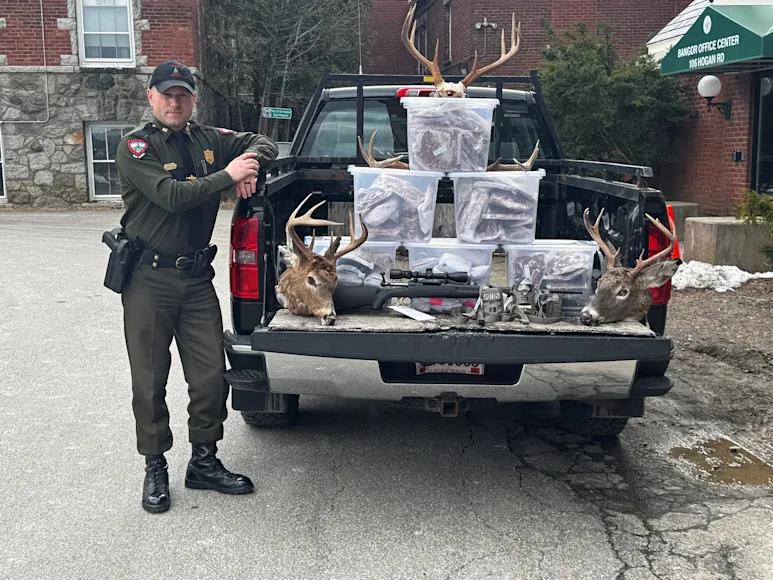
Undercover Investigation Takes Down Multi-State Poaching Ring in Ohio

A two-year undercover investigation has exposed a coordinated poaching operation involving multiple individuals crossing state lines to illegally harvest deer in Ohio—highlighting just how far some will go to exploit wildlife resources.
According to the Ohio Department of Natural Resources, the investigation uncovered a group of Michigan men who repeatedly traveled into Ohio with the intent of illegally killing deer and evading hunting laws.
Two-Year Investigation Built on Evidence and Surveillance
The case didn’t happen overnight. Wildlife officers spent two years gathering evidence, building a case through surveillance, documentation, and firsthand encounters.
According to the Ohio Department of Natural Resources, investigators collected photos, videos, and direct observations that revealed a consistent pattern of illegal activity tied to the group.
This type of long-term operation is often necessary in poaching cases, where offenders may operate across multiple seasons and jurisdictions.
Identified Ring Leaders and Organized Activity
Authorities identified several key individuals connected to the operation, including:
- James Barrett of Harrison Township, Michigan
- Todd Brown of Atlanta, Michigan
- Paul Laurain of Sterling Heights, Michigan
- James Laurain of Sterling Heights, Michigan
- Jonathan Ricker of Washington Township, Michigan
According to the Ohio Department of Natural Resources, these individuals were part of a broader group involved in repeated violations, with a total of 11 hunters ultimately charged.
Investigators determined that multiple suspects intentionally traveled from Michigan into Ohio specifically to poach deer.
Illegal Tactics Show a Pattern of Intent
The investigation revealed that this was not a case of isolated mistakes or misunderstandings—it was a deliberate pattern of illegal behavior.
According to findings released by the Ohio Department of Natural Resources, documented violations included:
- Jacklighting (spotlighting deer at night)
- Shooting deer from vehicles
- Hunting without proper nonresident licenses and permits
- Failing to properly game check harvested deer
- Providing false information to conceal illegal activity
These methods are not only illegal—they directly violate the principles of fair chase and ethical hunting.
Crossing State Lines to Poach Raises the Stakes
One of the most serious aspects of this case is the interstate nature of the operation.
According to the Ohio Department of Natural Resources, multiple individuals traveled into Ohio specifically to exploit its wildlife resources without following legal requirements.
Crossing state lines to commit wildlife violations can increase penalties and may involve additional legal consequences, depending on the scope of the offenses.
Why Poaching Cases Like This Matter
Poaching is more than just breaking hunting regulations—it undermines conservation efforts and steals opportunities from lawful hunters.
Wildlife management systems depend on:
- Regulated harvest limits
- Licensing and funding
- Ethical participation
According to enforcement principles emphasized by the Ohio Department of Natural Resources, illegal harvesting disrupts population management and damages the integrity of hunting as a whole.
In cases like this, the impact goes beyond a single animal—it affects the entire system.
Ethical Hunters Are Often the Most Affected
For hunters who follow the law, cases like this hit close to home.
Every tag purchased, every regulation followed, and every ethical decision made contributes to conservation. When individuals intentionally break those rules, they’re taking advantage of a system built on responsibility.
This is why many poaching cases generate strong reactions within the hunting community itself.
The Role of Undercover Operations in Wildlife Enforcement
This case also highlights the importance of undercover work in wildlife law enforcement.
Unlike other crimes, poaching often happens in remote areas, at night, or out of public view. That makes detection more difficult and requires proactive investigation.
According to the Ohio Department of Natural Resources, undercover operations allow officers to document repeated violations and build stronger cases that hold offenders accountable.
The Bottom Line
This investigation sends a clear message: wildlife crimes are taken seriously, and those who attempt to exploit the system will eventually be caught.
What makes this case stand out isn’t just the number of individuals involved—it’s the level of intent. These weren’t accidental violations. According to the Ohio Department of Natural Resources, this was a coordinated effort to illegally harvest deer and avoid detection.
For hunters who do things the right way, it’s a reminder of why ethics matter. And for those who don’t, it’s proof that even in remote woods, accountability isn’t far behind.