
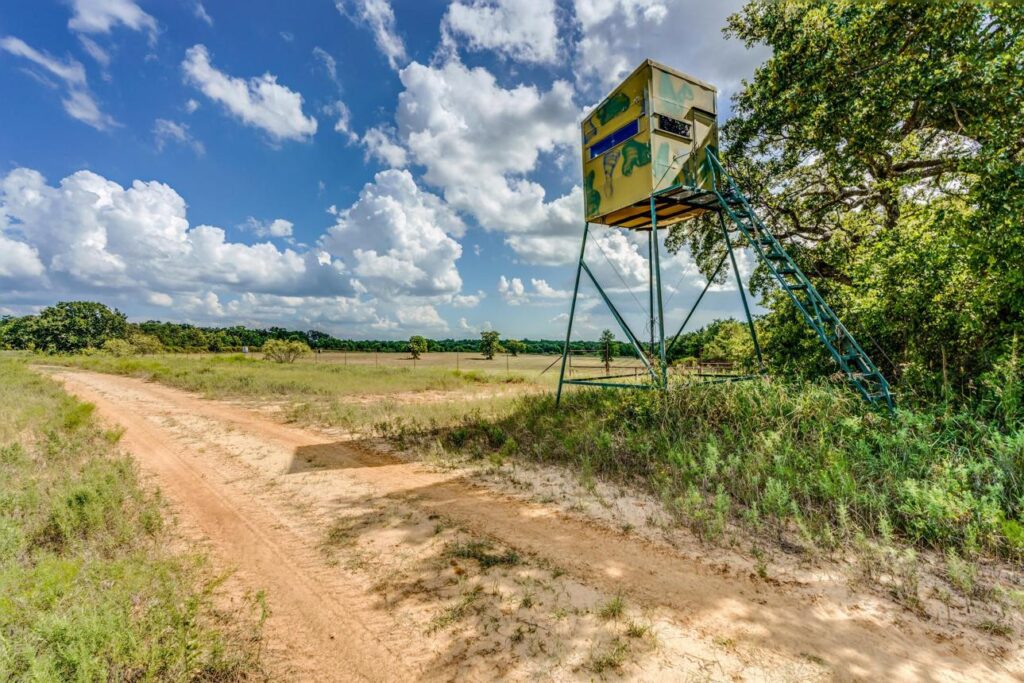
Landowner Finds Illegal Hunting Blind Hidden on His Property in Llano County, Texas. Authorities Say Nothing Can be Done Without Evidence of Trespassing

A Llano County ranch owner is raising concerns after discovering an unauthorized hunting blind concealed deep within his property—an incident that highlights ongoing issues with trespassing and illegal hunting across rural Texas.
Mark Ellison, who owns a 240-acre ranch outside Llano, said he came across the blind while checking fence lines earlier this month. What he found wasn’t a temporary setup—it was a constructed blind that had clearly been used multiple times.
Discovery Made During Routine Property Check
Ellison said the structure was located roughly 300 yards inside his property boundary, tucked into thick brush overlooking a well-used deer trail.
“It wasn’t something someone threw together that morning,” Ellison said. “This had been there for a while. There were cut limbs, a chair inside, even spent casings on the ground.”
According to Ellison, the blind appeared intentionally hidden from view, positioned to avoid detection from nearby roads or neighboring properties.
Signs of Repeated Illegal Use
The site showed multiple indicators of ongoing activity. In addition to shell casings, Ellison reported finding:
- Food wrappers and drink containers
- Fresh boot tracks
- A cleared shooting lane through brush
- Evidence of baiting nearby
The presence of these items suggests the blind had been used over time, not just for a single hunt.
Illegal blinds like this are often set up by individuals who repeatedly access private land without permission, sometimes entering from adjacent properties or public access points.
Texas Law Requires Landowner Permission
Under Texas law, entering private property to hunt without permission is considered trespassing and can result in criminal charges.
The Texas Parks and Wildlife Department states that hunters must have explicit consent from landowners before accessing land, regardless of whether fences are posted or not.
Constructing a blind on private land without permission can also lead to additional violations, especially if tied to illegal hunting practices such as baiting or hunting without proper licensing.
Game Wardens Notified and Investigation Ongoing
Ellison reported the discovery to local game wardens, who have since visited the property to document the scene.
According to guidance from the Texas Parks and Wildlife Department, incidents like this are taken seriously, particularly when there is evidence of repeated activity.
Wardens may use surveillance, patrols, and coordination with neighboring landowners to identify those responsible.
Trespassing Remains a Growing Concern in Rural Areas
Illegal hunting and trespassing are not isolated issues in Texas. Large ranches, especially those with abundant wildlife, are often targeted by individuals looking to hunt without permission.
Landowners face several risks when this happens:
- Liability concerns if someone is injured on the property
- Damage to fences, gates, or habitat
- Disruption of managed wildlife populations
For many, it’s not just about the animals—it’s about property rights and safety.
Landowners Increasingly Turning to Surveillance
In response to incidents like this, more landowners are installing trail cameras and security systems to monitor their property.
Ellison said he plans to add cameras near entry points and along key trails moving forward.
“You work hard to manage land and wildlife the right way,” he said. “Then someone comes in and tries to take advantage of it. That’s not something you can ignore.”
A Reminder for Hunters
Cases like this serve as a clear reminder that hunting without permission isn’t just unethical—it’s illegal.
Ethical hunters understand the importance of:
- Asking permission before entering private land
- Respecting property boundaries
- Following all state regulations
Violations don’t just impact landowners—they reflect on the hunting community as a whole.
The Bottom Line
What started as a routine property check turned into a clear case of illegal access and suspected poaching activity.
For Ellison and other landowners in the area, it’s a situation that raises ongoing concerns about enforcement and accountability.
As the investigation continues, one thing is certain—private property lines still matter, and crossing them without permission can carry serious consequences.