
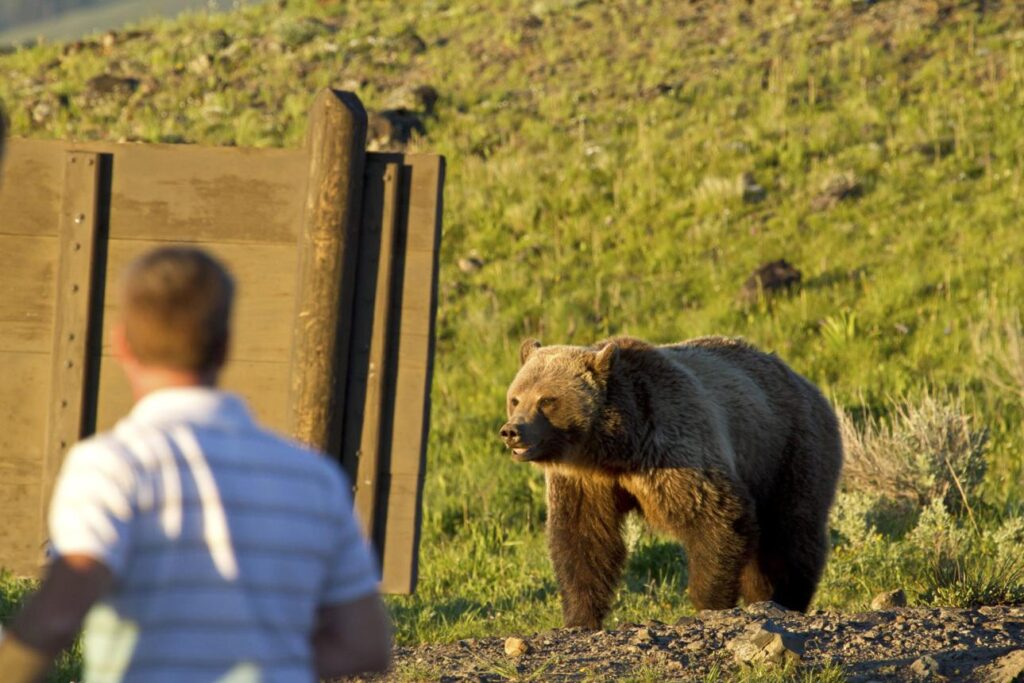
Recent Bear Attacks Are a Reminder: Don’t Mess With Wildlife

Every year, people head into the woods looking for adventure, photos, or close encounters with wildlife. And every year, some forget one important fact:
Bears are not oversized pets.
Recent attacks across the United States are once again reminding people that wild animals deserve distance, caution, and respect—not selfies, crowding, or careless behavior.
Yellowstone Attack Injures Two Hikers
One of the most recent incidents happened in Yellowstone National Park, where two hikers were seriously injured during a grizzly bear encounter near the Mystic Falls Trail close to Old Faithful.
According to the National Park Service, officials believe a female grizzly with cubs was involved in the attack. Multiple news outlets, including the Los Angeles Times, CBS News, and The Guardian, reported that the hikers were airlifted after the incident and that emergency trail closures followed.
That last detail matters.
A sow with cubs is one of the most dangerous situations a person can encounter in bear country. Most grizzly attacks are defensive, not predatory. The bear isn’t hunting people—it’s reacting to what it perceives as a threat.
Glacier National Park Sees Fatal Attack
Just days later, another tragedy unfolded in Glacier National Park.
According to the Associated Press, The Guardian, and SFGate, a 33-year-old hiker named Anthony Pollio was found dead near the Mt. Brown Trail after what officials described as injuries consistent with a bear attack. It marked Glacier’s first fatal bear attack since 1998.
Reports indicated Pollio was an experienced outdoorsman and may have attempted to deploy bear spray during the encounter. A bear spray canister was reportedly found at the scene, according to the New York Post and People Magazine.
Experience outdoors helps—but it does not make someone immune to wildlife encounters.
Too Many People Still Get Too Close
One of the most frustrating parts of recent incidents is how often people still ignore basic wildlife safety.
Just one day after the Yellowstone grizzly attack, Cowboy State Daily reported tourists crowding dangerously close to a black bear in Yellowstone while taking cellphone video. One man reportedly approached within about five feet of the animal.
That behavior isn’t brave.
It’s reckless.
According to the National Park Service, visitors should stay:
- At least 100 yards from bears and wolves
- At least 25 yards from other wildlife
Yet every year, people ignore those guidelines for photos and videos.
Wildlife Is Not Predictable
One of the biggest mistakes people make is assuming animals will behave predictably.
They won’t.
A calm bear can become aggressive in seconds if:
- It feels cornered
- Cubs are nearby
- Food sources are involved
- Humans get too close unexpectedly
According to the National Park Service and U.S. Fish and Wildlife Service, surprise encounters are one of the leading causes of defensive bear attacks.
That’s why experts consistently recommend:
- Traveling in groups
- Making noise on trails
- Carrying bear spray
- Avoiding headphones in bear country
Social Media Has Made the Problem Worse
Part of the issue is modern outdoor culture.
Too many people now treat wildlife encounters like social media opportunities instead of dangerous situations.
Videos of tourists:
- Walking toward bison
- Standing near bears
- Trying to “get closer for a photo”
…have become increasingly common in national parks.
And eventually, somebody pays for it.
Sometimes it’s the person.
Sometimes it’s the animal.
Because when wildlife attacks occur, officials often have to track and euthanize the animal afterward depending on the circumstances.
Bears Don’t Care About Your Intentions
This is the part many people fail to understand.
Bears do not care that:
- You wanted a picture
- You “love animals”
- You were just curious
- You didn’t mean harm
Wildlife reacts to behavior—not intentions.
And large predators can cover distance incredibly fast.
The Bottom Line
Recent attacks in Yellowstone and Glacier National Park are tragic reminders that nature is still wild.
According to the National Park Service, Associated Press, CBS News, and multiple recent reports, bear encounters this year have already left multiple people injured and at least one person dead.
The lesson should be obvious by now:
Respect wildlife. Give animals space. Stay alert.
Because the outdoors is not a petting zoo.
And bears are not something you “mess with” just because you saw one beside the trail.