
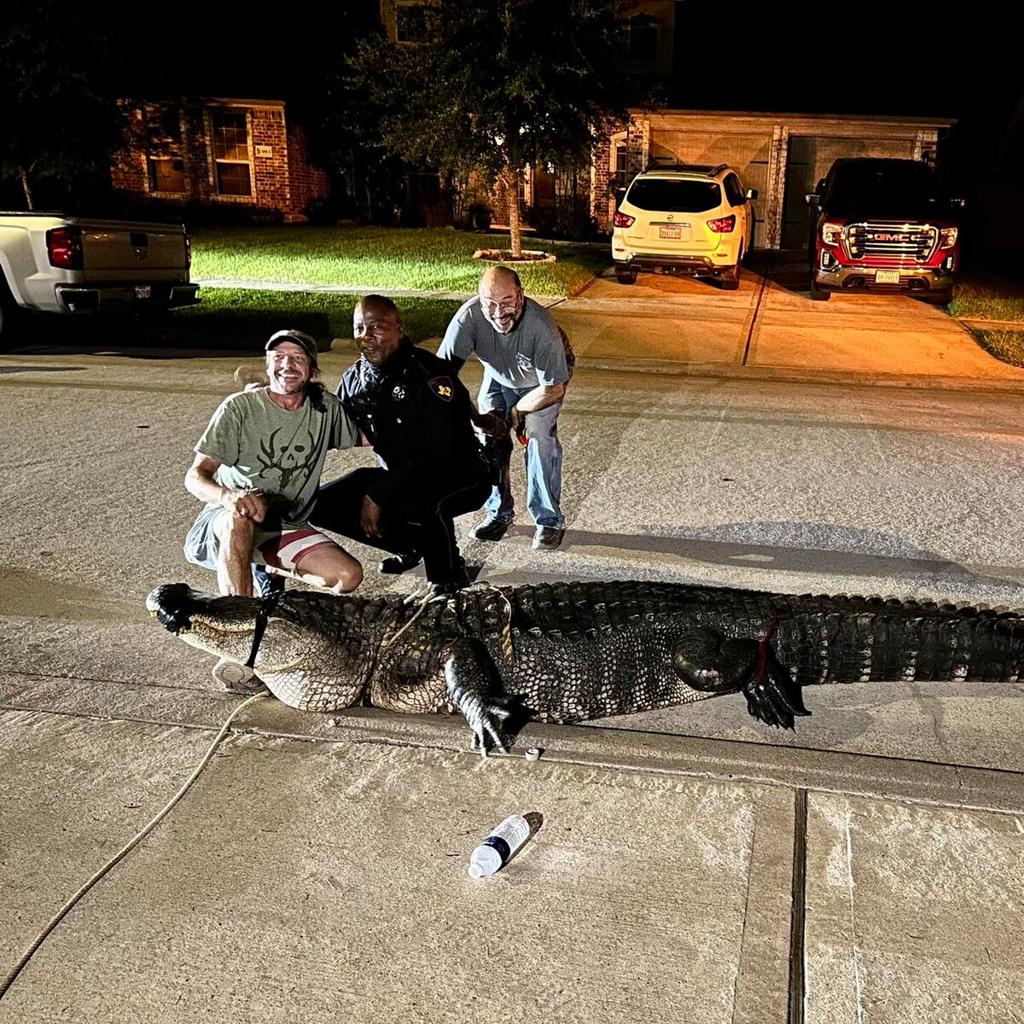
Giant Gator Found Near Katy Neighborhood Has Residents Doing Double Takes

Residents near a neighborhood outside Katy got an unexpected reminder this week that in Texas, wildlife sometimes shows up exactly where you least expect it.
And this time?
It had scales, teeth, and looked big enough to make people stop walking their dogs.
According to neighbors in the area, a massive alligator estimated to be between 10 and 12 feet long was spotted near a retention pond just outside a residential subdivision west of Katy, drawing crowds, cell phone videos, and plenty of nervous conversations.
“That Thing Is Huge”
People living nearby said the gator had reportedly been seen multiple times near the waterline before eventually moving closer to a walking path used by residents.
Several neighbors described the animal as:
- “Massive”
- “Bigger than expected”
- “Way too close to houses”
One resident reportedly said they initially thought it was a log until it moved.
Then reality set in.
Why Gators Show Up Near Neighborhoods
As surprising as it feels, wildlife officials say large alligators appearing near subdivisions is actually pretty common in parts of Southeast Texas.
Katy and the greater Houston area are full of:
- Retention ponds
- Bayous
- Drainage channels
- Wetlands
And to a big alligator?
Those areas can look like perfectly good habitat.
According to the Texas Parks and Wildlife Department, alligators naturally move between water sources, especially during warmer months and breeding season.
Sometimes that movement brings them into neighborhoods.
Bigger Gators Usually Mean Bigger Attention
Most Texans are used to hearing about small alligators showing up in ponds.
A 3- or 4-footer?
Usually not a major concern.
But once gators push into double-digit lengths, people start paying attention quickly.
According to Texas Parks and Wildlife Department guidance, nuisance alligators are typically evaluated based on behavior—not just size.
That means wildlife officials look for signs like:
- Aggressive behavior
- Approaching people
- Remaining in high-traffic areas
- Threatening pets
A large gator that simply stays in the water may not automatically be removed.
But one lingering near sidewalks or neighborhoods can raise concerns fast.
The Biggest Mistake People Make
Ironically, officials say people often create problems themselves.
According to the Texas Parks and Wildlife Department, feeding alligators—intentionally or accidentally—is one of the worst things residents can do.
Why?
Because gators begin associating humans with food.
That changes behavior quickly.
Officials consistently warn residents:
- Never feed alligators
- Keep pets away from shorelines
- Stay alert near ponds
- Give wildlife space
That last one matters.
A lot.
Texas Is Still Gator Country
People sometimes forget that much of Southeast Texas sits squarely inside alligator habitat.
According to the Texas Parks and Wildlife Department, Texas is home to an estimated 400,000 to 500,000 alligators, most concentrated in the eastern and coastal parts of the state.
That means sightings near Houston-area suburbs aren’t necessarily unusual.
Still, seeing one close to home hits differently.
Especially when it looks like something straight out of a swamp documentary.
Residents Split on What Should Happen
Not surprisingly, opinions in the neighborhood appear mixed.
Some residents want the gator removed immediately.
Others argue:
“It was here first.”
Wildlife officials often remind people that simply seeing a large alligator does not automatically mean danger.
But they also acknowledge that proximity to homes, children, pets, and walking trails changes the conversation.
The Bottom Line
A giant alligator near Katy has residents paying closer attention to local ponds and walking paths.
According to the Texas Parks and Wildlife Department, large gator sightings near neighborhoods happen more often than many people realize—but residents should still take them seriously.
Because in Texas, even a quiet neighborhood pond can sometimes remind you:
You’re never quite as far from wild country as you think.