
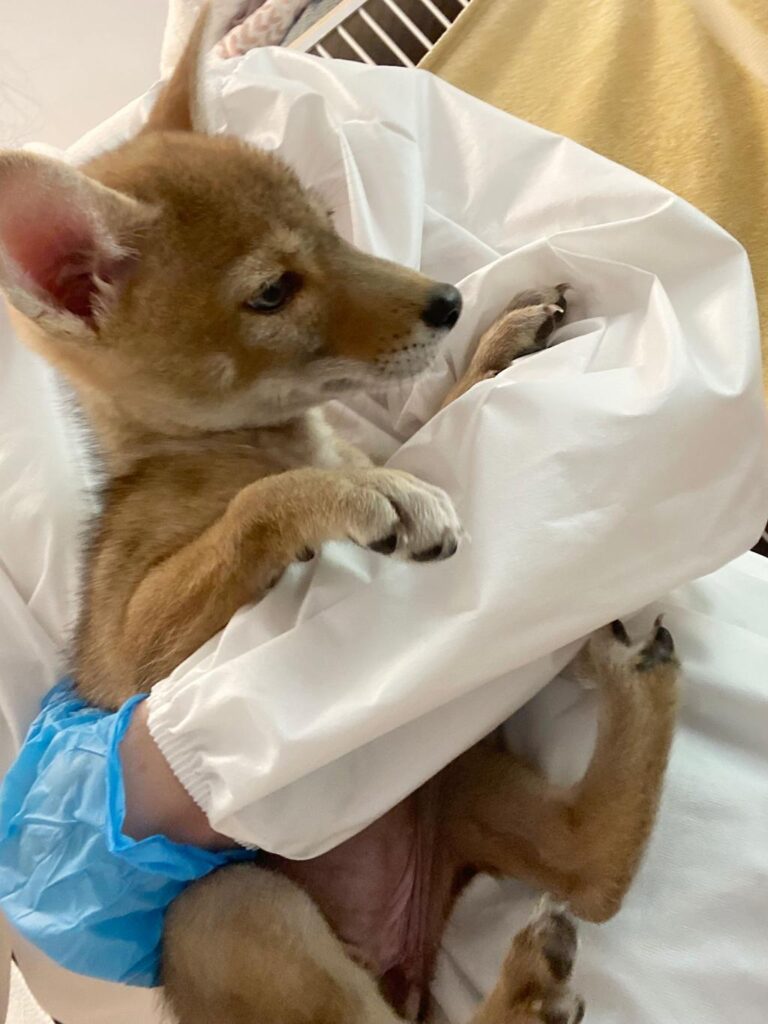
Family Thought It Was a Lost Dog—Then Wildlife Officials Realized What They Were Actually Feeding

What began as an act of kindness quickly turned into an unexpected wildlife lesson after a family believed they had rescued a lost dog—only to later discover the animal was something entirely different.
According to a real case reported by the Cape Wildlife Center in Massachusetts, a family found what appeared to be a distressed puppy wandering near a busy roadside and decided to help. The animal looked frightened, alone, and in need of assistance, which made the decision seem obvious at the time.
The problem was simple:
It was not a dog.
Wildlife officials later identified the animal as a young coyote.
The Family Believed They Were Helping a Lost Puppy
According to reporting from Newsweek, the family initially believed they had found a domestic puppy that had either escaped or become separated from its owner. The young animal reportedly appeared vulnerable and distressed, which naturally triggered concern.
Like many people would, the family attempted to help.
The animal reportedly behaved calmly enough at first that nothing immediately seemed unusual. However, after closer evaluation, wildlife experts quickly recognized details that suggested the situation was not what it seemed.
According to the Cape Wildlife Center, staff identified the animal as a juvenile coyote rather than a domestic dog.
The discovery surprised many people following the story because, at first glance, young coyotes can look remarkably similar to certain dog breeds, especially when they are small.
Why Coyotes Are Often Mistaken for Dogs
Wildlife officials say stories like this happen more often than many people realize.
According to wildlife experts, juvenile coyotes can easily resemble mixed-breed puppies or smaller dog breeds, especially when viewed from a distance or during moments of stress. Young coyotes often have softer facial features, smaller bodies, and behavior that may initially appear surprisingly calm.
That similarity frequently creates confusion.
According to wildlife specialists, the confusion becomes even more common when coyotes appear injured, malnourished, or separated from their family group.
In suburban and rural neighborhoods where coyotes increasingly overlap with people, residents sometimes mistake them for stray pets, particularly at dawn or dusk when visibility becomes limited.
The resemblance may look convincing at first.
Until someone who works with wildlife takes a closer look.
Wildlife Officials Say Helping Wild Animals Can Become Risky
Although the family had good intentions, wildlife experts caution that situations involving unknown animals can quickly become dangerous.
According to the Cape Wildlife Center, coyotes may carry diseases such as rabies, parasites, or other illnesses that can present risks to humans and pets. Even younger animals that appear calm may become unpredictable once stressed or frightened.
Wildlife officials generally encourage people to avoid handling unknown wild animals and instead contact licensed wildlife rehabilitators or local authorities.
That recommendation becomes especially important when the animal appears sick, injured, or unusually comfortable around people.
According to wildlife experts, human interaction can unintentionally make rehabilitation more difficult by causing wild animals to lose natural fear of people.
For predators like coyotes, that can create long-term problems.
Human-Wildlife Encounters Continue Increasing
The story also highlights a broader trend happening across much of the country.
According to wildlife agencies, coyote sightings continue increasing as suburban growth pushes deeper into wildlife habitat and coyotes adapt remarkably well to neighborhoods, parks, golf courses, and residential developments.
Coyotes have become especially common because of their intelligence and adaptability.
According to wildlife experts, coyotes can survive in environments ranging from remote ranchland to crowded urban areas, often moving through neighborhoods unnoticed while feeding on rodents, rabbits, fruit, pet food, or discarded trash.
Most of the time, people never even realize they are nearby.
Occasionally, however, a close encounter changes that.
Why the Story Resonated With So Many People
Part of what made this story spread online involved how understandable the mistake felt.
Many people likely would have done the same thing.
A frightened young animal standing near a road naturally triggers sympathy, especially when it resembles a puppy needing help. Most families are not wildlife experts, and in stressful moments, instinct often takes over before careful observation does.
That emotional reaction explains why wildlife officials responded carefully rather than critically.
The family had not acted out of recklessness.
They simply thought they were helping.
Still, the story became a reminder that appearances outdoors can sometimes be misleading.
Especially when wild animals begin living closer to people.
The Bottom Line
For one family, what appeared to be a simple act of rescuing a lost dog quickly turned into a surprising lesson after wildlife officials determined the animal they brought in was actually a young coyote.
Fortunately, the situation ended safely.
But wildlife experts say the experience highlights an important reminder for anyone spending time outdoors or living near wildlife habitat:
Sometimes, what looks like a lost pet is something entirely wild.