
Some Fishermen Believe Boat Traffic Is Ruining Their Favorite Lakes—Now They’re Fighting Back

For many serious fishermen, the frustration starts sometime around midmorning.
The lake may have begun quietly at daylight, with calm water, active fish, and the kind of peaceful conditions anglers dream about. Then the noise slowly begins. Jet skis appear near points. Wake boats start circling coves. Pleasure boats cut across main channels, and before long, once-quiet fishing spots begin rocking with waves and engine noise.
For some anglers, it feels like their favorite lakes are changing.
And many believe heavy boat traffic is quietly making fishing worse.
Across Texas and much of the country, serious fishermen increasingly argue that crowded lakes, recreational traffic, and growing shoreline development are changing fish behavior, increasing pressure, and making it harder to consistently catch bass in places that once felt reliable. In response, many anglers are beginning to adapt—and in some cases, actively push back.
Fishermen Say Popular Lakes Do Not Fish the Same Anymore
Talk to longtime anglers on heavily used lakes, and many describe a similar pattern.
Lakes that once felt predictable suddenly seem harder to fish.
Morning bites shut down faster. Shallow fish disappear earlier. Previously productive points become difficult to fish once wake boats arrive, and entire stretches of water become unpleasant to fish by midday.
For many fishermen, the frustration is not simply about inconvenience.
They believe boat traffic changes fish behavior.
According to fisheries discussions published by the Bassmaster, increased recreational activity can affect bass movement, especially in shallow water where noise, wakes, and repeated disturbance may reposition fish or reduce feeding activity. Although fish eventually adapt to activity on heavily pressured lakes, experienced anglers frequently report that bass become more difficult to pattern when heavy recreational traffic increases.
That becomes especially noticeable during summer.
Wake Boats Have Become a Major Flashpoint
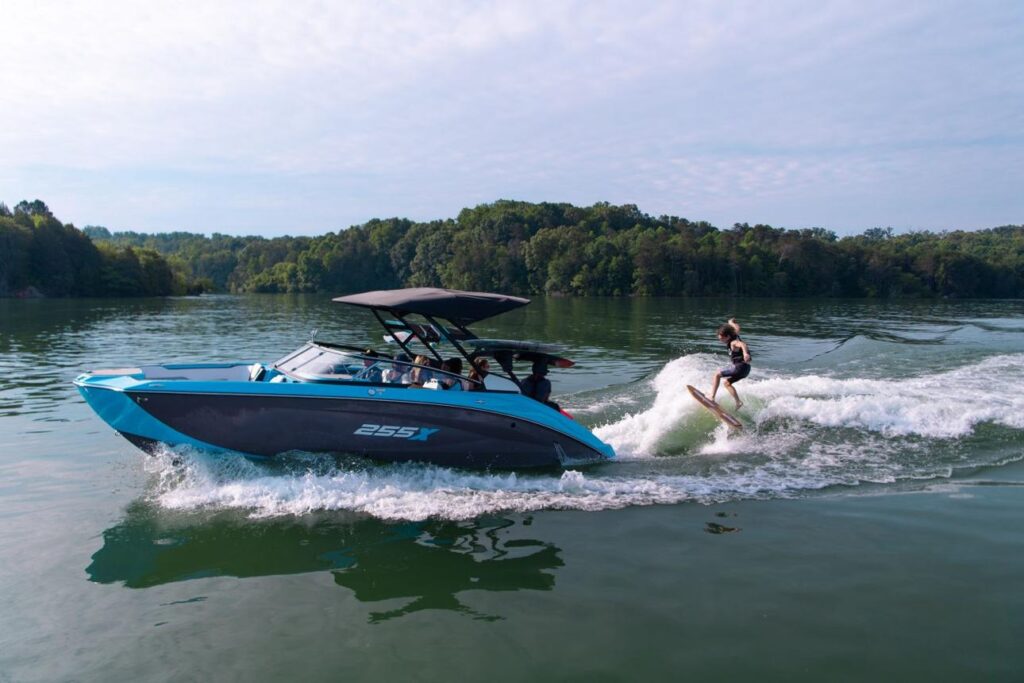
If there is one type of boat drawing particular frustration from fishermen, it is wake boats.
Designed to create large wakes for surfing and watersports, these boats often generate repeated rolling waves that move through otherwise calm fishing areas.
For anglers fishing docks, shallow cover, or shoreline structure, the disruption can feel constant.
A fisherman carefully working a shaded dock may suddenly find waves crashing against riprap, muddying shallow water, or repositioning baitfish. Some anglers believe repeated disturbance pushes bigger bass away from shallow areas entirely during busy periods.
The frustration has become strong enough that several communities across the country have debated restrictions involving wake-enhanced boating near shorelines.
According to reporting from multiple lake management agencies and boating discussions, some waterfront homeowners and anglers argue excessive wakes contribute not only to fishing disruption but also shoreline erosion and habitat damage.
Not everyone agrees, of course.
Boaters frequently argue public lakes belong to everyone.
That disagreement has quietly become one of the biggest tensions on crowded lakes.
Serious Anglers Are Fighting Back in Different Ways
Rather than simply quitting, many fishermen have started adjusting.
Some now launch earlier than ever.
Instead of arriving at sunrise, serious anglers increasingly hit the water before first light, hoping to capitalize on the few quiet hours before recreational traffic builds. Many describe fishing windows shrinking dramatically once weekend crowds arrive.
Others have shifted almost entirely toward night fishing.
According to the Texas Parks and Wildlife Department, summertime bass often become more active during lower-light conditions when temperatures cool and fishing pressure decreases. Many experienced anglers now intentionally avoid crowded daytime conditions altogether by targeting fish after sunset.
Some fishermen are also leaving larger lakes behind.
Smaller reservoirs, electric-only lakes, and remote public water increasingly attract anglers seeking quieter experiences away from wake boats and heavy traffic.
For many, the solution has become simple:
Fish where crowds are not.
Others Are Pushing for Rules and Education
In some areas, frustration has turned into advocacy.
Across parts of the country, fishing groups, lake associations, and shoreline residents have pushed for buffer zones, no-wake areas, reduced speeds near shorelines, and educational campaigns encouraging better boating etiquette around fishermen.
Many anglers are not asking recreational boaters to disappear.
They simply want more awareness.
A fisherman working shoreline cover in a small cove may have spent hours locating fish before repeated wake traffic suddenly blows through the area. Likewise, tournament fishermen often argue that excessive wakes create safety concerns during crowded conditions.
Some boaters already practice courtesy by slowing down near fishing boats or avoiding repeated passes close to anglers.
Others do not.
That inconsistency continues fueling tension.
Not Everyone Believes Boat Traffic Hurts Fishing
Interestingly, not all anglers agree with the criticism.
Many professional fishermen argue bass are remarkably adaptable animals.
According to discussions among anglers featured by the Major League Fishing, fish living in high-traffic lakes often adjust behavior rather than disappear entirely. Experienced fishermen frequently adapt by targeting deeper water, offshore structure, or shaded areas less affected by surface activity.
In other words, fish still bite.
Anglers simply may need to change with conditions.
That perspective has led some fishermen to argue the problem is not necessarily boat traffic itself.
The problem may be refusing to adapt.
The Bottom Line
For many serious fishermen, growing boat traffic has undeniably changed the experience on some favorite lakes.
Crowded weekends, wake boats, shoreline traffic, and increasing recreational pressure have pushed many anglers to fish earlier, stay later, move to smaller lakes, or rethink how they approach the water entirely.
At the same time, public lakes remain shared spaces where fishermen, recreational boaters, and families all expect access.
That reality likely means the debate is not going away anytime soon.
But ask enough serious fishermen, and many will tell you the same thing:
The quiet lake they remember feels harder to find every summer.