
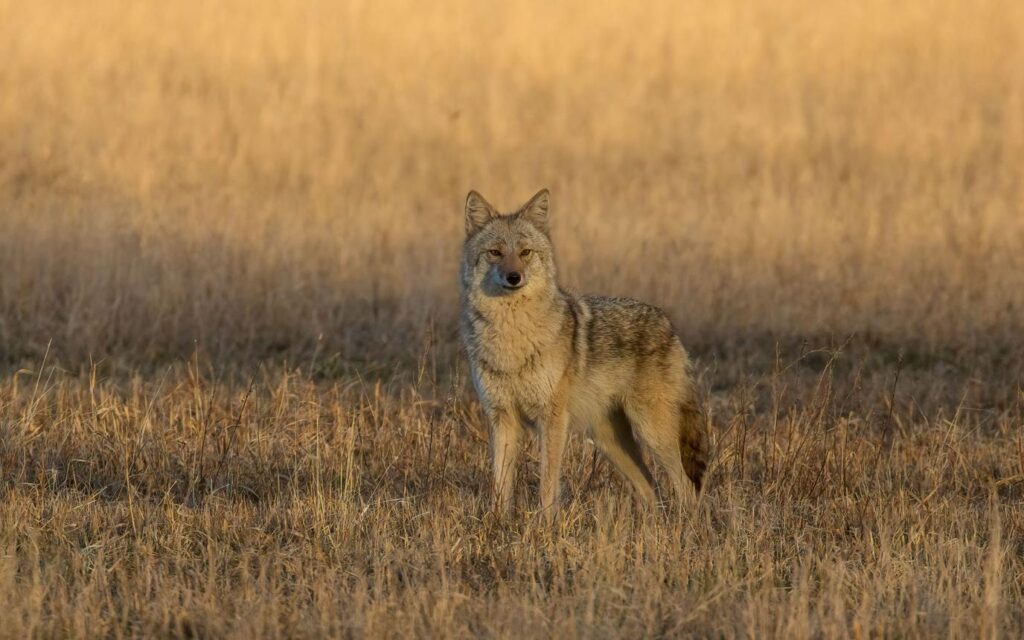

Few topics spark stronger debate around deer camp than coyotes.
Ask a group of hunters whether coyotes are hurting local deer herds, and the conversation usually becomes heated in a hurry. Some hunters believe predators are devastating fawn survival rates and quietly reducing the number of mature deer on the landscape. Others argue coyotes have become a convenient scapegoat for problems caused by poor habitat, drought, overgrazing, or unbalanced deer populations.
The reality is far more complicated than many people realize. Coyotes absolutely prey on fawns, and in some areas they kill significant numbers of them. However, wildlife research also shows that predator control by itself rarely solves deer management problems. The truth lies somewhere in the middle, which is exactly why coyote hunting remains one of the most debated topics in modern deer management.
Coyotes Are Extremely Effective Predators of Young Fawns
One fact wildlife biologists generally agree on is simple: coyotes kill fawns.
According to research published by the National Deer Association, coyotes have become one of the leading predators of whitetail fawns across many parts of the country, particularly throughout the South where coyote populations expanded rapidly over the last several decades. Studies tracking newborn fawns with GPS collars repeatedly found that predators account for a substantial percentage of mortality during the first weeks of life.
Research conducted by the University of Georgia and Texas-based work from the Caesar Kleberg Wildlife Research Institute documented areas where coyotes represented one of the largest causes of fawn mortality shortly after birth. During spring and early summer, newborn fawns spend much of their time hidden in grass and brush while does feed nearby. Their primary defense mechanism involves remaining perfectly still and relying on camouflage to avoid detection.
Unfortunately for fawns, coyotes hunt using both sight and scent.
A hidden fawn may remain invisible to many predators, but coyotes often locate them by smell while moving through bedding cover. Wildlife researchers have documented coyotes actively searching likely fawning areas during peak birthing periods, which explains why predator concerns become especially intense in deer country during late spring and early summer.
Why Many Hunters Believe Coyote Hunting Matters
For many landowners and hunters, the logic behind predator control feels straightforward.
If coyotes kill fawns, reducing coyote numbers should increase deer recruitment.
That belief helped make predator hunting increasingly popular across Texas and much of the South. Night hunting, thermal optics, predator calls, suppressors, and year-round coyote control efforts became common management tools on ranches focused on improving deer numbers.
According to the National Deer Association, some studies have shown measurable improvements in fawn survival when predator removal occurred intensively and consistently. On properties with strong habitat, good nutrition, and targeted predator management, researchers sometimes documented increased recruitment rates following coyote reduction programs.
Many hunters also point to trail camera evidence that appears convincing. They describe seeing fewer coyotes around feeders and bedding areas after aggressive predator control, followed by increases in doe and fawn sightings during summer months.
From that perspective, coyote hunting feels less like recreation and more like active herd management.
Why Predator Control Is More Complicated Than It Sounds
The challenge is that coyotes are remarkably resilient animals.
According to wildlife biologists with the Texas Parks and Wildlife Department, coyote populations recover quickly after removal efforts. Unlike some predators, coyotes respond to population declines by reproducing faster, increasing litter sizes, and allowing younger females to breed.
In practical terms, that means removing coyotes rarely eliminates them for long.
A ranch may aggressively reduce predator numbers during one season, only to see neighboring coyotes quickly move into the vacant territory. In some situations, local populations rebound faster than expected.
That reality creates an important distinction.
Wildlife experts increasingly argue that short-term coyote removal can help fawn survival in some situations, but long-term success usually depends on consistent management rather than occasional hunting efforts.
Simply killing coyotes whenever they appear may not produce meaningful population-level changes by itself.
Habitat Often Matters More Than Predators
One uncomfortable truth in deer management is that habitat quality frequently matters as much—or more—than predator numbers.
According to the National Deer Association, strong fawning habitat dramatically improves survival rates. Thick native grasses, brush diversity, bedding cover, and healthy vegetation give newborn deer more opportunities to remain hidden during their most vulnerable weeks.
Poor habitat creates the opposite situation.
Overgrazed land, short grass, or sparse vegetation makes fawns easier for predators to find. In those situations, coyotes may simply expose weaknesses already present in the landscape.
That is why many wildlife managers caution against viewing predator control as a magic solution.
A property struggling with poor nutrition, excessive deer density, drought stress, or weak cover may continue experiencing poor fawn recruitment even if coyote numbers decline.
In many cases, habitat improvements and predator management work best together.
Why the Debate Gets Emotional
For many hunters, the coyote debate becomes personal.
Trail cameras showing predators carrying dead fawns can create strong reactions, especially for hunters investing time and money into habitat improvement. Watching doe numbers decline or seeing fewer young deer during summer surveys naturally pushes many hunters toward predator control.
At the same time, others argue coyotes belong on the landscape and play an important ecological role. Predators often remove weak animals, scavenge carrion, and help regulate prey populations.
That disagreement explains why predator management continues dividing opinions even among experienced hunters.
Some believe intensive coyote hunting should happen every year.
Others believe healthy habitat solves most of the problem naturally.
The Bottom Line
Coyotes absolutely prey on fawns, and in certain areas they can significantly affect deer recruitment. However, research increasingly shows that predator control works best when combined with strong habitat management, balanced deer populations, and realistic expectations.
For hunters serious about improving deer numbers, the answer may not be choosing between coyote hunting and habitat work.
The answer may be understanding that successful deer management usually requires both.
Because when it comes to helping fawns survive, there is rarely one simple fix.