
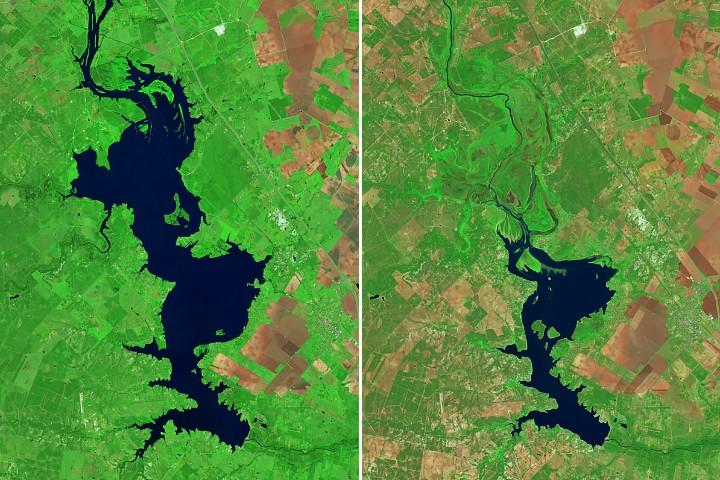
Corpus Christi Nears “Water Emergency”: No Modern City Has Ever Run Out of Water

Corpus Christi is moving closer to declaring a “water emergency,” a designation that signals more than just drought concerns—it indicates the city is approaching a critical point where water demand could outpace supply.
While the term may sound alarming, it doesn’t mean the city has run out of water. Instead, it reflects a narrowing margin between available resources and daily usage, prompting officials to act before the situation worsens.
What a “Water Emergency” Actually Means
A Level 1 water emergency is essentially an early warning stage.
According to reporting from the Houston Chronicle, Corpus Christi officials have indicated that this level means the city is within roughly six months of not being able to meet water demand if conditions continue without improvement. That designation triggers immediate conservation efforts aimed at stretching the remaining supply.
At the same time, data reported by KRIS 6 News shows that the city’s primary water sources—Lake Corpus Christi and Choke Canyon Reservoir—have dropped to critically low, single-digit capacity levels, leaving little buffer if the drought persists.
Why Corpus Christi Is Facing This Situation
The current water crisis is the result of multiple factors converging at once.
A prolonged drought across South Texas has significantly reduced inflows into the region’s reservoirs. According to the Texas Tribune, the lack of rainfall combined with sustained high temperatures has accelerated water loss and limited natural replenishment.
At the same time, water demand has remained high. Corpus Christi isn’t just a residential city—it’s also a major industrial hub. The Texas Tribune reports that growing industrial use, particularly from refineries and petrochemical facilities, has added pressure to an already strained system.
This combination—reduced supply and steady demand—is what has pushed the city toward emergency status.
What Changes for Residents
If a water emergency is officially declared, residents can expect immediate restrictions.
According to coverage from KUT News, proposed measures include:
- Bans on lawn watering
- Restrictions on washing vehicles with city water
- Limits on filling swimming pools
These aren’t voluntary guidelines. Violations could result in fines up to $500 and, in some cases, suspension of water service for repeat offenses.
The goal is simple: reduce usage quickly enough to prevent the system from reaching a breaking point.
Mandatory Conservation Could Go Further
City leaders are also considering broader reductions that would affect both residents and businesses.
According to the Texas Tribune, officials have discussed requiring up to a 25% reduction in water usage across the board. For households, that could mean strict monthly limits on water consumption.
KRIS 6 News reports that proposed residential limits could be set at approximately 5,200 gallons per month, with penalties for exceeding that threshold.
While many households may already fall within that range, higher-usage properties and commercial operations would likely feel the impact more significantly.
Industry’s Role in the Crisis
One of the biggest challenges in managing Corpus Christi’s water supply is the role of industry.
According to the Associated Press, industrial users—particularly energy and manufacturing facilities—account for a substantial portion of the city’s water consumption. That makes conservation efforts more complex, as reducing usage isn’t just a residential issue.
Balancing economic activity with resource conservation is a key part of the city’s response strategy.
What Happens If Conditions Don’t Improve
A Level 1 water emergency is just the first stage.
If reservoir levels continue to decline, Corpus Christi could move into more severe emergency levels. According to previous reporting from the Texas Tribune, those higher stages could involve:
- More aggressive rationing
- Reduced water pressure
- Potential impacts to water quality
In a worst-case scenario, prolonged shortages could begin affecting both residents and the industries that rely on the city’s water system.
Efforts to Prevent a Full Crisis
City officials are not relying on restrictions alone.
According to the Texas Tribune, Corpus Christi is actively working on several solutions, including:
- Developing emergency groundwater wells
- Expanding infrastructure to bring in additional supply
- Exploring long-term desalination projects
These efforts are aimed at extending the city’s water supply and reducing dependence on rainfall alone. However, many of these solutions take time to implement, which is why conservation measures are being prioritized in the short term.
Why This Matters Beyond One City
Corpus Christi’s water situation isn’t just a local issue—it has broader implications.
As one of Texas’ key energy hubs, the city supports major industrial operations that impact both the state and national economy. Any disruption to its water supply could have ripple effects beyond the region.
According to the Associated Press, maintaining water availability is critical not only for residents but also for sustaining industrial output along the Gulf Coast.
The Bottom Line
A “water emergency” doesn’t mean the taps are about to run dry—but it does mean the system is under serious strain.
According to reporting from the Houston Chronicle, KRIS 6 News, the Texas Tribune, KUT News, and the Associated Press, Corpus Christi is approaching a point where immediate action is necessary to avoid more severe shortages.
For residents, that means stricter rules and closer attention to water use. For city leaders, it’s a race to stabilize supply before conditions worsen.
And for Texas as a whole, it’s a reminder that water—like land and wildlife—is a resource that requires careful management, especially when conditions turn against it.