
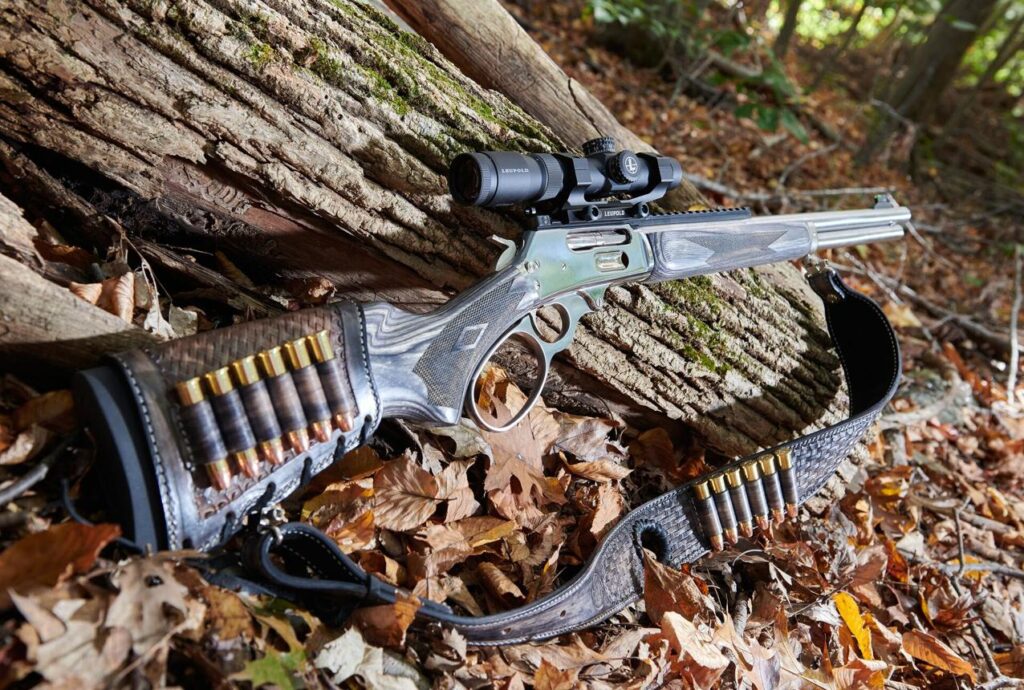
Does Anyone Really Need to Own a .45-70?

It’s a fair question—especially in a world filled with flat-shooting, high-velocity cartridges.
With modern rounds like the 6.5 Creedmoor and .300 Win Mag dominating the conversation, the .45-70 Government almost feels like a relic. It’s big, heavy, slow by today’s standards, and carries a reputation that’s more “old school” than cutting edge.
So… does anyone actually need a .45-70?
Probably not.
But that doesn’t mean it doesn’t deserve a place in your lineup.
The .45-70 Was Built for a Different Kind of Problem
The .45-70 Government dates back to 1873, originally developed for the U.S. military. It wasn’t designed for long-range precision—it was built for power.
And not just a little power.
We’re talking about a cartridge capable of pushing heavy bullets—often 300 to 500 grains—with serious authority. According to ballistic data from Hornady Manufacturing, modern .45-70 loads can deliver massive energy at close to moderate distances, making it one of the hardest-hitting cartridges still in common use.
Where the .45-70 Actually Shines
The truth is, the .45-70 isn’t trying to compete with modern long-range cartridges.
It excels in very specific situations:
- Thick brush where shots are close
- Big game hunting where penetration matters
- Situations where stopping power is a priority
For animals like elk, moose, and even bear, the .45-70 delivers deep penetration and heavy impact. It’s not about speed—it’s about authority.
Short Range, Maximum Impact
Let’s be clear—the .45-70 is not a long-range cartridge.
Its trajectory drops quickly compared to modern rounds. But inside 150–200 yards, it’s extremely effective.
According to performance insights from Nosler Inc., heavy, slow-moving bullets like those used in .45-70 loads are known for deep penetration and strong terminal performance at shorter distances.
In the environments it was built for, that matters more than flat trajectory.
It’s One of the Best “Brush Guns” Ever Made
If you hunt in thick timber, river bottoms, or dense cover, the .45-70 has a serious advantage.
Lever-action rifles chambered in .45-70—like the Marlin 1895—are:
- Quick to shoulder
- Easy to maneuver
- Ideal for close-range encounters
In those conditions, you’re not taking 400-yard shots. You’re reacting quickly, often at close range.
That’s exactly where the .45-70 thrives.
Recoil Is Real—and It’s Not for Everyone
There’s no way around it—the .45-70 kicks.
Depending on the load, recoil can be substantial, especially in lightweight rifles. For some shooters, that’s a dealbreaker.
But for those who are comfortable with it, the trade-off is power that few other cartridges can match at close range.
It’s Surprisingly Versatile
One thing that often gets overlooked is how flexible the .45-70 can be.
With different loads, it can be:
- Mild and manageable for practice
- Extremely powerful for large game
According to loading data from SAAMI, the cartridge supports a wide range of pressures and bullet weights, giving shooters options depending on their needs.
So… Do You Need One?
No, you don’t need a .45-70.
Modern cartridges can do a lot of the same jobs with less recoil and flatter trajectories.
But that’s not really the point.
Why People Still Choose the .45-70
Hunters and shooters who own a .45-70 usually aren’t chasing trends—they’re choosing it for specific reasons:
- Confidence in close-range power
- Preference for traditional rifles
- Hunting in environments where it excels
- Simply enjoying a cartridge with history and character
It’s not about necessity—it’s about purpose.
The Bottom Line
The .45-70 isn’t trying to be everything—and that’s exactly why it still matters.
It’s a specialized tool built for specific situations. In the right environment, it’s incredibly effective. Outside of that, there are better options.
So no—you don’t need a .45-70.
But if you understand what it’s built for, you might find it’s one of the most satisfying rifles you’ll ever own.