
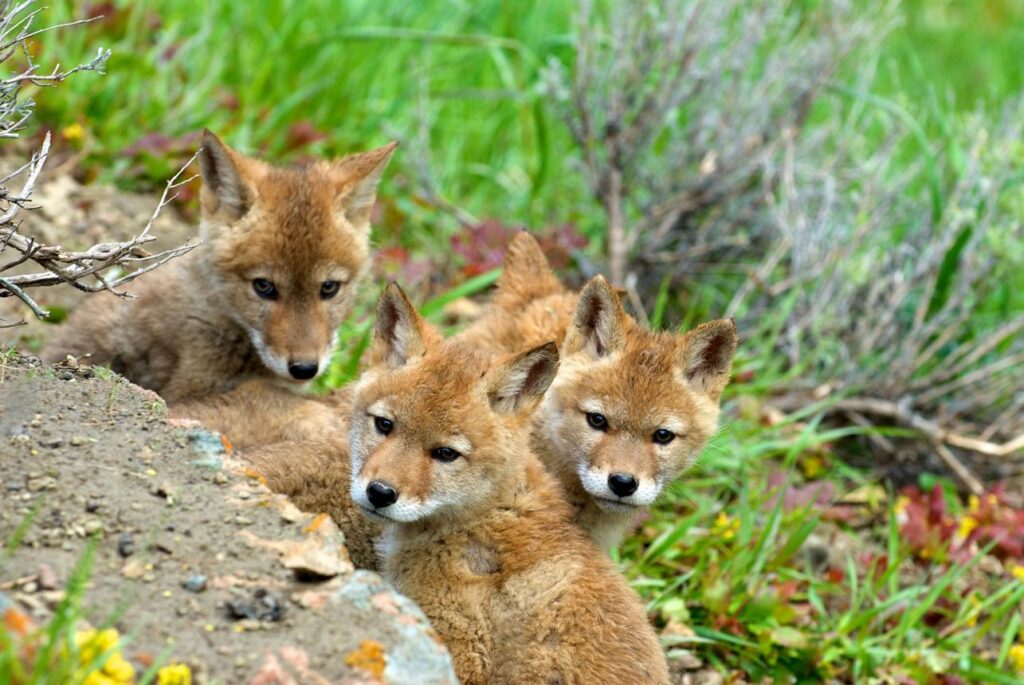
Does Killing Coyotes Actually Create More Coyotes? Breaking Down the Myth

It’s one of the most repeated claims in predator management:
“Kill coyotes, and you’ll just create more coyotes.”
You’ve probably heard it explained with a strange twist—that coyotes somehow “take a census” by howling, realize some are missing, and then increase reproduction to compensate.
It sounds convincing. But it’s not how biology works.
There is a kernel of truth behind the idea—but it’s often misunderstood, exaggerated, and misapplied.
Coyotes Don’t “Take a Census”
Let’s clear this up first.
Coyotes do not track population numbers or intentionally increase breeding because others are missing. The idea that they somehow recognize losses and respond strategically is a myth.
According to the U.S. Fish and Wildlife Service, coyote vocalizations—like howling—are primarily used for territory communication, locating pack members, and establishing presence, not counting population.
There is no evidence supporting the idea that coyotes consciously adjust reproduction based on population awareness.
What Actually Happens After Coyotes Are Removed
So why does it sometimes feel like there are “more coyotes” after hunting pressure?
The answer comes down to resource availability and biology.
When coyotes are removed from an area:
- There is less competition for food
- Remaining coyotes have better access to resources
- Pup survival rates increase
According to research referenced by the Texas A&M AgriLife Extension Service, coyote populations are highly adaptable and can increase litter sizes or pup survival when food becomes more available.
That’s not because they’re replacing lost individuals—it’s because the environment can now support more young.
Population Rebound Is Not the Same as Population Increase
This is where the confusion happens.
Yes, coyote populations can rebound quickly.
But that doesn’t mean killing coyotes creates more of them.
According to the USDA Wildlife Services, removing coyotes from a specific area reduces the population in that area—at least temporarily.
Over time, populations recover due to:
- Immigration from surrounding areas
- Increased reproduction success
- High adaptability
That’s very different from saying hunting increases their numbers.
Local Impact vs. Long-Term Control
For landowners and hunters, the key distinction is local vs. long-term impact.
If you remove coyotes from your property:
- You will have fewer coyotes there in the short term
- Predation pressure on deer, turkeys, and livestock can decrease
According to the Texas Parks and Wildlife Department, predator management can help reduce localized impacts on wildlife populations, particularly during vulnerable periods like fawning and nesting seasons.
But over time, new coyotes will move in or populations will rebound.
That’s why predator control isn’t a one-time solution.
Why Timing Matters in Predator Control
If the goal is to protect wildlife—especially fawns, turkey nests, or livestock—timing becomes critical.
Spring and early summer are often the most effective times for coyote control because:
- Coyotes are raising pups
- Food demand is high
- Predation on young animals increases
According to the Texas A&M AgriLife Extension Service, targeted predator removal before and during fawning or nesting seasons can improve survival rates of prey species.
Coyotes Are Hard to Eliminate—But Not Impossible to Manage
Coyotes are one of the most adaptable predators in North America.
They:
- Reproduce efficiently
- Expand into new territories quickly
- Thrive in both rural and suburban environments
Because of that, complete eradication isn’t realistic.
But management is.
According to the USDA Wildlife Services, consistent, targeted control efforts can reduce conflicts with livestock and wildlife, even if populations eventually rebound.
The Real Takeaway
The statement “killing coyotes creates more coyotes” is misleading.
A more accurate version would be:
“Coyote populations can rebound quickly after removal because of increased resources and reproduction success.”
That’s a big difference.
The Bottom Line
If you hunt or remove coyotes from your property:
- You are reducing the number of coyotes in that area—at least temporarily
- You can help protect fawns, turkeys, livestock, and small game
- But the population will likely recover over time
According to the U.S. Fish and Wildlife Service, Texas A&M AgriLife Extension Service, USDA Wildlife Services, and Texas Parks and Wildlife Department, effective predator management is ongoing, not one-and-done.
Coyotes aren’t increasing because they’re being hunted.
They’re simply surviving—exactly the way they were built to do.
And managing them means understanding that reality, not the myth.