

Grandpa doesn’t like “new” things.
He doesn’t trust electric cars, streaming services, or any rifle that needs a firmware update. So when I showed up at the range with a pistol chambered in 5.7x28mm and told him he had to try it, I knew I was asking for trouble.
But I was excited.
To me, the 5.7 is fascinating — lightweight, fast, flat-shooting. Low recoil. High capacity. Modern engineering at its finest. It represents everything today’s handgun market is leaning toward: speed, efficiency, innovation.
To Grandpa, it looked like a space gun.
“That thing looks like it belongs in a sci-fi movie,” he muttered, squinting at it like it might start hovering.
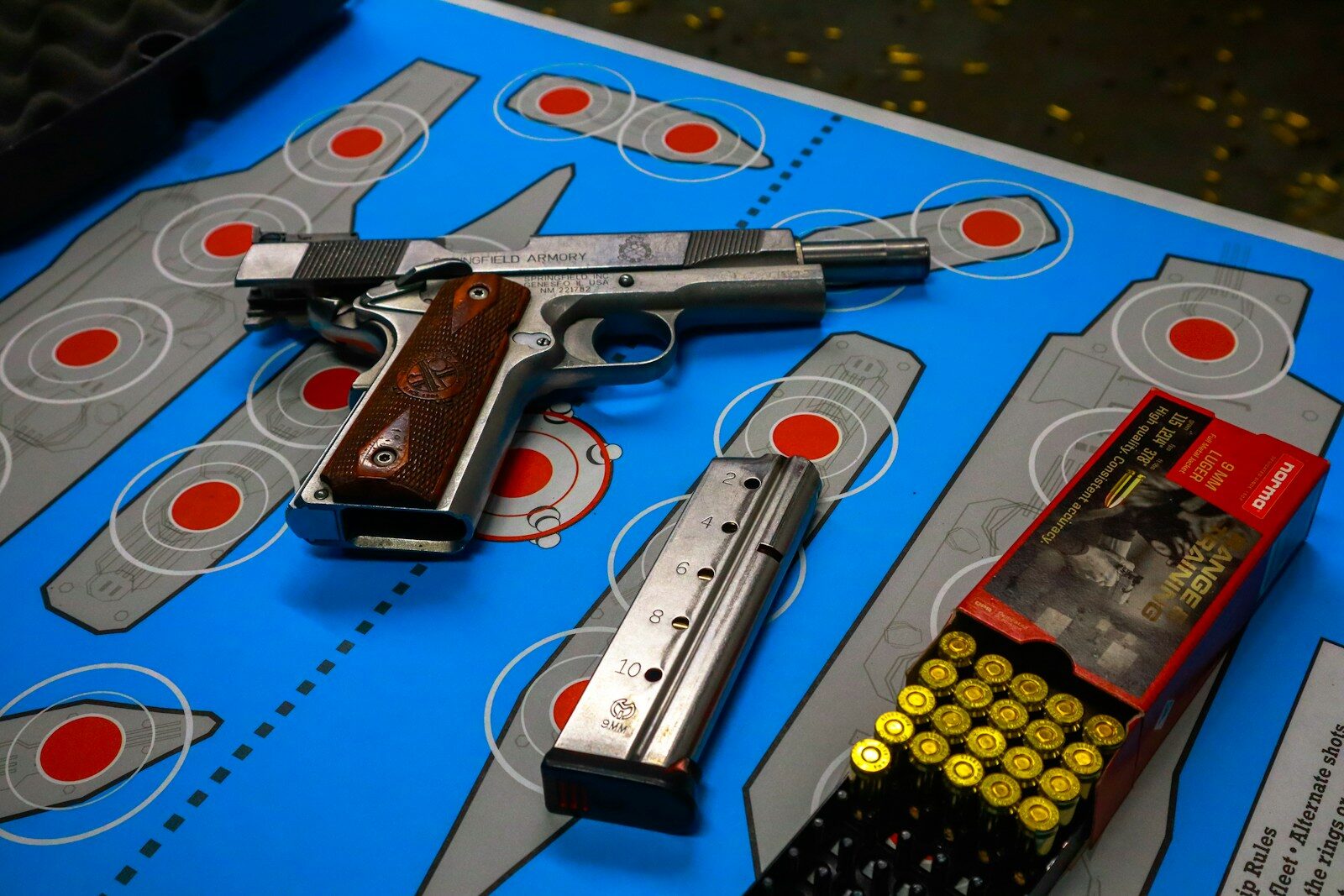
He adjusted his hearing protection, set down his well-worn range bag, and unzipped it slowly — almost ceremonially. Inside, wrapped in a faded cloth that’s older than I am, was his Government-model .45.
Blacked steel. Wood grips polished smooth from decades of use. It smelled faintly of oil and memory.
“Now this,” he said, holding it up slightly, “is a pistol.”
I grinned. “Just try the 5.7 first.”
The First Shots
He loaded the magazine carefully, inspecting the small, bottlenecked cartridges.
“Bullets used to be fat,” he said. “You could see ’em.”
He racked the slide and extended his arms.
The first shot cracked.
Then another.
Then five more in steady rhythm.
He lowered the pistol, blinked once, and looked at me sideways.
“Well… I’ll be.”
The recoil barely nudged the muzzle. The sights tracked flat. His group tightened quickly — muscle memory doesn’t fade when you’ve been shooting longer than most people have been alive.
“That’s… different,” he admitted.
I tried not to look too smug. “Told you.”
He fired another magazine, this time a little faster. The 5.7 barked sharply but stayed tame in his hands.
“Shoots soft,” he said. “Feels like cheating.”
The Complaints Begin
And then, right on schedule, the complaining started.
“Everything today’s lighter. Smaller. Plastic,” he grumbled, handing it back to me. “Back in my day, guns had weight. You knew you were holding something.”
I picked up his .45 and felt it — solid, unapologetic steel. When I fired it, the difference was immediate. A deeper boom. A heavier push. The slide cycling like a piece of industrial machinery.
It demanded respect.
Grandpa watched me with a satisfied nod.
“See? That’s authority.”
I laughed. “It also holds half as many rounds.”
He shrugged. “Shouldn’t need more.”
We stood there for a minute, brass scattered at our feet — skinny modern cases mixed with big, old-school .45 shells.
Two eras, same bench.
Why He Stayed With the .45
After another few magazines through both pistols, I asked him straight.
“So… you switching?”
He didn’t hesitate.
“Nope.”
He said it with the calm certainty of a man who has made up his mind about most things decades ago.
“It’s fine,” he added. “Shoots nice. But I don’t need faster. I don’t need lighter. I need what I know.”
He picked up his .45 again, thumb brushing the grip like it was an old friend.
“This one’s been with me a long time,” he said. “It’s loud. It’s heavy. It kicks. But I trust it.”
And that was that.
What I Learned
Driving home, I thought about it.
I had been excited about showing him something new — something modern and different. And to his credit, he gave it a fair shake. He shot it well. He admitted it had advantages.
But in the end, it wasn’t about ballistics charts or magazine capacity.
It was about familiarity.
Confidence built over decades.
The 5.7 might represent the future — lighter recoil, flatter trajectory, high-capacity performance. But Grandpa’s .45 represents something else: consistency. Tradition. A rhythm he understands.
There’s room for both.
I’ll keep experimenting with new calibers and polymer frames and whatever innovation comes next.
And he’ll keep loading big, slow rounds into that old steel pistol, shaking his head at “the new stuff today.”
But every once in a while, when we’re at the range together, I catch him glancing at the 5.7 just a little longer than before.
He won’t admit it.
But I think he liked it.