
How Gangsters and the Mob Helped Create One of the Most Iconic Cartridges Ever: The .357 Magnum

The .357 Magnum didn’t come from a hunting camp or a target range—it was born out of a much darker chapter in American history.
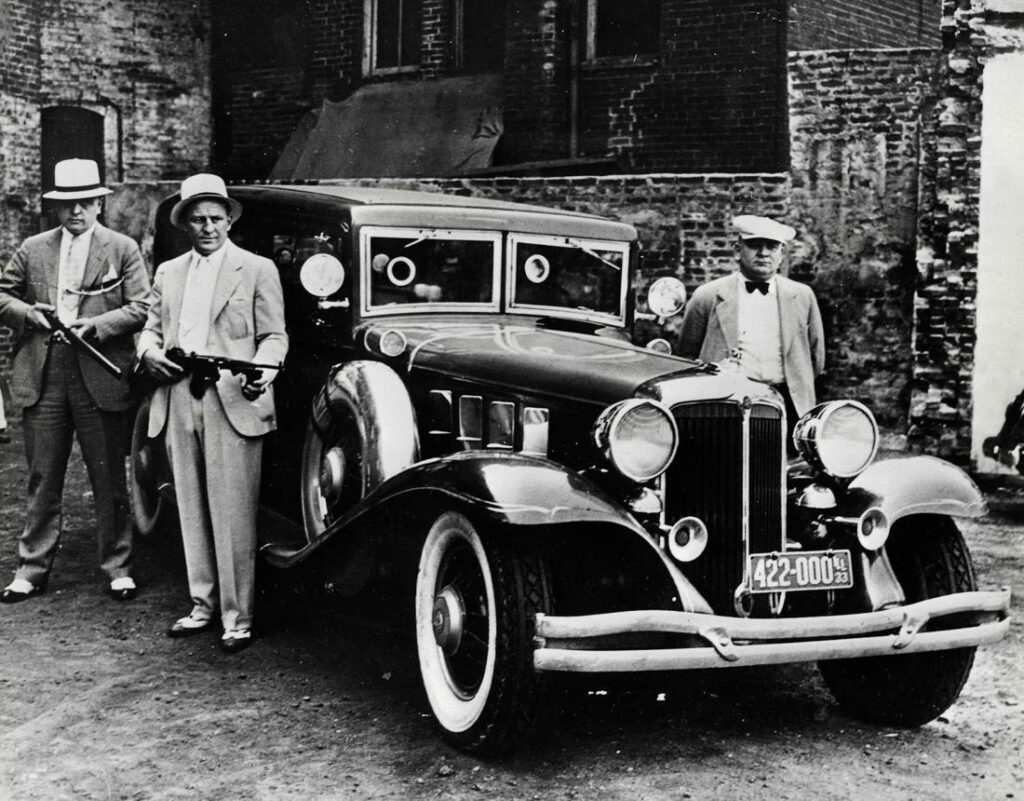
During the 1920s and 1930s, as organized crime surged during Prohibition, law enforcement found itself outgunned. Gangsters weren’t just carrying pistols—they had access to body armor, high-powered rifles, and fully automatic weapons. Standard police revolvers simply weren’t cutting it.
What followed was a push to develop a handgun cartridge powerful enough to match the threat. The result would become one of the most respected and widely used rounds in history: the .357 Magnum.
The Rise of Organized Crime Changed Everything
The Prohibition era gave rise to some of the most notorious criminals in American history. Figures like Al Capone and John Dillinger operated with firepower that far exceeded what most police officers carried at the time.
Law enforcement officers were typically armed with revolvers chambered in .38 Special—a reliable round, but one that struggled against newer threats.
According to historical law enforcement accounts referenced by the Smith & Wesson, criminals during this era increasingly used early forms of body armor and vehicles for cover, making it difficult for officers to stop them with standard ammunition.
The .38 Special Was No Longer Enough
The .38 Special had been a staple of American policing for decades, but it had limitations—especially when it came to penetration.
Criminals began exploiting those limitations by using:
- Heavy clothing and improvised armor
- Vehicles as cover during shootouts
- Superior firepower, including submachine guns
Law enforcement needed something with more velocity and more stopping power.
That’s where the idea of a “magnum” revolver cartridge began to take shape.
The Push for a More Powerful Cartridge
One of the key figures behind the development of the .357 Magnum was Elmer Keith, who spent years experimenting with higher-pressure loads for revolvers.
Working alongside engineers and manufacturers, Keith pushed for a cartridge that could safely deliver significantly higher velocities than the .38 Special.
According to historical development records from Smith & Wesson, this collaboration led to the introduction of the .357 Magnum in 1935.
The .357 Magnum Changed Handgun Performance

When it was introduced, the .357 Magnum was unlike anything that had come before it.
It offered:
- Significantly higher velocity than .38 Special
- Improved penetration
- Greater energy on target
This made it capable of defeating barriers that previously stopped handgun rounds, including early body armor and car doors.
According to ballistic history referenced by the National Rifle Association, the .357 Magnum quickly earned a reputation for its ability to penetrate obstacles while maintaining accuracy and effectiveness.
Law Enforcement Quickly Took Notice
Once the .357 Magnum became available, it didn’t take long for law enforcement agencies to adopt it.
Officers finally had a sidearm cartridge that could:
- Match the firepower of criminal threats
- Penetrate cover when necessary
- Deliver reliable stopping power
The round became especially popular with highway patrol officers and federal agents, who often encountered criminals using vehicles during pursuits.
From Crime-Fighting Tool to Hunting and Defense Staple
While the .357 Magnum was developed in response to organized crime, its usefulness didn’t stop there.
Hunters quickly realized its potential for:
- Medium-sized game
- Predator control
- Versatile field use
At the same time, civilians adopted it for personal defense due to its reliability and proven performance.
According to cartridge performance data from SAAMI, the .357 Magnum remains one of the most balanced handgun cartridges ever developed, offering a combination of power, accuracy, and versatility.
Why the .357 Magnum Still Matters Today
Nearly a century after its introduction, the .357 Magnum is still widely used.
Despite advances in handgun technology, it continues to stand out because it delivers:
- Proven stopping power
- Reliable performance across different applications
- Compatibility with .38 Special for reduced recoil and practice
Few cartridges have maintained relevance for as long—or across as many different roles.
The Bottom Line
The .357 Magnum wasn’t created for convenience—it was created out of necessity.
Faced with increasingly dangerous criminals during one of the most violent periods in American history, law enforcement needed something better. The result was a cartridge that not only met that need but went on to define handgun performance for generations.
In a way, the very forces that made the era so dangerous also drove one of the most important innovations in firearms history.
And today, the .357 Magnum remains a reminder that sometimes, the toughest challenges lead to the most enduring solutions.