
National Park Service Is Asking Hunters for Help With Feral Hogs—And Many Say It’s Long Overdue
For years, hunters across the country have argued something that many wildlife professionals quietly agreed with:
If America is serious about conservation, it cannot ignore the damage caused by invasive species.
Now, the National Park Service (NPS) appears to be acknowledging exactly that.
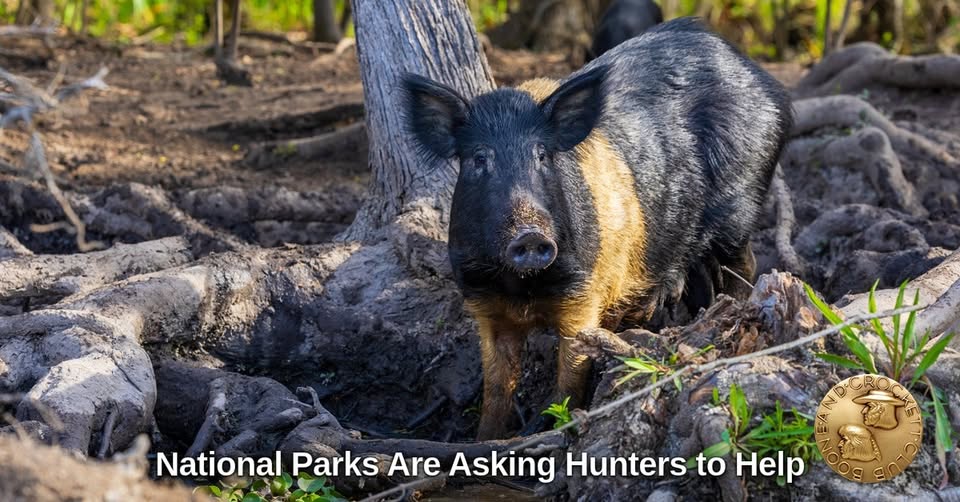
In a move drawing attention from hunters and conservation advocates alike, the National Park Service is expanding qualified volunteer opportunities aimed at controlling invasive species in parts of the southeastern United States. According to the agency, the effort focuses on reducing damage caused by destructive non-native animals—particularly feral hogs, which continue to devastate wildlife habitat, native vegetation, and ecosystems inside protected lands.
For many outdoorsmen, the reaction has been simple:
It is about time.
Why Feral Hogs Have Become Such a Massive Problem
Feral hogs are not simply a nuisance.
They are one of the most destructive invasive species in the country.
According to the United States Department of Agriculture (USDA), wild hog populations now exist across large portions of the United States and cause an estimated $2.5 billion in agricultural and environmental damage every year. These animals tear up native vegetation, destroy nesting habitat, contaminate water sources, spread disease, and aggressively compete with native wildlife for food.
Inside sensitive ecosystems, the damage becomes even more serious.
According to the National Park Service, feral hogs root through fragile landscapes, destroy native plants, damage wetlands, and threaten species that many parks were originally created to protect. Ground-nesting birds, reptiles, amphibians, and smaller mammals can all be negatively affected when invasive hog populations grow unchecked.
For years, wildlife managers have struggled to slow the problem.
Now, federal officials are increasingly recognizing something many rural communities already understand:
Controlling hog populations often requires experienced boots on the ground.
Why the National Park Service Is Turning to Hunters
According to the National Park Service, the agency is expanding qualified volunteer opportunities in two southeastern national parks as part of ongoing invasive species management efforts. While participation requires screening, training, and oversight, the broader message feels significant.
The agency is actively seeking help from people with practical field experience.
And that means hunters.
For many conservation-minded sportsmen, the announcement feels overdue. Hunters have long argued they are among the people most willing to volunteer time, effort, and expertise when wildlife management problems emerge.
That claim is not without evidence.
According to the U.S. Fish and Wildlife Service, hunters and anglers contribute billions of dollars annually to wildlife conservation through license sales, excise taxes on firearms and ammunition, habitat programs, and nonprofit conservation organizations. Much of North America’s modern wildlife recovery system was built through funding and volunteerism tied directly to sportsmen.
In other words, hunters have often been helping conserve wildlife long before anyone officially asked.
A Different Side of Hunting That Often Gets Overlooked
Stories involving hunters tend to focus heavily on harvest numbers, trophy animals, or political debates surrounding hunting rights.
What receives far less attention is the role hunters regularly play in habitat management and invasive species control.
Across much of the South, hunters already spend countless hours assisting with feral hog management on private lands. In many areas, landowners rely heavily on local hunters to help control populations that can otherwise spiral quickly out of control.
Anyone who has seen the aftermath of a hog sounder moving through a pasture understands why.
Entire fields can be ripped apart overnight.
Food plots disappear.
Creek banks erode.
Native habitat suffers.
According to wildlife experts, feral hog populations reproduce rapidly enough that waiting too long to manage them often makes the problem exponentially worse.
That reality is one reason many hunters view the National Park Service’s request as less of a surprise and more of an inevitable step.
Conservation Has Always Been Part of Hunting
For many hunters, conservation and hunting have never been separate ideas.
According to the Boone and Crockett Club and the North American Model of Wildlife Conservation, hunters historically played a major role in restoring species populations after severe declines in the late 1800s and early 1900s. License fees, excise taxes through the Pittman-Robertson Act, and volunteer conservation work continue supporting habitat restoration across the country today.
That history matters.
Many hunters believe public conversations about conservation often overlook the reality that sportsmen routinely contribute money, labor, and advocacy toward improving wildlife habitat.
The National Park Service’s latest move feels, to some, like overdue recognition of that role.
The Bottom Line
The National Park Service is expanding volunteer opportunities aimed at addressing invasive species in parts of the Southeast, including destructive feral hog populations that continue damaging native habitat inside protected landscapes.
According to the National Park Service and USDA, invasive hogs remain one of the most damaging wildlife management problems in the country, causing ecological destruction and billions of dollars in losses each year.
For many hunters, the announcement reinforces something they have believed all along:
Conservation works best when the people who spend the most time on the land are invited to help protect it.