
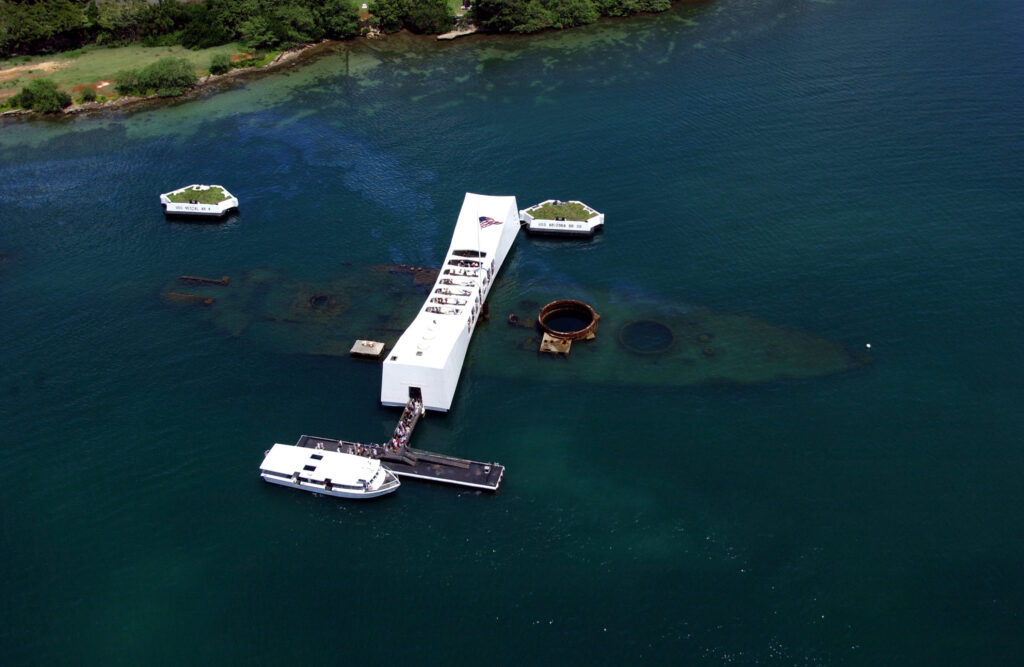
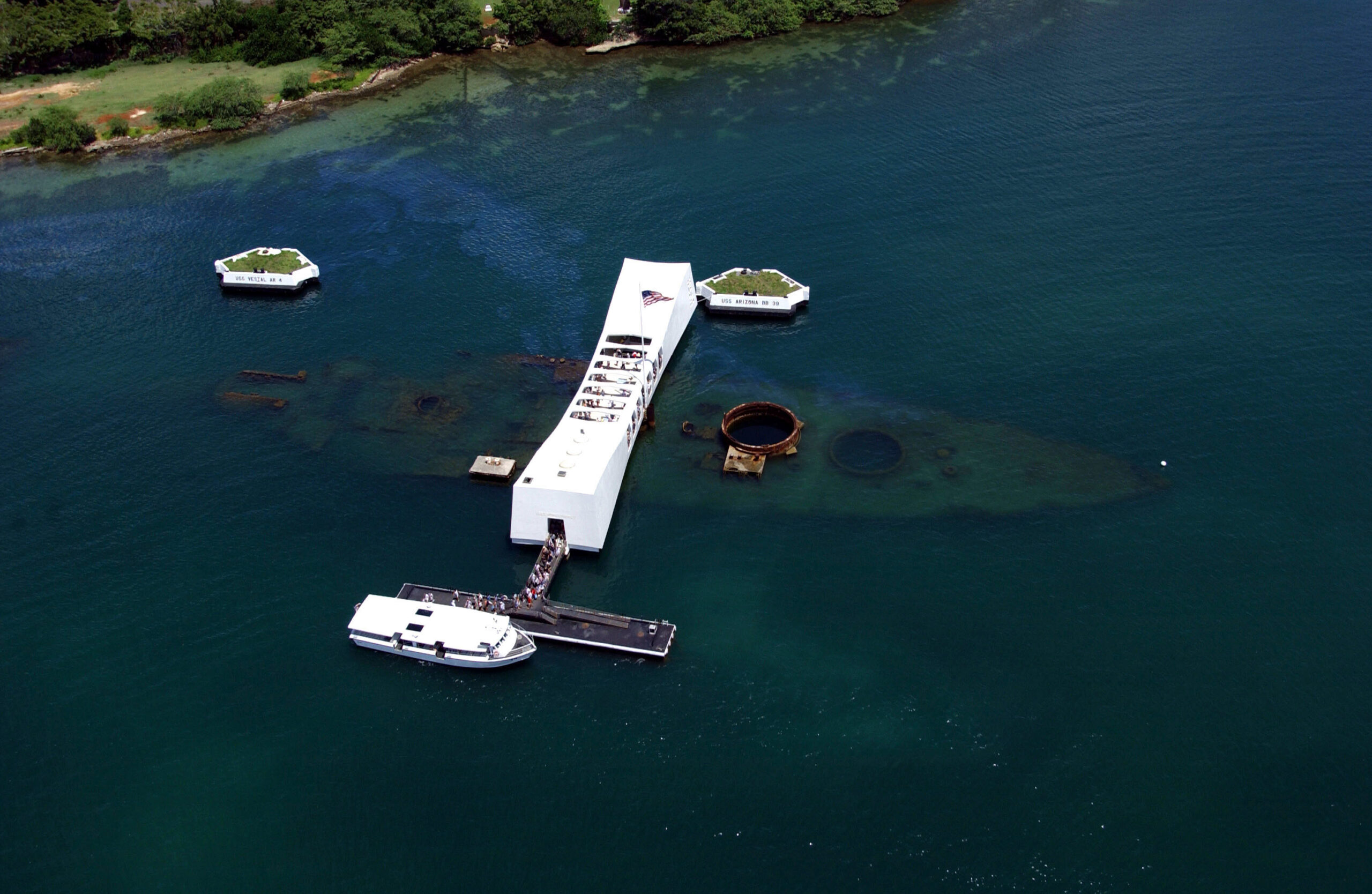
On a quiet morning at Pearl Harbor, beneath the white span of the USS Arizona Memorial, U.S. Navy divers carried out a final mission. It wasn’t written in orders or logged in a duty book. It was a mission of honor. With solemn precision, they escorted the ashes of John D. Anderson, Boatswain’s Mate Second Class, back to the steel hull where his story—and his heartbreak—began.
On December 7, 1941, the world changed in a matter of minutes. As Japanese aircraft roared overhead and bombs tore through Battleship Row, the USS Arizona erupted in a catastrophic explosion. Fire consumed steel. The harbor boiled with oil and debris. More than 1,177 sailors and Marines aboard the Arizona were killed in the blast and inferno that followed, making it one of the deadliest single-ship losses in U.S. naval history.
John Anderson was there that morning. Amid the chaos and smoke, he refused to abandon ship. His twin brother, Delbert, was somewhere inside the burning vessel. While others fought to survive, John searched. It wasn’t heroics for medals or recognition. It was a brother looking for his brother.
That search—born of love and loyalty—ended in heartbreak. Delbert was among the 1,177 who never came home. John survived, but survival came with a weight he would carry for the rest of his life.
For decades, John lived as one of the last surviving crew members of the Arizona. He built a life beyond the war, yet Pearl Harbor never truly left him. The grief didn’t fade; it settled. Those who knew him described a quiet resilience—a man who honored his fallen shipmates not with grand speeches, but with steadfast remembrance. He attended memorials. He told the story when asked. He carried the names in his heart.
Each year, on the anniversary of the attack on Pearl Harbor, the nation paused. Flags lowered. Survivors gathered. And beneath the memorial, oil still rose slowly from the wreck—“the tears of the Arizona,” some call it—an enduring reminder that history rests just below the surface.
For John, the wait was long. The ache endured. But the promise was never forgotten.
It is a tradition among surviving crew members of the Arizona that, upon their passing, they may choose to have their ashes interred within the sunken battleship, joining their fallen shipmates. It is not a military requirement. It is something deeper—an unspoken bond among those who were there.
Now, at last, that vigil is over.
In a carefully choreographed ceremony marked by reverence and silence, Navy divers descended into the waters above the wreck. They carried John’s ashes to Turret Four—the very place where his desperate search began more than eight decades ago. There, within the steel that once shook with explosions and fire, his remains were placed.
It was not just an interment. It was a homecoming.
Turret Four stands as a silent sentinel within the wreck, a place heavy with memory. To return John there was to close a circle left open since that December morning. The search that began in smoke and confusion now ends in stillness.
He is reunited with Delbert and the 1,176 crewmates who never left their post.
For the divers who carried out the mission, it was sacred work. Each movement deliberate. Each breath measured. Beneath the memorial above—visited by millions each year—they fulfilled a promise made long ago by survivors who vowed never to forget those who were lost.
The story of the Arizona is often told in numbers: 1,177 dead. Two bombs that sealed the ship’s fate. Minutes that altered history. But this final chapter is not about statistics. It’s about two brothers.
John lived a full life in the shadow of that day. He bore the grief quietly, but he never allowed it to eclipse his sense of duty or his devotion to remembrance. He represented a generation that endured unimaginable loss and carried on anyway.
Now, the promise has been kept.
Together again.
Two brothers, reunited in eternity.
As the waters of Pearl Harbor settle above the Arizona’s hull, the memorial remains a place of reflection and reverence. Visitors walk its white span, gazing down at the rusting steel below. Few will know the intimate details of John’s lifelong vigil. Fewer still will understand what it means to wait more than eighty years for a reunion.
But somewhere beneath their feet, in the quiet darkness of Turret Four, a brother’s search has finally ended.
And in that stillness, honor endures.