
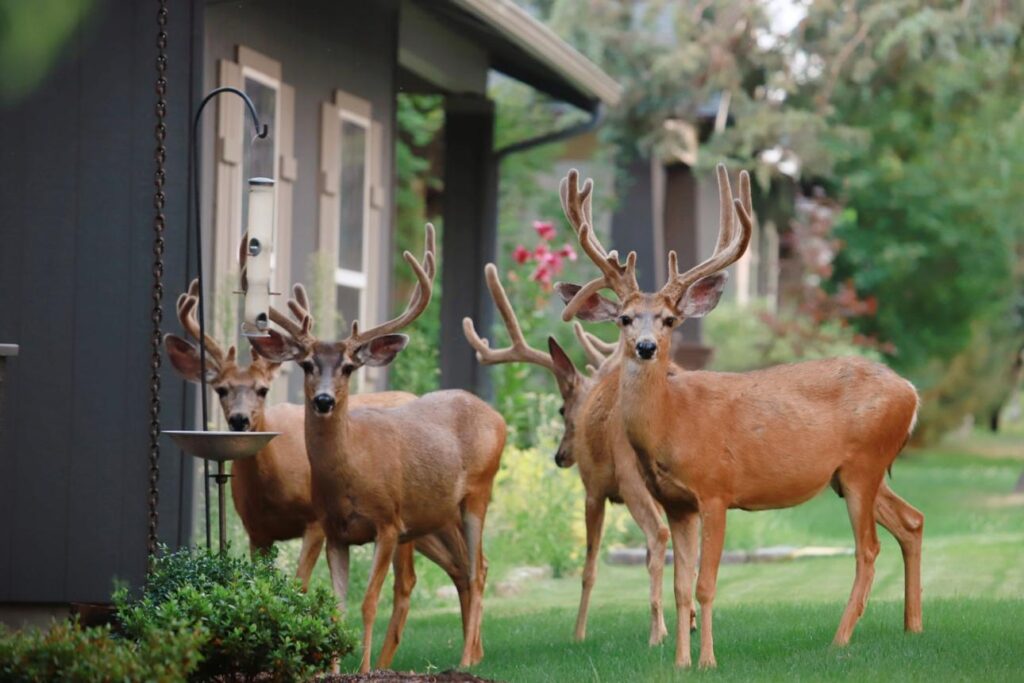
Neighbor Says the Deer “Aren’t Natural”—Now Wildlife Officials Are Involved

What began as an argument between neighbors over backyard wildlife has reportedly turned into something much larger after concerns about an unusually tame deer population caught the attention of wildlife officials.
At first, the complaints sounded strange.
According to nearby residents, one neighbor repeatedly insisted that the deer wandering through the area “didn’t seem natural.” The animals reportedly behaved differently than wild deer typically do. They appeared unusually comfortable around people, lingered near homes for extended periods, and in some cases, allegedly showed little fear when approached.
Most neighbors brushed it off.
Until wildlife officers started asking questions.
When Deer Stop Acting Like Deer
The situation reportedly unfolded in a semi-rural community where seeing deer near homes had become normal. In many parts of Texas and across the country, suburban deer populations have adapted remarkably well to neighborhoods, golf courses, and edge habitats where food sources remain abundant and predators are limited.
Still, some residents reportedly noticed unusual behavior.
Several deer appeared to spend nearly all their time around a handful of properties. Some residents claimed the animals approached vehicles, remained near porches, or behaved more like domesticated livestock than wild whitetails.
That behavior reportedly raised concerns with at least one neighbor, who began documenting deer movement and repeatedly contacting local authorities.
“They don’t act wild,” one resident reportedly said. “It’s like they’ve gotten too comfortable.”
Why Wildlife Officials Sometimes Investigate
While the idea of “unnatural deer” may sound unusual, wildlife agencies do occasionally investigate situations involving suspicious wildlife behavior.
According to the Texas Parks and Wildlife Department, officials sometimes respond to reports involving illegally possessed wildlife, unauthorized feeding operations, disease concerns, captive breeding violations, or situations where animals become habituated to humans.
One of the biggest concerns involves illegal feeding or confinement.
Whitetail deer that regularly receive food from people often lose natural caution, changing movement patterns and behavior. Over time, deer can become unusually tolerant of humans and vehicles, particularly in residential areas where food sources remain reliable.
Wildlife officials also monitor concerns tied to diseases such as Chronic Wasting Disease, which has increased scrutiny around deer movement and captive cervid operations in some regions.
At this point, officials have reportedly not confirmed wrongdoing in the neighborhood case.
But questions remain.
Could Captive Genetics Be Involved?
One rumor reportedly circulating among residents suggested the deer might not be entirely wild.
In parts of Texas, high-fence operations and breeder deer have occasionally created controversy when animals escape confinement or appear outside expected areas. According to the Texas Parks and Wildlife Department, breeder deer facilities are regulated because of concerns involving disease transmission, genetics, and wildlife management.
In rare cases, escaped captive deer may behave differently than wild populations because they have experienced human interaction.
That possibility quickly fueled speculation among nearby residents.
Others dismissed the idea completely, arguing the deer were simply becoming accustomed to neighborhood life.
Wildlife officials reportedly have not publicly confirmed whether genetics, feeding, or simple habituation is playing a role.
Feeding Wildlife Can Create Bigger Problems
Biologists frequently warn that feeding deer—even with good intentions—can create unintended consequences.
According to the National Deer Association, concentrated feeding areas can alter deer behavior, increase disease risk, and create unnatural movement patterns. Animals that become dependent on human food sources may lose caution around roads, pets, or people.
That shift sometimes creates frustration among neighbors.
One resident enjoys watching deer from the porch.
Another worries about property damage, vehicle collisions, or wildlife behaving unpredictably.
The disagreements can escalate quickly.
In some communities, conflicts over feeding wildlife have even resulted in local ordinances and law enforcement involvement.
What Happens Next
For now, wildlife officials reportedly continue evaluating the situation while neighbors continue debating what exactly is happening.
Some believe the deer simply adapted to suburban life.
Others remain convinced something unusual is going on.
What everyone appears to agree on, however, is that the animals no longer behave quite like typical wild deer.
Whether that comes from human feeding, escaped genetics, changing habitat, or simply deer becoming increasingly comfortable around people remains unclear.
The Bottom Line
For one neighborhood, what started as complaints about strange deer behavior unexpectedly turned into a conversation involving wildlife officials.
At the center of the debate sits one unusual question:
When deer stop acting wild, what exactly is causing it?
And sometimes, the answer turns out to be far more complicated than anyone expected.