
Property Owner vs. Trespassers: When a Quiet Piece of Land Turns Into a Legal Fight

It started the way a lot of rural problems do—small, almost easy to ignore.
A cut fence. Fresh tire tracks. A gate left open.
At first, the landowner figured it was a mistake. Maybe someone got turned around. Maybe it was a neighbor cutting through without thinking. It happens. Out here, not everything is clearly marked, and not every line is obvious.
But then it kept happening.
And that’s when it stopped being an accident.
The First Signs Something Was Off
The property sat just far enough outside town to feel like its own world. Five acres, backed up to thicker timber, with a small clearing and a few trails cut in for hunting. Nothing fancy—just land meant to be used, not shown off.
The first real red flag came after a weekend away.
The gate had been opened, driven through, and shut again—but not latched. Inside, there were ATV tracks cutting across the pasture and into the treeline. Not just one pass. Multiple loops.
Someone had been riding the property like it was theirs.
According to land use guidance from the Texas Parks and Wildlife Department, unauthorized vehicle use is one of the most common forms of trespassing on rural land, especially in areas near expanding development.
At that point, it was still frustrating—but manageable.
Then it escalated.
When It Stops Being Harmless
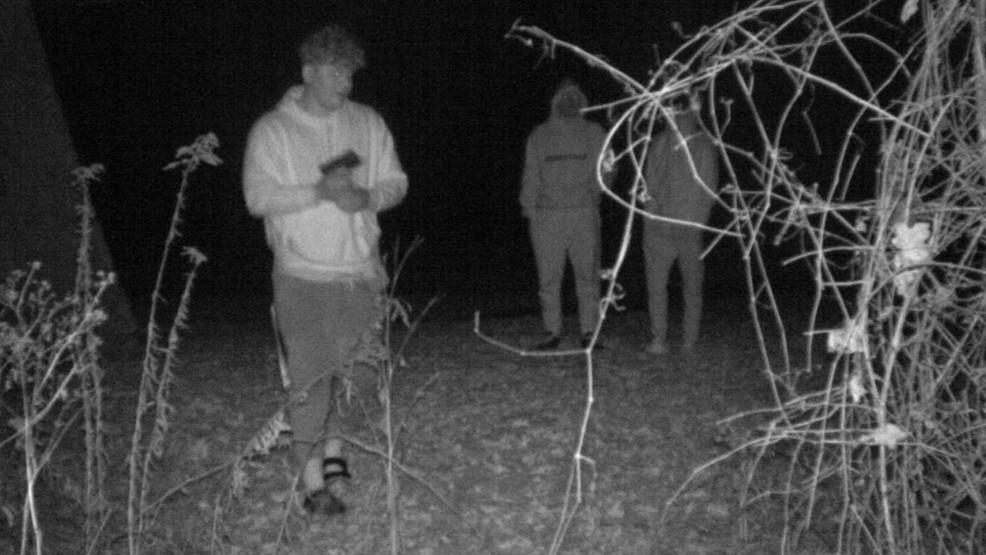
A week later, the landowner pulled a trail camera card.
What showed up on that footage changed everything.
Two individuals—faces visible, no attempt to hide—walking the property with rifles. Not passing through. Hunting.
They moved through the same areas where stands had been set up. One of them even stopped and looked directly into the camera before continuing on.
That’s when it hit:
This wasn’t accidental anymore.
According to the American Farm Bureau Federation, hunting without permission on private land is a serious issue across rural America, often leading to conflicts that escalate quickly due to safety concerns and property rights violations.
Because now it wasn’t just about land.
It was about control—and risk.
The Confrontation
The next weekend, the landowner decided to go out early.
Not to hunt.
To wait.
Right around sunrise, the sound came back—engines in the distance, getting closer. Two ATVs, same direction as before. Same entry point.
This time, the gate didn’t stop them.
They drove right through.
The confrontation wasn’t dramatic. No shouting match. No immediate escalation. Just a simple, direct question:
“Do you know you’re on private property?”
The response came quick—and casual.
“We’ve been riding back here for years.”
That answer said everything.
The Reality of Rural Trespassing
In a lot of rural areas, land use becomes blurred over time. Trails get used, paths get worn in, and people start treating private land like shared ground—especially if no one has pushed back.
But legally, there’s no gray area.
According to the Texas Penal Code, entering or remaining on property without consent constitutes trespassing, and hunting without permission can carry additional penalties.
Still, enforcement isn’t always immediate. And that’s where things get complicated.
Why These Situations Escalate
Most property disputes don’t start with bad intentions.
They start with assumptions.
Someone thinks:
- “No one’s using it”
- “It’s always been open”
- “It’s not a big deal”
But for the landowner, it is a big deal.
It’s liability. It’s safety. It’s the principle of ownership.
According to rural land management data from the U.S. Department of Agriculture, trespassing issues have increased in areas where development pushes closer to previously isolated land, creating more overlap between recreational users and private property.
Taking Back Control
After the confrontation, things changed.
New locks went on the gate. Signs went up along the fence line. Cameras were repositioned. And more importantly, boundaries were made clear.
Not aggressively.
Just clearly.
In most cases, that’s enough.
Because once people know they’re being watched—and that someone is paying attention—the behavior stops.
The Bigger Picture
This wasn’t about one incident.
It was about something bigger happening across rural America.
More people are moving out. More land is being divided. And more individuals are bringing different expectations about how that land should be used.
Some see open space.
Others see ownership.
And when those views collide, situations like this become more common.
The Bottom Line
Trespassing isn’t always dramatic. Most of the time, it builds slowly—small actions that go unchecked until they become something bigger.
In this case, it started with tire tracks.
It ended with a line being drawn.
Because owning land isn’t just about having it.
It’s about protecting it.
And sometimes, that means standing there, face to face, and making it clear:
This isn’t public.
And it never was.