
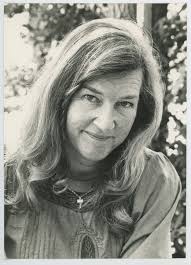
Remembering the Story of Val Plumwood: The Woman Who Survived a Crocodile’s Death Roll
In the wild landscapes of northern Australia, where dense wetlands stretch for miles and silence hangs heavy over still water, danger doesn’t always announce itself.
Sometimes, it strikes without warning.
In 1985, philosopher Val Plumwood experienced one of the most violent predator encounters ever documented—and lived to tell the story. Her survival was nothing short of extraordinary, but what followed would make her story even more powerful.
It wasn’t just about surviving.
It was about understanding what it meant.
A Walk Into the Wild
Plumwood was exploring Kakadu National Park, one of the most remote and ecologically rich areas in Australia. Known for its vast wetlands and abundant wildlife, Kakadu is also home to the saltwater crocodile—the largest living reptile on Earth.
According to Parks Australia, saltwater crocodiles in the region can exceed 20 feet in length and are capable of explosive, ambush-style attacks from the water’s edge.
Plumwood was walking along a billabong—a quiet, lagoon-like body of water common in northern Australia—when everything changed.
The Attack
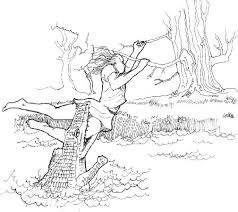
Without warning, a crocodile surged from the water and clamped onto her.
What followed was the animal’s signature killing technique: the death roll.
According to wildlife research cited by Australian Geographic, crocodiles use this spinning motion to disorient, drown, and tear apart prey. It is fast, violent, and almost always fatal.
Plumwood was dragged into the water and rolled repeatedly—again and again.
Later accounts describe how she was spun, released briefly, then seized again. Each time, the crocodile repositioned its grip and continued the attack.
By all biological standards, this should have been the end.
A Moment Between Life and Death
In her later essay, Being Prey, Plumwood described what it felt like inside that moment—when survival seemed impossible.
She didn’t describe panic in the way most would expect.
Instead, she described a strange clarity.
A realization that she was no longer separate from the natural world—but part of it.
“I was prey,” she wrote.
That shift in perspective would become the foundation of one of the most powerful survival narratives ever published.
The Unthinkable Happens
After multiple death rolls, something unexpected occurred.
The crocodile released her.
According to accounts later analyzed by wildlife experts and referenced in Australian Geographic, crocodiles sometimes reposition prey during an attack, especially if the grip is not secure. In extremely rare cases, this can create a brief window for escape.
Plumwood seized it.
Severely injured, she managed to crawl away from the water’s edge—bleeding, disoriented, but alive.
Rescue Against the Odds
Her survival didn’t end at escape.
She was deep in remote wilderness, far from immediate help. Despite massive injuries—including deep lacerations and trauma from repeated submersion—she managed to reach a ranger station.
According to accounts from Parks Australia and later retellings in Australian media, her rescue required urgent medical evacuation.
Doctors later confirmed what many already knew:
Surviving a crocodile attack of that magnitude is almost unheard of.
More Than Survival
What makes Plumwood’s story different isn’t just the attack—it’s what she did with it.
Rather than framing the event as man versus beast, she reframed it entirely.
In Being Prey, she challenged the idea that humans exist outside the food chain. According to her writing, modern society often views humans as separate from nature—protected, dominant, untouchable.
Her experience shattered that illusion.
According to analysis of her work in environmental philosophy circles, Plumwood’s account became a defining example of what it means to confront the reality of being part of a living, predatory ecosystem.
The Reality of Crocodile Country
Encounters like this are rare—but not impossible.
According to data from Parks Australia, saltwater crocodiles are responsible for a small number of attacks each year, most occurring when humans enter or approach water in known crocodile habitats.
Their hunting method is simple:
-
Wait
-
Ambush
-
Overpower
And once it begins, there are very few second chances.
A Legacy That Endures
Val Plumwood didn’t just survive one of the most violent predator encounters on record.
She changed how people think about survival.
Her story is still studied, still shared, and still respected—not because of the danger alone, but because of the perspective she brought back from it.
The Bottom Line
In the wilderness, there are no guarantees.
No matter how experienced, prepared, or aware you are, there are places where humans are not the dominant force.
Val Plumwood’s story is a reminder of that truth.
Not as a warning to stay away—but as a reminder to respect what lives there.
Because sometimes, survival isn’t about control.
It’s about understanding your place in a world that doesn’t revolve around you.