
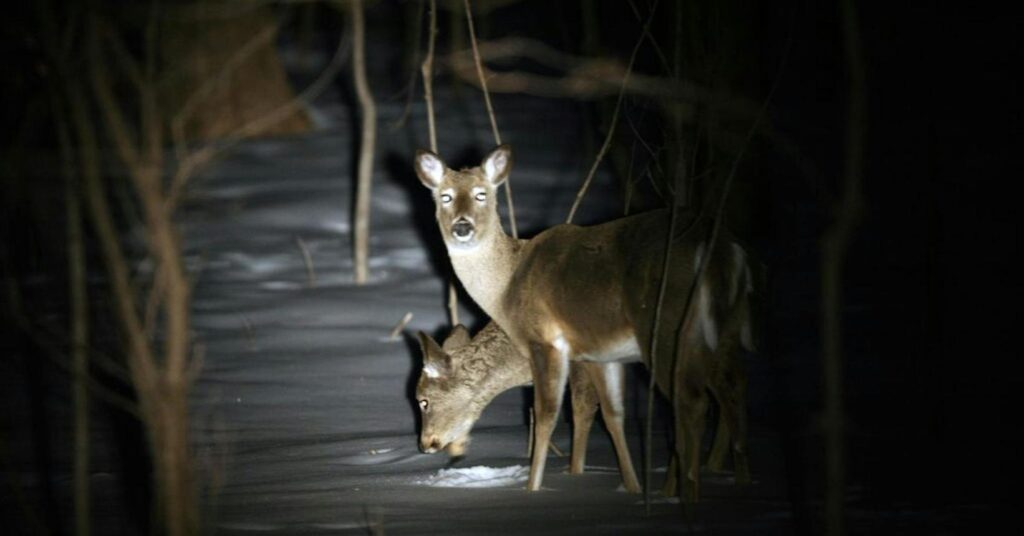
State Wildlife Officers Crack Down on Illegal Spotlighting

Illegal spotlighting has long been one of the fastest ways to turn a hunting trip into criminal charges—and wildlife officers across the country are stepping up enforcement efforts as nighttime poaching activity continues to draw concern.
From rural backroads to farm country and remote ranchland, state wildlife agencies say spotlighting violations remain one of the most common—and dangerous—forms of illegal hunting.
What Is Spotlighting?
Spotlighting, often called “jacklighting,” generally refers to using artificial light to locate or immobilize animals at night before shooting them.
In many cases, poachers use:
- High-powered spotlights
- Vehicle headlights
- Thermal equipment used illegally
- Rifles fired from roads or vehicles
The light temporarily freezes or disorients animals, making them easier targets.
According to the Texas Parks and Wildlife Department, illegal nighttime hunting and spotlighting violations often involve deer, hogs, and other game animals taken outside legal hunting methods.
Why Wildlife Officers Are Cracking Down
Wildlife officials say spotlighting creates several major problems.
First, it violates fair chase principles that ethical hunters follow.
Second, it often leads to waste.
According to the Boone and Crockett Club, poachers involved in spotlighting frequently target trophy animals, sometimes leaving meat behind after removing antlers or valuable parts.
But there’s another reason enforcement has intensified:
Safety.
Firing rifles at night from roads or vehicles creates enormous risk for:
- Nearby homes
- Livestock
- Other motorists
- Rural landowners
Modern Enforcement Is Catching More Violators
Game wardens today have more tools than ever.
Wildlife agencies increasingly rely on:
- Night patrols
- Thermal imaging equipment
- Trail cameras
- Anonymous tip programs
According to the Texas Parks and Wildlife Department, public reporting continues to play a major role in solving poaching cases.
Many major busts begin with landowners or neighbors noticing suspicious headlights moving across fields late at night.
Penalties Can Be Severe
Many people underestimate how serious spotlighting charges can become.
Depending on the state and circumstances, penalties may include:
- Heavy fines
- Equipment confiscation
- Loss of hunting privileges
- Criminal charges
- Restitution for illegally taken wildlife
According to the Texas Parks and Wildlife Department, repeat offenders or major poaching cases can sometimes result in felony-level consequences.
Ethical Hunters Hate Spotlighting Too
Ask most hunters what they think about spotlighting, and you’ll get a strong answer.
Many ethical hunters see poachers as thieves stealing from wildlife resources everyone helps conserve.
Legal hunters:
- Buy licenses
- Follow seasons
- Respect land boundaries
- Practice ethical harvest
Poachers ignore all of it.
The Bottom Line
Wildlife officers are sending a clear message: illegal spotlighting isn’t being ignored.
According to the Texas Parks and Wildlife Department and conservation groups like the Boone and Crockett Club, spotlighting undermines conservation, threatens safety, and damages the reputation of responsible hunters.
Because at the end of the day, real hunting doesn’t happen through a truck window with a spotlight.
It happens the right way.