
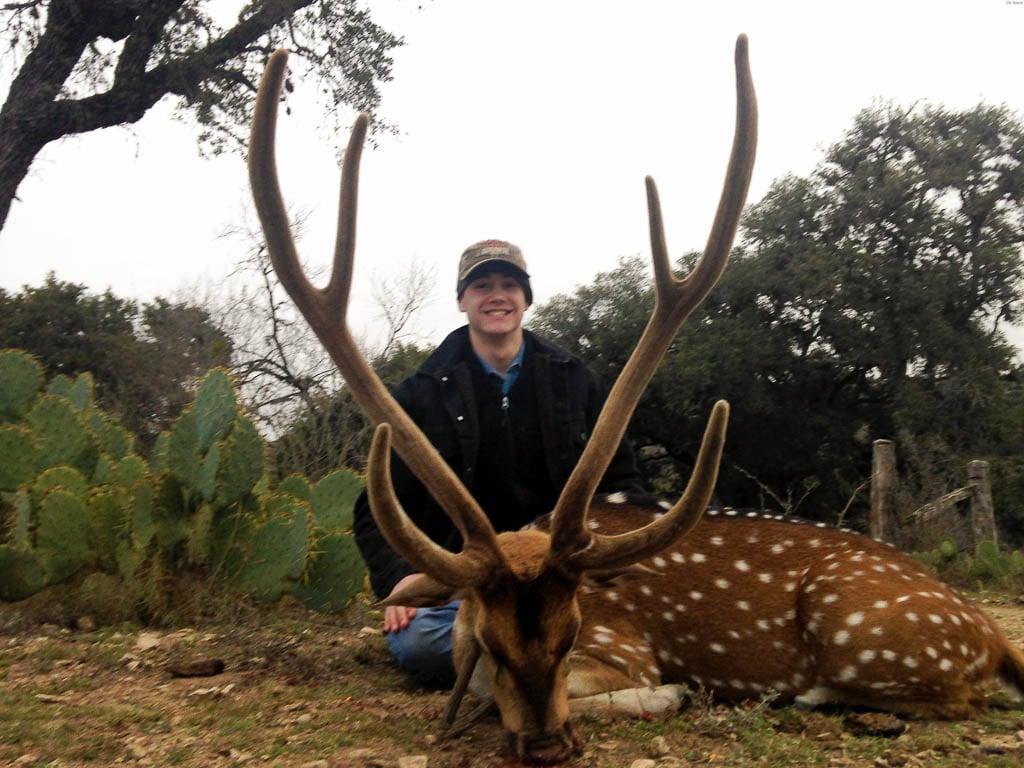
Storm Knocks Down High Fence—Now a Central Texas Rancher Wants Neighbors to Pay for Escaped Game

A dispute unfolding near Lometa is raising big questions about property rights, wildlife ownership, and who’s responsible when things quite literally break down.
After a recent storm tore through the area, a high-fence ranch suffered significant damage, leaving sections of its perimeter fence flattened and compromised. According to nearby landowners, that breach allowed several exotic game animals—reportedly including species typically kept for managed hunts—to escape onto neighboring properties.
Now, the ranch owner is making a demand that has sparked frustration and confusion across the community:
If those animals are hunted off his property, he believes the neighbors should have to pay for them.
When the Fence Comes Down, So Do the Boundaries
High-fence ranching is common across parts of Texas, especially in areas where landowners manage exotic species like axis deer, blackbuck, and other non-native game. These operations rely heavily on perimeter fencing—not just for containment, but for the business model itself.
Inside the fence, animals are considered part of a controlled operation.
Outside the fence, things get complicated.
According to neighboring landowners, the storm damage created multiple openings large enough for animals to move freely off the ranch. In the days following the storm, sightings of exotic game began occurring on adjacent properties—some miles away from where they had originally been contained.
For landowners who don’t operate high-fence properties themselves, this created an unexpected situation.
Suddenly, animals they didn’t own—and didn’t ask for—were showing up on their land.
The Rancher’s Claim
The ranch owner, according to those familiar with the situation, has taken the position that the escaped animals still belong to him. From that perspective, any harvesting of those animals by neighbors would be considered a loss of property.
That’s where the demand comes in.
If a neighbor hunts one of those escaped animals, the rancher believes compensation should be required—essentially treating the animal as private property regardless of where it ends up.
It’s a stance that has not gone over well.
Neighbors Push Back
For neighboring landowners, the situation feels fundamentally different.
From their point of view, once the animals crossed the fence line, they became no different than any other free-ranging wildlife. And in Texas, wildlife laws are clear on one key point: native wildlife is not privately owned in the traditional sense.
But exotics?
That’s where the gray area starts.
Many neighbors argue that they should not be held responsible for:
- Fence failures they didn’t cause
- Animals they didn’t release
- A business model they aren’t part of
Some have also raised concerns about liability in the opposite direction—questioning whether they could be responsible if those animals damage crops, fencing, or property after escaping.
The Legal Gray Area Around Exotic Game
Texas law treats exotic animals differently than native wildlife.
Unlike whitetail deer or turkey, many exotic species can be privately owned, bought, and sold. That’s what makes high-fence operations possible in the first place.
But ownership becomes harder to define once those animals are no longer contained.
If an animal escapes due to:
- Storm damage
- Fence failure
- Lack of maintenance
…does ownership still apply once it’s roaming freely?
That’s the question at the center of this dispute.
Legal experts often point to the importance of “control.” As long as an owner maintains control—typically through fencing—ownership claims are clearer. Once that control is lost, especially unintentionally, the situation becomes far less defined.
More Than Just a Local Dispute
What’s happening near Lometa isn’t just a neighbor disagreement—it touches on a broader debate across Texas.
High-fence ranching has long been controversial.
Supporters argue it:
- Supports conservation of exotic species
- Generates economic value
- Provides controlled hunting environments
Critics argue it:
- Blurs the line between hunting and livestock harvest
- Creates artificial management of wildlife
- Leads to disputes like this when systems fail
When everything works as designed, the model operates smoothly.
But when something goes wrong—like a storm knocking down fencing—the lines between private property and public resource can blur quickly.
Who Is Responsible?
At the heart of the issue is a simple but difficult question:
Who bears responsibility when containment fails?
Is it:
- The ranch owner, for not maintaining a secure perimeter?
- The storm, as an unavoidable act of nature?
- Or neighboring landowners, simply for being in the path of escaped animals?
For now, there’s no clear answer.
And until there is, tensions are likely to remain high.
The Bigger Picture
For many rural Texans, this situation hits close to home.
Land ownership comes with expectations—control over your property, your resources, and what happens within your boundaries.
But cases like this challenge those assumptions.
They raise questions about:
- The limits of ownership
- The risks of high-fence operations
- And how responsibility is shared when things go wrong
The Bottom Line
A storm knocked down a fence.
But what it exposed runs much deeper.
Now, a rancher is trying to hold onto ownership of animals that no longer stay on his land—and neighbors are pushing back against being pulled into a situation they didn’t create.
As this dispute unfolds near Lometa, it may ultimately force a clearer answer to a question that doesn’t come up often—until it suddenly does:
When the fence is gone…
Who really owns what’s on the other side?
Rancher will owes me rent for using my property and compensation for the feed and water
Not his property anymore, they are able to be hunted by any hunter who has a license.